






















































The Silicon Prairie of Power: How Minnesota Became a Global Hub for Microgrid Innovation

In the skyline of Bloomington, Minnesota, just northeast of the busy I-494 and Highway 100 interchange, stands a building that looks less like a corporate office and more like a piece of high-tech sculpture. With its red-and-blue accents and sharp angles, the headquarters of Open Access Technology International (OATI) is often compared to a futuristic sailboat or a robotic sentry. Yet, the true marvel is not the architecture, but what happens within its walls and on its roof.
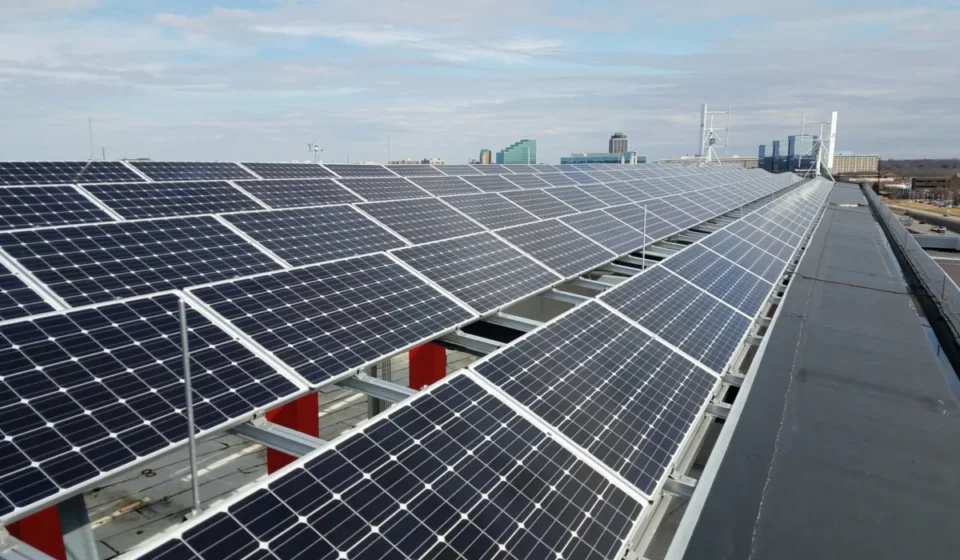
Inside, scores of electrical engineers and high-powered servers manage the invisible pulse of North America. OATI’s software coordinates the flow of electricity across the majority of the continent’s high-voltage transmission lines. More importantly, the building itself serves as a living laboratory—a "proof of concept" for the next revolution in energy: the microgrid. By synchronizing solar panels, batteries, an onsite cogeneration plant, and emergency diesel generators, OATI’s proprietary platform ensures the lights stay on even if the regional grid collapses.
Minnesota, often associated with agriculture and medical technology, has quietly emerged as a dominant force in the multibillion-dollar microgrid industry. From the modular hardware of Minneapolis-based Syncris to the nationally recognized research at the University of St. Thomas, the state is leveraging a century of manufacturing expertise to solve the modern challenges of grid reliability, rising costs, and climate change.
Main Facts: A Concentrated Ecosystem of Energy Expertise
The microgrid industry is defined by its ability to "island" a local power system from the main utility grid, allowing schools, hospitals, neighborhoods, or industrial plants to operate independently during outages. Minnesota’s outsized influence in this sector is not accidental; it is the result of a dense ecosystem comprising established giants, agile startups, and academic powerhouses.
The Power Players
OATI stands as the largest Minnesota-based entity in the space, having evolved from a 1990s-era software firm into a leader in Distributed Energy Resource Management Systems (DERMS). Their technology is now utilized by over 150 electric cooperatives, including 24 members of the Dairyland Power Cooperative across Wisconsin and Minnesota.
However, the ecosystem extends far beyond OATI. Syncris, a Minneapolis-based firm, is revolutionizing the hardware side of the industry. They produce modular inverters—the critical devices that convert the direct current (DC) from solar panels and batteries into the alternating current (AC) used by the grid. Their "Lego-block" approach allows users to expand microgrids incrementally without the prohibitive costs of custom re-engineering.
Academic and Research Hubs
The Center for Microgrid Research at the University of St. Thomas (UST) has become a premier destination for advanced development. It is currently the only institution in North America providing hands-on training for both students and professionals in a real-world microgrid environment. Complementing this, researchers at the University of Minnesota are collaborating with other Midwestern institutions to harden these local grids against the growing threat of cyber warfare.
Economic Impact
The financial footprint of this industry is significant. According to the Minnesota Department of Employment and Economic Development (DEED), the state exported approximately $2.3 billion in "IT-related electrical equipment" last year. This sector supports a specialized workforce that bridges the gap between traditional electrical engineering and advanced software development.
Chronology: From Industrial Giants to Independent Power
To understand why Minnesota is a microgrid leader today, one must look back several decades. The state’s history is rooted in "power electronics," a legacy built by multinational corporations that established deep roots in the Twin Cities.
- The 1980s and 1990s: Companies like Honeywell, Siemens, IBM, Eaton, and Johnson Controls developed a massive manufacturing and engineering presence in Minnesota. These firms specialized in energy controls and building automation, creating a talent pool of engineers who understood how to manage complex electrical loads.
- The Rise of Independent Energy: Michael Burr, founder of Microgrid Initiatives, notes that the 1980s saw the launch of Independent Energy magazine in Minnesota. The publication chronicled the birth of the independent power industry, which eventually evolved into the distributed energy movement we see today.
- The Mid-1990s (OATI’s Founding): OATI was established during the early days of energy market deregulation. Their first-of-its-kind software solutions were designed to move as fast as electrons, allowing utilities to trade electricity in real-time.
- The Early 2000s (Advanced Metering): Companies like Pequot Lakes-based Hunt Technologies became pioneers in advanced metering infrastructure (AMI). Hunt was eventually acquired by Landis+Gyr, but the expertise remained in the state.
- 2020–Present (The Resilience Era): A series of extreme weather events—from record-setting heatwaves in the Midwest to devastating hurricanes in the South—shifted the focus from energy efficiency to "resilience." This sparked the current boom in microgrid demand, as communities sought ways to maintain power during prolonged outages.
Supporting Data: Federal Investment and Economic Realities
The transition to microgrids is being fueled by a combination of federal subsidies and the harsh economic reality of power outages.
Tribal and Rural Grants
In 2023 and 2024, the federal government signaled its commitment to microgrids as a tool for social equity and energy sovereignty.

- Red Lake Nation: Awarded $3.15 million to support solar- and battery-powered microgrids.
- White Earth Nation: Received $1.75 million for a solar-powered resilience hub.
- Department of Energy (DOE): Recently announced $8 million in grants for 14 remote communities across Alaska, Nevada, and South Dakota, many of which are being developed with the help of Minnesota-based consultants.
The Cost of "Grid Edge" Instability
For industrial customers, the move to microgrids is often a matter of survival. Zach Edmond, COO of Syncris, points out that customers located at the "grid edge"—far from transmission lines—often suffer from poor "power quality."
- Maintenance Costs: Repeated voltage fluctuations can degrade sensitive machinery. A machine designed to last 20 years may fail in seven due to poor power quality.
- Direct Losses: One Syncris customer reported losing hundreds of thousands of dollars annually due to brief but frequent power interruptions.
Official Responses: Resilience, Sovereignty, and Policy
Leaders within Minnesota’s energy sector emphasize that microgrids are no longer a niche "green" project; they are a strategic necessity.
David Heim, OATI’s Vice President and Chief Strategy Officer, highlights the pride in Minnesota’s homegrown tech. "It’s cool that we are a [Twin Cities] company doing all this right here in our backyard, not out in Silicon Valley," Heim said. He further notes that for tribal nations, microgrids are about more than just electricity. "The mere fact that they’re planning to do some form of onsite generation gives them a seat at the table. They can say to the utility, ‘we’d love for you to sponsor this project, but in return, you have to give us some concessions.’"
Mary Brown, OATI’s Senior Executive Vice President and Chief Legal Officer, points to the shifting policy landscape. With federal energy policy changes and potential import tariffs threatening to raise electricity prices, she argues that Distributed Energy Resource Management Systems (DERMS) will be vital for cost control. These systems allow utilities to orchestrate neighborhoods of EVs, home batteries, and solar arrays to reduce peak demand, often compensating homeowners for their participation.
Greg Mowry, Syncris Co-founder and former director of the UST Center for Microgrid Research, emphasizes the need for simplicity. After witnessing the slow pace of energy deployment in Africa and Eastern Europe, Mowry realized that the "highly custom, one-off" nature of microgrid engineering was the primary barrier. "Our core technology is more like a Lego block," he explains, focusing on volume manufacturing to drive down costs.
Implications: A Bulwark Against an Uncertain Future
The rise of Minnesota’s microgrid industry has profound implications for the future of the American energy landscape.
1. Climate Adaptation
As extreme weather events—like the "hurricane-force" microbursts that recently struck northern Minnesota—become more frequent, the traditional centralized grid model appears increasingly vulnerable. Microgrids offer a decentralized alternative, ensuring that "resilience hubs" can provide refrigeration, cooling, and medical equipment power even when the surrounding area is dark.
2. Energy Sovereignty
For remote and tribal communities, microgrids represent a path toward independence from distant, investor-owned utilities. This "energy sovereignty" allows these nations to manage their own resources and insulate themselves from the price volatility of the broader market.
3. Economic Democratization
The work being done by companies like Syncris to modularize technology means that microgrids will soon be accessible to a wider range of customers. Small manufacturing plants, schools, and even small neighborhoods will be able to install systems that were once only affordable for large military bases or hospital campuses.
4. Technological Leadership
Minnesota’s ability to export billions of dollars in electrical equipment ensures that the state remains a critical node in the global supply chain. As the world transitions toward renewable energy, the software and hardware developed in Bloomington and Minneapolis will likely set the standards for how the "grid of the future" operates.
In conclusion, the "robotic dog" building in Bloomington is more than just an office—it is a symbol of Minnesota’s role as a stabilizer in an increasingly volatile world. By blending a century of industrial might with cutting-edge AI and modular hardware, Minnesota is proving that the path to energy security is paved with local innovation and a long-standing streak of self-reliance.