







































Politics in the Pasture: Farmfest 2024 Highlights the Pulse of Minnesota’s Electorate

As the late-summer sun beat down on the sprawling fields of Morgan, Minnesota, this week, the annual pilgrimage to Farmfest once again proved that the state’s political heart beats loudest in the rural heartland. For three decades, this event has served as more than just an agricultural showcase; it is a critical proving ground for those seeking to represent the North Star State in St. Paul and Washington, D.C.
With the August 11 primary election looming on the horizon, the air at the Gilfillan Estate was thick with the scent of freshly baled hay, diesel exhaust, and the unmistakable tension of campaign season. Thousands of Minnesotans descended upon the site, navigating between rows of industrial-sized tractors and cutting-edge agricultural technology to catch a glimpse of the candidates vying for seats in the U.S. Senate, the House of Representatives, and the governor’s office.

Main Facts: A Convergence of Policy and Pavement
Farmfest, organized by IDEAg, has long been considered the premier venue for political discourse in Minnesota. This year’s edition featured a packed schedule of candidate forums, town halls, and "media scrums" that saw hopefuls jostling for position in front of local television crews and newspaper reporters.
The primary objective for the candidates was clear: secure the rural vote. While Minnesota’s political map has become increasingly polarized—with the Twin Cities metropolitan area trending deeply Democratic and the rural counties leaning heavily Republican—the candidates who braved the heat in Morgan understood that the path to victory often runs through the agricultural sector.

Key themes dominated the discussion: the rising cost of fertilizer, the implementation of the federal Farm Bill, concerns over land use, and the perennial issue of trade policy. For the voters in attendance, the event provided a rare opportunity to engage in face-to-face dialogue with individuals who, if elected, will hold the power to shape the state’s economic and environmental landscape for years to come.
Chronology: Two Days of Campaigning in the Heat
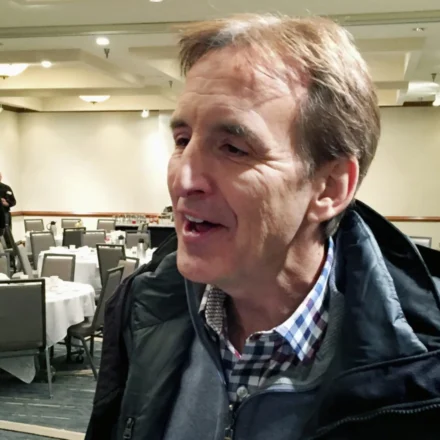
MinnPost photographer Bridget Bennett, who spent two full days documenting the event, captured a narrative of exhaustion and engagement.

Day One: The Opening Salvo
The event kicked off with a flurry of activity as campaigns set up their booths—often strategically positioned near the food courts or the main entrance. The morning sessions were dominated by Senate candidates, who participated in moderated forums designed to address the specific needs of rural Minnesotans. The tone was largely civil, though the subtext of the upcoming August 11 primary added an edge to every interaction. By midday, as the temperature spiked, the "media scrums" began. Candidates were surrounded by journalists, answering rapid-fire questions about everything from national security to local irrigation rights.
Day Two: The Final Push
The second day focused on the gubernatorial and Congressional races. The atmosphere was noticeably more frantic. Candidates for the House of Representatives moved with a sense of urgency, knowing that a single handshake could translate into a critical vote in a tight district. Throughout the afternoon, the constant rhythm of the event became the handshake—a ritualistic display of candidate accessibility. From shaking hands with local farmers to posing for photos with 4-H club members, the candidates treated every interaction as a high-stakes campaign asset.

Supporting Data: The Agricultural Context
To understand the gravity of Farmfest, one must look at the data governing Minnesota’s agricultural economy. According to recent reports from the Minnesota Department of Agriculture, the state is home to nearly 65,000 farms, contributing billions of dollars annually to the state’s GDP.
However, the sector faces significant headwinds. Input costs—including fuel, fertilizer, and machinery—have seen inflationary spikes that have squeezed profit margins for family-owned operations. During the forums, candidates were presented with data suggesting that the average age of a Minnesota farmer is now over 57 years old, raising urgent questions about succession planning and the barriers to entry for young farmers.

Furthermore, the uncertainty surrounding the federal Farm Bill remains a point of contention. As federal subsidies and safety nets for crop insurance are debated in Washington, the candidates at Farmfest were pressed to clarify their stances. Candidates who demonstrated a nuanced understanding of these federal mechanisms were met with nods of approval, while those who relied on platitudes were frequently met with skepticism from the seasoned agricultural crowd.
Official Responses: The Candidates Speak
The rhetoric from the stage reflected the diverse ideological spectrum of the state.

-
The Republican Perspective: Many candidates focused on the "regulatory burden" they claim is stifling the agricultural industry. Their platform centered on deregulation, the promotion of biofuels, and a strong stance against federal overreach. One prominent candidate noted, "Our farmers don’t need a government handbook to tell them how to care for their land; they need the government to get out of the way so they can feed the world."
-
The Democratic-Farmer-Labor (DFL) Perspective: Candidates on this side of the aisle emphasized the importance of climate-smart agricultural practices and federal investment in rural infrastructure. They argued that government support is essential to help farmers transition to more sustainable, resilient models. "We are committed to ensuring that the next generation of farmers has the tools—and the financial security—to thrive in a changing climate," one candidate remarked during a panel discussion.

-
The Independent/Third-Party View: A handful of candidates utilized the platform to call for a departure from the two-party system, arguing that neither major party is adequately addressing the erosion of the rural middle class. Their speeches focused on localized solutions and the need for greater transparency in corporate agricultural contracts.
Implications: The Road to August 11 and Beyond
As the tents were dismantled and the tractors were driven back to their respective counties, the implications of this year’s Farmfest began to crystallize. The primary election on August 11 serves as a critical filter; it will determine which candidates emerge with the momentum necessary to compete in the general election.

The event demonstrated that rural Minnesota is not a monolith. Voters here are sophisticated, well-informed, and deeply concerned about the intersection of global markets and local survival. For the candidates, the lessons of the past two days are clear:
- Visibility is Currency: The amount of time a candidate spent shaking hands and walking the rows was directly proportional to the buzz they generated on the ground.
- Substance Over Style: While the event had a festive atmosphere, the Q&A sessions were rigorous. Voters were quick to dismiss candidates who lacked specific answers regarding trade policy or supply chain logistics.
- The Urban-Rural Divide Remains: Despite the attempts of some candidates to bridge the gap, the conversation at Farmfest remained heavily insulated within rural concerns. The challenge for whoever wins the August 11 primary will be to translate the energy felt in Morgan into a platform that can resonate with the broader, more urbanized population of Minnesota.
As the political caravan departs from the Gilfillan Estate, the focus shifts to the final stretch of the primary campaign. The handshakes have been exchanged, the photos have been taken, and the promises have been recorded. Now, the power rests with the voters.

Whether these interactions will be enough to sway the outcome on August 11 remains to be seen. However, one thing is certain: in the high-stakes world of Minnesota politics, there is no substitute for showing up, rolling up your sleeves, and looking a voter in the eye—even if it means spending two days in the middle of a hot, dusty field. The path to the state capitol and the halls of Congress is built on these moments, and for those who navigated the rigors of Farmfest, the test has only just begun.