
















































Empowering the Next Generation: How the "Seal of Climate Literacy" is Reshaping High School Education

In an era defined by extreme weather events and shifting ecological realities, a growing movement in American education is seeking to bridge the gap between abstract climate science and tangible community action. Known as the "Seal of Climate Literacy," this emerging credential—an endorsement affixed to high school diplomas—is transforming the way students interact with their environment, moving them from passive observers of climate change to active, informed participants in local solutions.
The initiative, which began in Colorado and is rapidly gaining traction in states like Maine and California, represents a significant shift in K-12 pedagogy. By requiring a combination of rigorous coursework and hands-on, community-based capstone projects, proponents argue that the seal provides students with both the scientific foundation and the agency necessary to navigate a warming world. However, as the program expands, it is finding itself at the center of a national debate over the purpose of public education, the role of political ideology in the classroom, and the future of the green workforce.
The Genesis of an Idea: From Theory to Practice
The concept of the seal was born from a realization that many students felt disconnected from the dense, often overwhelming climate data presented in textbooks. Mary Seawell, CEO of the Denver-based nonprofit Lyra Colorado, recalls how rural educators and students expressed a desperate need to explore climate change as a reality of their daily lives.
"They didn’t want to just read about global doom and gloom," says Seawell. "They wanted to explore climate change as a lived experience."
The pilot program in Colorado, launched in 2024, set a clear standard: to earn the seal, students must complete at least two advanced courses covering Earth’s climate systems and execute an approved project that addresses a specific environmental issue in their community. This dual approach ensures that students possess the theoretical knowledge to understand climate mechanisms while gaining the practical experience required for modern problem-solving.
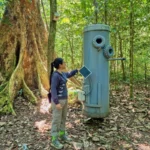
Anthony Muñoz, a student at Vista Academy near Denver’s international airport, became one of the program’s early success stories. Concerned about the impact of jet fuel emissions on his school’s local environment, Muñoz collaborated with climate scientists from the National Center for Atmospheric Research (NCAR) to establish an "ozone garden." By planting specific species capable of detecting ground-level ozone pollution, Muñoz turned his school grounds into a functional data-collection site.
"One garden is a very good data source," Muñoz reflects. "Colorado is so beautiful, and I would hate to see it wilt away." His project, which helped him secure grant funding and provided real-world data for researchers, serves as a blueprint for what the seal aims to achieve: the intersection of academic rigor and civic responsibility.
A Chronology of Expansion
The growth of the climate literacy movement has been marked by a blend of grassroots advocacy and legislative maneuvering.
- 2024: Colorado officially approves the Seal of Climate Literacy, becoming the first state to integrate this credential into its K-12 system. The rollout begins in 26 of the state’s 179 school districts.
- Early 2025: Maine, leveraging its existing framework for the "Seal of Biliteracy," adopts a climate seal via state education officials to bypass legislative gridlock. The pilot program exceeds expectations, with 57 students participating in the first year alone.
- Late 2025: California signs legislation into law to establish a statewide seal, following intense lobbying by youth coalitions.
- Ongoing: Youth-led initiatives in states like Hawaii and Minnesota continue to push for similar mandates, with varying degrees of legislative support.
The success of these programs in disparate states—from the coastal communities of Maine, where students study ocean acidification and sustainable fisheries, to the high plains of Colorado—highlights the versatility of the initiative. Because the projects are community-specific, they allow for a curriculum that is relevant to local economic and ecological concerns.
Supporting Data and the Green Workforce
Proponents of the seal emphasize that this initiative is as much about economic preparation as it is about environmental stewardship. As the global economy transitions toward renewable energy, there is an urgent need for a workforce capable of managing solar grids, climate-resilient agriculture, and urban heat mitigation.
Lyra Colorado has begun aligning the seal with vocational certifications. By partnering with institutions like Colorado Mountain College, the organization is working to ensure that students who earn the seal have a direct pathway to credit in skilled trades, such as heat pump installation and sustainable forestry management.
Furthermore, the data suggests that these programs are effectively engaging students who might otherwise be disengaged from traditional science tracks. In Maine, Melissa Luetje, a science teacher at Freeport High School, notes that her students are actively researching ways to commodify invasive species and manage woodlands affected by climate-driven insect damage. "It’s up to each community to figure out what they value and how they want to roll this out," Luetje explains.
The Opposition: Science or Activism?
Despite its popularity among students and climate advocates, the seal has encountered significant pushback. Critics argue that the program distracts from the core mission of public education: foundational literacy and numeracy.
Lance Izumi, senior director of education studies at the Pacific Research Institute, has been a vocal critic of the movement. He argues that schools should prioritize basic scientific proficiency—a metric in which many states are currently struggling—rather than what he characterizes as "activist community projects."
"Diverting focus away from foundational science learning could worsen performance levels," Izumi stated in an email. His critique touches upon a broader national anxiety: that schools are becoming battlegrounds for political agendas rather than centers of academic excellence. Critics also point to the financial burden on school districts, many of which are already facing tight budgets and are forced to rely on philanthropic funding to support these initiatives.
The Political Climate and Its Chilling Effect
The movement toward climate literacy is unfolding against a volatile federal backdrop. Recent shifts in the political landscape have led to increased scrutiny of environmental non-profits, with some lawmakers calling for the investigation of the tax-exempt status of organizations that support climate advocacy.
Mary Seawell notes that this federal pressure has created a "chilling effect" among potential donors. "Funders are worried," she admits. The threat to research institutions—such as the proposed budget cuts to the National Center for Atmospheric Research—further complicates the ability of students like Muñoz to access the data and mentorship they need for their projects.
Despite these hurdles, the momentum remains palpable. The students themselves appear to be the most resilient advocates for the program. Many who graduate with the seal go on to join environmental clubs at the collegiate level, lobby their state legislatures, and continue to mentor younger students.
Implications: A New Model for Civic Engagement
The Seal of Climate Literacy represents a fundamental shift in how we conceive of "educated" citizenship. By fostering an environment where students are expected to engage with the complex challenges facing their specific regions, these programs are creating a generation that views local policy, scientific data, and environmental health as interconnected.
The implications for the future of education are profound. If the seal becomes a standard feature of the American high school experience, it could shift the national conversation on climate change from the abstract, partisan debates of Washington to the pragmatic, community-driven projects of local school districts.
As Anthony Muñoz, now a sophomore in mechanical engineering, reflects: "Are you going to think beyond yourself and help not only those in need but the environment, or will you sit back and wait for someone else to change the world for you?"
Whether the seal can survive the current political volatility and budgetary constraints remains to be seen. However, for the thousands of students who have already participated, the initiative has already achieved its primary goal: it has provided them with the tools to look at their surroundings, identify a problem, and—crucially—believe that they have the power to fix it.