























































For many office workers, the "fresh air" provided by modern climate-controlled buildings is an illusion. Sealed windows and high-efficiency HVAC systems might keep temperatures stable, but they often trap a silent, invisible cocktail of pollutants known as Volatile Organic Compounds (VOCs).
It was this harsh reality that sparked the creation of Greenairy, a startup now poised to disrupt the indoor air quality market. Founded by Tanvi Thombre and Lakshya Saraf, the company is moving beyond conventional filtration to harness the biological power of plants, optimized by technology, to scrub toxic gases from the air we breathe. As the company prepares to take the stage at TechCrunch Disrupt’s Startup Battlefield 200, the industry is taking notice of their unique approach to solving "sick building syndrome."
The Genesis: A Health Scare in the Makerspace
The story of Greenairy began not in a boardroom, but in the trenches of a university makerspace. As engineering students, Thombre and Saraf spent countless hours in an environment crowded with laser cutters, 3D printers, and soldering irons. At the time, they were oblivious to the chemical vapors swirling around them.
The turning point came when Thombre’s closest friend suffered a sudden medical emergency, collapsing and requiring an urgent hospital visit. The incident served as a harrowing wake-up call. "We were unknowingly exposed to toxic fumes," Thombre recalls. "We began investigating indoor air pollution and realized it was an invisible but dangerous health risk—especially in schools, offices, hotels, salons, and any commercial buildings where air conditioning prevents windows from being opened."
Their research led them to a startling conclusion: while standard air purifiers excel at capturing particulate matter like dust, dander, and pollen, they are largely ineffective against the gases that pose the greatest long-term threat to human health.
The Problem with Current Technology
The traditional air purifier is a staple of the modern office, but Saraf argues that current technology suffers from a fundamental limitation. Most consumer-grade purifiers rely on HEPA filters, which are designed to capture solid particles. However, gaseous pollutants—such as carbon dioxide, formaldehyde, and benzene—pass right through these fibers.
"A plant in a pot cleans air slowly," Saraf explains. "But when we change the conditions around the plant, it cleans air much faster and better than these conventional methods."
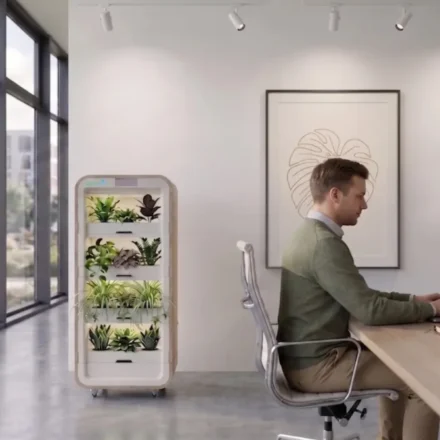
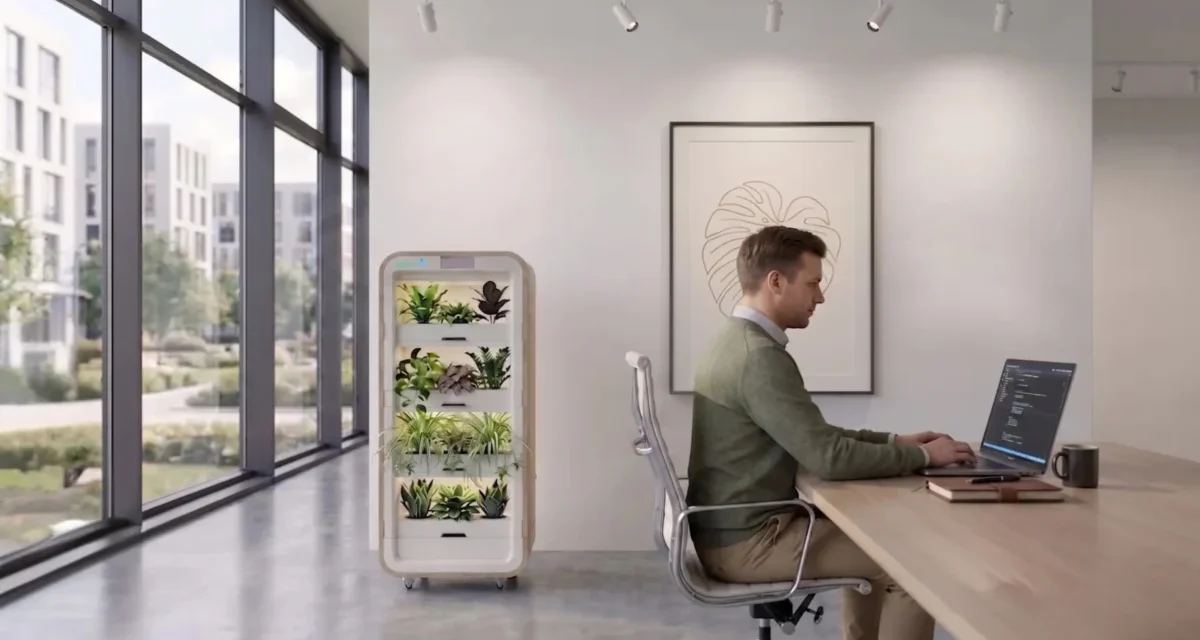
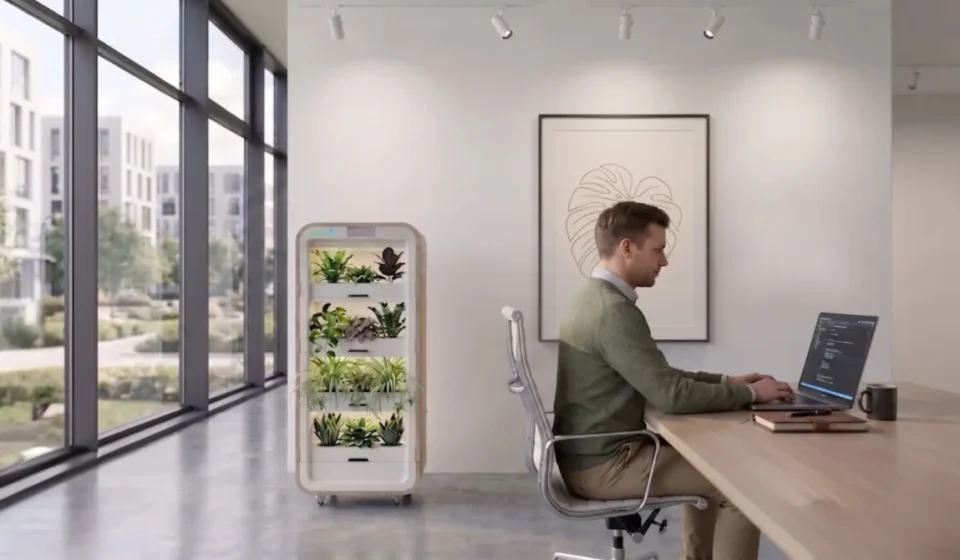
This is the core premise of Greenairy. The startup has engineered specialized "plant towers" that act as high-efficiency bio-filters. By forcing airflow through the root systems and leaves of specifically curated plants, the towers accelerate the natural gas-exchange process. Unlike mechanical filters, which require frequent replacement and generate waste, Greenairy’s systems are self-sustaining, utilizing biological processes that break down VOCs rather than simply trapping them.
The Science of "Sick Building Syndrome"
The urgency behind Greenairy’s mission is backed by a growing body of scientific literature. The Environmental Protection Agency (EPA) has long documented "sick building syndrome"—a phenomenon where building occupants experience acute health effects, such as headaches, fatigue, and respiratory irritation, that appear linked to time spent in a specific structure.
Beyond these immediate symptoms, the long-term implications are even more concerning. VOCs are frequently linked to chronic respiratory diseases and systemic inflammation. Furthermore, the economic cost of poor indoor air quality is staggering. Research from the Harvard T.H. Chan School of Public Health has demonstrated a direct correlation between indoor air quality and cognitive function. Employees working in environments with high levels of CO2 and VOCs consistently perform worse on tests of strategic thinking, information usage, and crisis response.
By targeting the removal of these invisible gases, Greenairy isn’t just selling a health product; they are selling a productivity tool for the modern enterprise.

Validation and Performance Metrics
To prove that their biological solution could outperform mechanical alternatives, Greenairy conducted a series of rigorous pilot programs across Singapore. Using RESET-certified air monitors—the gold standard for building health tracking—the startup compared their plant towers against medical-grade ionizers and HEPA-based purification systems.
The results were decisive. "Our tower had the lowest VOC levels and removed VOCs the fastest," Saraf reports. In one office environment, the Greenairy towers achieved a 50% reduction in both daily average and peak VOC levels. Perhaps most impressively, these results were not static; the company observed that as the plants and their associated root-zone microbes matured, the air purification efficiency actually increased, creating a "self-optimizing" system.
To ensure their claims held up to professional scrutiny, the founders engaged the German testing and certification firm TÜV SÜD. While the final report is currently being prepared for publication, preliminary data confirms the efficacy of the system, paving the way for the company’s transition from pilot phase to large-scale manufacturing.
Chronology of a Startup: A Transcontinental Strategy
The journey of Greenairy is as unique as its technology, defined by a distributed operational model. With Saraf based in Berkeley, California, and Thombre managing operations in Singapore, the founders have successfully bridged the gap between the world’s two most vital startup hubs.
This transcontinental approach is intentional. While Saraf focuses on fundraising and networking in the Bay Area’s vibrant tech ecosystem, Thombre oversees the rigorous on-the-ground testing and product development in Singapore. This division of labor has allowed the startup to iterate rapidly.
Looking ahead, the roadmap is clear. The company expects to unify its operations in Singapore by the first half of 2027. This transition will mark the launch of their first mass-produced towers, with an initial rollout targeting corporate offices, hospitality groups, and educational institutions in the region.
Implications for the Future of Workplace Design
Greenairy’s entry into the market arrives at a time when companies are struggling to bring employees back to the office. As organizations prioritize wellness and ESG (Environmental, Social, and Governance) goals, the demand for "healthy buildings" is reaching an all-time high.
The implications of a successful, plant-based, filter-free air solution are profound:
- Sustainability: By removing the need for synthetic filters, Greenairy eliminates the recurring waste generated by millions of office air purifiers globally.
- Biophilic Design: Beyond the air quality benefits, the psychological impact of integrating nature into the workplace is well-documented. Employees in the pilot studies reported a preference for the "fresh" aroma and the calming aesthetic of the towers.
- Operational Efficiency: With no filters to change and a self-maintaining biological engine, the total cost of ownership for a Greenairy tower is projected to be significantly lower than that of high-end mechanical purifiers over a five-year lifecycle.
Conclusion: A Breath of Fresh Air
As the team prepares to present at the TechCrunch Disrupt Startup Battlefield 200, they are carrying more than just a product; they are carrying a vision for a future where office environments are no longer passive hazards.
"We want to make the invisible visible," Thombre says. By turning the office landscape into a living, breathing component of the building’s infrastructure, Greenairy is challenging the status quo of modern architecture. For the millions of workers who spend their days behind sealed glass, the promise of a cleaner, more natural, and more productive workspace may soon be just a plant tower away.
As the company moves toward full-scale production in 2027, the tech community will be watching closely to see if this biological approach to air quality can truly displace the mechanical giants of the industry. If their pilot results hold true at scale, Greenairy may well be the breath of fresh air that the modern office so desperately needs.