

















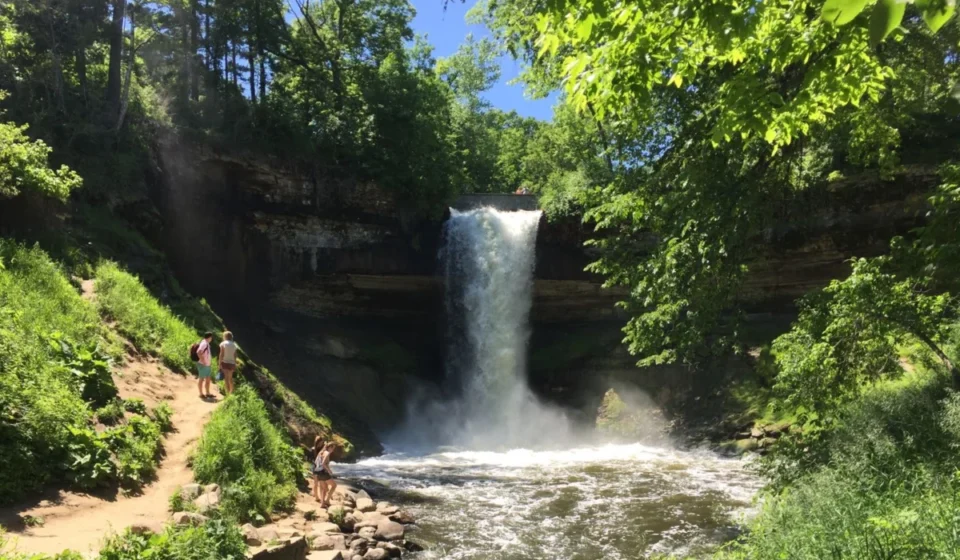

In an era defined by political polarization and social fragmentation, finding common ground has become a rarity in American public life. Yet, as the nation navigates a complex landscape of housing shortages, climate volatility, and a deepening epidemic of loneliness, one unlikely consensus has emerged: the enduring value of the public park.
Data from the Trust for Public Land (TPL) reveals that 88 percent of Americans visited a public park or recreational space within the past year. Remarkably, this enthusiasm transcends partisan divides, with 90 percent of voters who supported Kamala Harris and 80 percent of those who backed Donald Trump identifying these spaces as "critical infrastructure" for their communities. As cities scramble to address urgent needs, experts are increasingly pointing to these green oases not merely as amenities, but as high-yield investments that pay dividends in economic, social, and environmental currency.
The Economic Multiplier: A $3 Return on Every Dollar
For decades, municipal parks departments have fought for budget priority against high-profile demands like infrastructure, police, and education. However, a groundbreaking report from the Trust for Public Land provides a powerful new argument for funding: for every dollar invested in parks and recreation, communities see an annual economic return of three dollars.
"You really do get so much goodness out of them," says Will Klein, director of parks research at the Trust for Public Land. "People are healthier, they connect with each other, and these spaces drive business activity, particularly for the small, local businesses that form the backbone of our neighborhoods."
The economic impact is multifaceted. Beyond the direct spending by visitors at local cafes and boutiques, parks function as significant engines for tourism and property value appreciation. Iconic sites like New York’s Central Park or San Francisco’s newly developed Sunset Dunes draw millions, but the ripple effect is felt in smaller municipalities as well. The Florida Gulf Coast Trail, a 420-mile greenway project, is projected to generate $200 million in annual economic activity in Sarasota County alone by drawing in cyclists and outdoor enthusiasts.
Chronology: The Evolution of the Public Green Space
The American relationship with parks has shifted dramatically over the last century.
- Early 20th Century: The "City Beautiful" movement popularized the idea that urban environments should incorporate formal, aesthetic green spaces to improve public morality and civic pride.
- Post-WWII Era: As suburbs expanded, parks were often relegated to peripheral community amenities, sometimes prioritized only when land was deemed "unusable" for development.
- Late 20th Century: The focus shifted toward recreational utility—playgrounds, baseball diamonds, and tennis courts became the standard.
- 2020–Present: The COVID-19 pandemic served as a critical turning point. As indoor spaces shuttered, Americans rediscovered the "third place"—the social space outside of home and work. Parks became essential, life-sustaining infrastructure, sparking a new wave of urban planning that prioritizes "green infrastructure" as a solution to climate change and social isolation.
Supporting Data: Health and Infrastructure
The financial benefits of parks extend deep into the public health sector. With the United States spending an astronomical $5.3 trillion annually on health care, the preventative role of green space is gaining attention.
Physical inactivity remains a primary driver of chronic cardiovascular disease, costing the U.S. economy upwards of $200 billion annually. The TPL report highlights that parks are now the most preferred destination for exercise, outpacing private gyms. "That physical activity has real health and economic benefits—about $2,000 per person in health care savings each year," Klein notes.
Furthermore, the environmental data is equally compelling. As climate change accelerates, cities are experiencing record-breaking temperatures and more intense, destructive rainfall. Traditional "grey" infrastructure—concrete sewers and storm drains—is struggling to keep pace with these extreme weather events. Parks act as natural sponges. By absorbing runoff, they prevent catastrophic property damage from flooding and mitigate the "urban heat island" effect, where paved, densely populated areas become dangerously hot. By investing in parkland, cities are essentially purchasing a form of climate insurance.
Official Perspectives: Rethinking the Urban Core
The discourse among urban planners and public officials is shifting from viewing parks as "nice-to-have" decorations to "must-have" necessities.
"Our polling this year showed that the most popular place in America to run, play, and exercise are parks and public spaces," says Klein. "They are one of the few remaining places where a person can exist without the pressure of a financial transaction."
This lack of a paywall is crucial for social equity. In a "commodified world," the ability to sit, walk, or play without paying an entry fee is a democratic essential. For the elderly on fixed incomes or families struggling with the cost of living, parks provide a rare, inclusive social sphere. Municipalities are beginning to integrate these insights into broader policy. Some cities are experimenting with "pocket parks" squeezed into dense urban infill developments, while others are championing "agrihoods"—neighborhoods built around working farms—to tackle food insecurity and community cohesion simultaneously.
Implications: The Path Forward
The implications for future development are clear: green space and housing do not have to be competitors. When integrated thoughtfully, they enhance the value of one another.
- Property Values: Even for those who never step foot inside a park, living near green space increases property values, which in turn strengthens the municipal tax base. This creates a virtuous cycle where increased revenue can be reinvested into further community improvements.
- Climate Resilience: Urban design must pivot toward "spongier" cities. Every acre of parkland is an asset that reduces the long-term cost of flood remediation and air conditioning.
- Social Infrastructure: To combat the epidemic of loneliness, policymakers must treat public parks as essential venues for community building—supporting concert series, community gardens, and safe spaces for youth.
Ultimately, the argument for parks is an argument for a more resilient, healthier, and more prosperous society. As Will Klein aptly puts it, "Parks are actually one of these solutions hiding under the feet of all these local leaders."
For the city of the future, the most advanced technology might not be a high-speed transit system or a smart-grid skyscraper, but the humble, accessible, and life-affirming public park. By treating these spaces as the vital infrastructure they are, local governments can solve multiple crises at once, ensuring that the "green dividend" is shared by all residents, regardless of their zip code or political affiliation.
As we look toward the next decade of urban growth, the challenge will be ensuring that these green jewels are not sacrificed to the pressures of real estate development, but rather, that they become the foundational bedrock upon which the next generation of American cities is built.