








































For decades, the gold standard for media accessibility for the Deaf and hard-of-hearing community has been closed captioning. Since its inception in the 1970s, text-based subtitles have allowed millions to engage with television and film. However, for a significant portion of the global Deaf population—particularly children and those with limited English literacy—captions have often served as a barrier rather than a bridge.
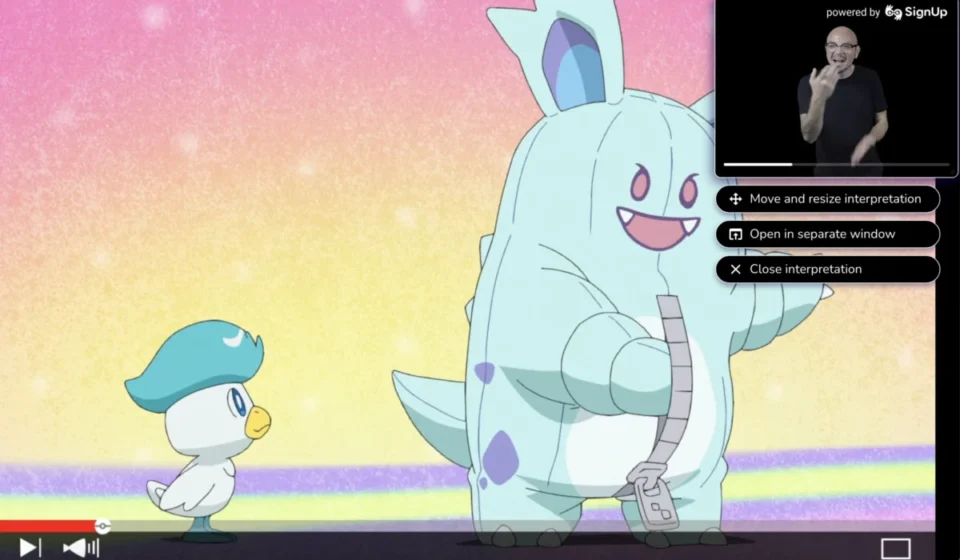
A quiet revolution is currently unfolding on streaming platforms, led by a partnership between major content providers and the accessibility startup SignUp Media. By integrating native American Sign Language (ASL) translation directly onto the screen, this initiative is transforming how Deaf audiences experience narrative content, moving beyond the limitations of text to provide a truly visual, emotive storytelling experience.
The Core Innovation: Moving Beyond Text
At the center of this movement is a shift in philosophy: accessibility should not require the audience to be proficient in a secondary written language. For many Deaf individuals, ASL is their primary language. When a viewer is forced to read captions, they are effectively performing a secondary cognitive task—translating English text—which can distract from the nuances, pacing, and emotional weight of the visual medium.
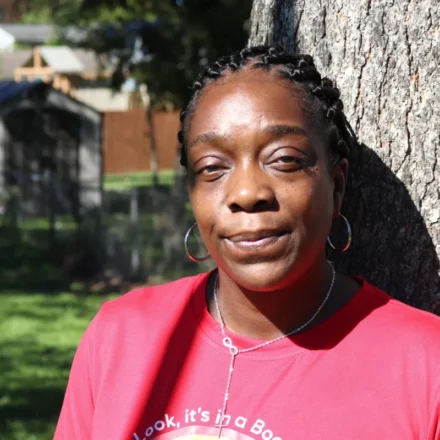
Minneapolis-based translator Everett Glenn, a pivotal figure in this new wave of accessibility, describes the experience of watching captions as "hard to match up with the emotion of what’s happening." As a native ASL user, Glenn notes that reading English text often feels like an exhausting chore that detracts from the cinematic experience. "I’m trying to figure out what they’re saying and reading it at the same time," he explains. By providing a dedicated box on-screen where a translator signs the dialogue in real-time, the platform allows the viewer to absorb the performance, the facial expressions, and the tone of the characters as a cohesive whole.
Chronology: A Rapid Evolution of Access
The trajectory of SignUp Media serves as a testament to the urgent demand for better accessibility tools.
- 2021: Mariella Satow, then just 17 years old, founds SignUp Media with a modest catalog of only three translated titles. The initiative is born from the realization that existing accessibility options were failing the youngest members of the Deaf community.
- 2022–2023: The platform begins to scale, attracting a growing user base. It gains traction for its focus on family-friendly and children’s content, where visual engagement is paramount.
- 2023: Everett Glenn joins the team, bringing his professional expertise as both a translator and a social worker. His early work includes translating films like Shang-Chi and the Legend of the Ten Rings and The Grinch Who Stole Christmas.
- 2025–2026: The partnership with global streaming giants—most notably Netflix—expands significantly. The library grows to over 70 titles. Glenn completes a landmark 45-hour project translating the Pokémon Horizons series, marking a significant milestone in the depth and scale of ASL-integrated content.
Supporting Data: The Literacy Gap
The necessity for this evolution is underscored by sobering statistics regarding education and language acquisition within the Deaf community. According to the World Health Organization (WHO), there are more than 430 million Deaf people globally, 34 million of whom are children.
Despite the widespread availability of closed captioning, the median literacy rate for Deaf high school graduates in the United States has stagnated at approximately a 4th-grade level for over a century. This phenomenon is closely linked to "language deprivation"—the lack of consistent, robust exposure to a fully accessible language during the critical years of early childhood development.
When children are denied access to a natural language like ASL, they struggle to map English text to the concepts they see on screen. By providing content in ASL, platforms like SignUp Media are not just providing entertainment; they are offering a vital tool for language reinforcement, helping to bridge the literacy gap by ensuring that the story is understood in the user’s native tongue.
The Art of Translation: Crafting Identity
The process of creating these translations is far more rigorous than simply signing the script. For Everett Glenn, a single episode of a show like Pokémon Horizons requires an intensive deep dive.

"I just try to have some background," Glenn says, describing his initial phase of watching the content to internalize the narrative arc. He then meticulously maps out how to convey specific vocabulary and emotional undertones. "I figure out how I want to sign something, and what the meaning is behind some of the vocabulary."
A major challenge, particularly in long-running series, is the creation of "sign names." In the Deaf community, sign names act as shorthand for people or characters, capturing their essence, appearance, or personality. For a franchise as vast as Pokémon, this presented a unique creative opportunity. Glenn had to invent distinct sign names for dozens of characters. For Pikachu, for example, he developed a sign that highlights the character’s iconic dimples. This level of detail allows Deaf children to build the same deep, personal connection to characters that hearing children form through hearing names spoken aloud.
Implications for the Future of Accessibility
The implications of this initiative extend far beyond the Deaf community. While the primary goal is to provide equitable access to those who are Deaf or hard-of-hearing, the platform is also seeing interest from hearing users who are eager to learn ASL.
"It’s an enjoyable way to have access to the language and to learn," says Glenn. By normalizing the presence of an ASL translator on-screen, these platforms are reducing the stigma surrounding disability and fostering a culture of inclusion.
However, the work is far from finished. Glenn, who is currently training as a mental health therapist, views his work with SignUp Media as an extension of his social work. He emphasizes that the goal is to provide a consistent, high-quality stream of language that children can rely on.
The Next Frontier
The partnership between streaming services and providers like SignUp Media signals a turning point in media technology. It moves the industry away from a "one-size-fits-all" approach to accessibility—where text is the only solution—and toward a model that respects the linguistic diversity of its audience.
As the library of ASL-translated content grows, it creates a feedback loop of demand. Parents are beginning to seek out content that includes ASL options, and production studios are beginning to see the value in producing inclusive media from the ground up.
"Every generation figures out a way to do it better," Glenn reflects. With over 25,000 monthly active users already utilizing the platform, the success of this initiative is proof that when technology is designed with the user’s lived experience in mind, it doesn’t just improve accessibility—it enriches the story for everyone.
As we look toward the future, the integration of ASL into mainstream media is likely to become a standard expectation rather than an exception. The "box in the corner" is becoming a portal, offering millions of children and adults the chance to see themselves, their language, and their stories reflected back at them with the nuance and clarity they have always deserved. By bridging the gap between sound and silence, these translators are not only breaking barriers; they are opening new worlds of imagination.