













































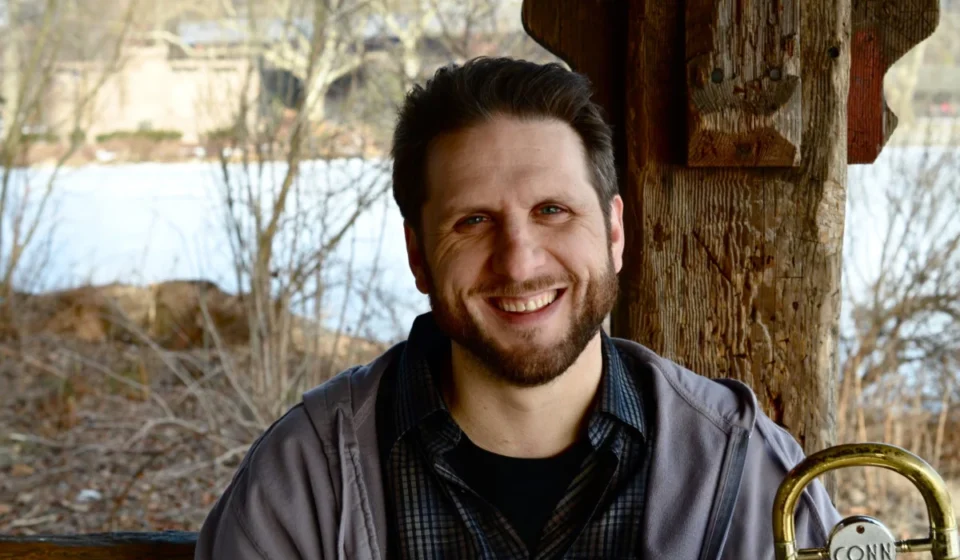

For JC Sanford, a life spent in the service of music—as a trombonist, composer, conductor, and educator—has always been defined by the pursuit of perfection. Throughout a career spanning nearly 56 years, Sanford has navigated the complexities of international music scenes, from the high-pressure bandstands of New York City to the academic rigor of Minnesota’s higher education circuit. Yet, as he stands at the helm of the Northfield Jazz Festival, entering its third year, he admits he has encountered a different kind of performance art: the logistical orchestration of public infrastructure.
"I never in my life thought I’d be booking a food truck, nevermind thinking, ‘OK, are two taco trucks enough, or should it be something else?’" Sanford says, offering a wry laugh. "Or that we needed more portable toilets than the ones already in the park, and that some need to be available for handicapped people. This stuff has been a real area of growth for me."
For Sanford, the festival is more than a concert series; it is a labor of love that bridges his past as an internationally recognized composer and his present as a pillar of the Northfield community.
The Evolution of a Cultural Cornerstone
The Northfield Jazz Festival has seen a meteoric rise in scope since its inception. Two years ago, the event was a modest, day-long affair. Supported by a grant from the Southeastern Minnesota Arts Council (SEMAC), it featured only three local groups. It was a proof-of-concept project, designed to see if the college town, located 40 miles south of the Twin Cities, could sustain a dedicated jazz showcase.
By the second year, partnering with the Northfield Arts Guild, Sanford tripled the festival’s budget. The event expanded to three days, incorporating talent from the Twin Cities and, crucially, a nationally recognized headliner. This year, the momentum has only accelerated. With additional funding secured from the Minnesota State Arts Board and Arts Experience, the festival has solidified its infrastructure. The 2026 iteration offers a broader musical palette, improved site management, and a robust lineup of workshops—all while maintaining the founder’s core mandate: the festival remains entirely free to the public.
A Chronology of the Weekend’s Rhythms
The festival’s structure is designed to encourage exploration, with venues scattered across the city to invite foot traffic.
Friday: Setting the Stage
The festivities kick off on Friday night at the Grand Event Center. Following last year’s success, the Strawberry Jazz Collective returns to open the festival. Known for their ability to balance vintage standards with the kind of high-energy aplomb that fills a dance floor, they will be joined by the Bend in the River Big Band. Sanford views this as a vital entry point for the community. "It is a great way to get the locals who know these folks to be more attuned to events happening the rest of the weekend with artists from the Twin Cities and elsewhere," he notes.
Saturday: National Acclaim and Local Venues
Saturday shifts the focus toward intimacy and technical mastery. The headline performance features pianist Christian Sands, a 37-year-old virtuoso and multiple Grammy nominee. For those familiar with Sands’ work—notably his tenure with the Christian McBride Trio—his presence is a significant coup for Northfield. Before his 7:30 p.m. performance at the First United Church of Christ, Sands will host a master class at 4:00 p.m., providing an educational bridge for aspiring musicians.
The day’s schedule is punctuated by performances from the duo of Judi Vinar and David Stanoch at the Northfield Arts Guild Theater, and the Dale Alexander Trio at the Northfield Public Library.
Sunday: The Park Tradition
Sunday returns to the festival’s outdoor roots at Way Park. Utilizing the "Showmobile"—a mobile stage unit—the afternoon features a trio of performances:

- 1:00 p.m.: The Michael Cain Trio.
- 2:20 p.m.: The Charles Gorczynsky Tango Quartet.
- 4:30 p.m.: The Inatnas Orchestra, featuring Sanford, his wife (composer Asuka Kikatani), and special guest trumpeter Russ Johnson.
The weekend concludes with a traditional jam session at Imminent Brewing, hosted by the Blue Ox Trio, bringing the community together for an informal, spontaneous finale.
Supporting Data and Artistic Depth
The festival is underpinned by a deep bench of talent that reflects Sanford’s professional network. The inclusion of the Inatnas Orchestra is particularly significant. Kikatani, whose recent work was premiered by Chicago’s Third Coast Percussion, is a formidable creative force in her own right. The addition of Russ Johnson—a veteran of both the New York and Chicago jazz scenes—adds a layer of professional polish that elevates the local ensemble.
Furthermore, the festival is prioritizing the next generation of performers. Vocalist Anya Menk, a former student of Sanford’s at Gustavus Adolphus, will be featured in the Inatnas set and will conduct her own masterclass on Sunday morning. This focus on mentorship and legacy building is a hallmark of the festival’s identity.
Official Perspectives: A "Town vs. Gown" Reconciliation
Northfield, a city of 20,000 residents—including roughly 5,000 students from Carleton and St. Olaf Colleges—is not immune to the classic "town versus gown" friction. Tensions over municipal tax bases, land usage, and the perceived insularity of academic institutions are common.
Sanford, however, sees the festival as a corrective measure. "It is definitely much more diverse than when I went to high school here," he observes. "But in a lot of ways, it hasn’t changed that much. It has always been a community that really appreciated the arts."
He credits the city’s Department of Tourism and various municipal departments for their collaborative spirit. By actively soliciting feedback from attendees—and learning from the "trial-by-fire" of bathroom logistics and food truck management—Sanford is building a sustainable model for community engagement. He views the colleges as partners, even if he remains an advocate for more intentional outreach from those institutions to the broader Northfield public.
Implications for the Future
The sustainability of the Northfield Jazz Festival hinges on its accessibility. Sanford is firm in his belief that charging for tickets would defeat the purpose of the event. "If we ever had to start charging people, I don’t think I could keep doing this," he says. "We want everybody to come, and any amount of money is a barrier to that."
By relying on grants and donor support, the festival maintains its democratic character. It serves as a case study for how small-to-mid-sized American towns can cultivate a high-art scene without sacrificing accessibility.
For Sanford, the festival also serves as a personal grounding mechanism. A decade after returning to his hometown to raise his daughter, he has seen his life evolve: from the excitement of his own professional career to the responsibilities of caring for his mother, who is currently living with Alzheimer’s. In this context, the festival becomes a celebration of continuity—a way to weave his own professional history into the fabric of the place he calls home.
As the music begins this Friday, the result of months of logistical headaches, grant applications, and meticulous planning will be on display. For the audience, it is a weekend of world-class jazz. For JC Sanford, it is proof that even in the smallest towns, the right combination of vision and persistence can create a stage large enough for the world to notice.