






















































The Inbox Revolution: AWS Launches "Pizza Bot" to Redefine Asynchronous AI Agent Management

In a significant shift in how enterprises conceptualize human-AI collaboration, Amazon Web Services (AWS) has open-sourced Pizza Bot, a self-hosted application designed to move AI agent management away from the constraints of live chat windows and into an asynchronous "inbox" environment. As AI agents evolve from simple chatbots into autonomous workers capable of handling complex, long-running tasks, AWS is positioning Pizza Bot as the infrastructure required to govern and track these background operations.
However, the release has sparked a nuanced debate among industry analysts. While the tool promises to enhance productivity by mimicking the way executives delegate work to human teams, experts warn that the transition from synchronous to asynchronous AI could introduce significant risks regarding governance, oversight, and operational complexity.
The Core Concept: From Chatbots to Autonomous Agents
For years, the industry standard for interacting with Large Language Models (LLMs) has been the "chat window." In this paradigm, a user submits a prompt, the model responds, and the user remains engaged until the task is complete. While effective for brainstorming or quick coding snippets, this model breaks down when applied to autonomous agents tasked with multi-step, hour-long workflows—such as scraping data, drafting reports, and updating CRM records.
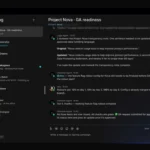
Pizza Bot changes this by introducing a management layer that treats AI tasks like email or project management tickets. By organizing interactions into threads, it allows users to delegate a task, walk away, and return to an "inbox" that displays the status of the work.
The Inbox Architecture
The interface is organized into three primary tabs:
- All: A comprehensive history of every task, providing a granular audit trail of messages, tool usage, and intermediate work.
- Unread: A prioritized list of completed tasks that await human review.
- Action: A critical dashboard for tasks that have hit a "pause" state, requiring specific human input or approval before the agent can proceed.
By moving to this model, AWS aims to solve the "attention tax" currently imposed by AI. Instead of waiting for an agent to finish, a user can hand off a complex request, let the system manage the state, and engage only when a decision is required.
Under the Hood: The Technical Foundation
Pizza Bot is built on a robust, industry-standard stack designed to provide persistence for AI agents. AWS has leaned heavily into the LangChain ecosystem to ensure the application remains flexible and developer-friendly.
Key Architectural Components
- Stateful Runtime: The application utilizes LangGraph, which allows agents to checkpoint their progress. Unlike a traditional chat session that vanishes once the browser is closed, Pizza Bot preserves the agent’s messages, tool activities, and state.
- Model Agnosticism: Developers are not locked into a single provider. The platform supports Anthropic, OpenAI, Google Gemini, and Amazon Bedrock. Furthermore, it supports local execution via Ollama, allowing organizations with strict data sovereignty requirements to run models on-premises.
- MCP Integration: By leveraging the Model Context Protocol (MCP), Pizza Bot can connect to a variety of external services, allowing agents to browse the web, interact with local files, and trigger specialized sub-agents.
This design is intentionally modular. By separating the user interface from the agent runtime and the model provider, AWS is betting that developers will prefer a "Lego-block" approach to building autonomous agent systems rather than relying on a proprietary, "black-box" SaaS solution.
Implications for Enterprise Productivity
The shift toward an asynchronous model has the potential to fundamentally alter the economics of corporate labor. Bhupendra Chopra, Chief Revenue Officer at Kanerika, suggests that the "inbox" model mirrors the hierarchical delegation practiced in modern management.
"A chat interface requires a person’s attention throughout the task, while an inbox brings them in only when their judgment is needed," Chopra notes. "Coding agents have already demonstrated this model, where an engineer assigns an issue and reviews the resulting pull request. Pizza Bot extends that approach to tasks such as meeting preparation and follow-ups."
By allowing for the batching of work, enterprises can potentially increase the throughput of their AI deployments. Instead of one human supervising one agent in real-time, one human can effectively manage a "fleet" of agents, checking in only when they hit an exception or require a final sign-off.
The Governance Hurdle: Challenges to Adoption
Despite the technical elegance of the solution, analysts are sounding a note of caution regarding the reality of enterprise adoption. The primary concern is that "open-source" does not equate to "ready-to-deploy."
The Integration Tax
While Pizza Bot provides the framework, the actual value for an enterprise lies in connecting the agent to internal systems like SAP, Salesforce, or proprietary ERPs.
"Integration is where most of the money in an enterprise agent deployment goes," says Chopra. "Each of those systems needs a connector that someone has to build, secure, and maintain."
The Operational Burden
Unlike a managed service (SaaS), Pizza Bot is self-hosted. This shifts the entire lifecycle management—including security patching, scalability, and infrastructure maintenance—onto the internal IT teams of the enterprise. Manoj Chandra Jha, principal analyst at Nord-IQ Research, highlights the lack of an enterprise-grade Service Level Agreement (SLA). "The integration and operational burden ultimately falls on enterprises, who would be responsible for running, securing, and maintaining the open-source software themselves."
Risks of the "Out of Sight, Out of Mind" Model
Perhaps the most significant criticism of the asynchronous inbox approach is the risk of reduced visibility. In a live chat, a user can see an agent "going off the rails" and intervene immediately. In an asynchronous environment, the agent works in the background, potentially compounding errors over several hours before a human ever checks the "Unread" tab.
The Dangers of Asynchronicity
- Approval Fatigue: If an agent sends dozens of requests for minor approvals, users may begin to "rubber stamp" them without careful inspection, negating the purpose of human oversight.
- Information Decay: There is a significant time lag between an agent initiating a task and a human reviewing it. In that window, external data (such as CRM availability or calendar slots) may change, rendering the agent’s proposed action obsolete or incorrect.
- Hidden Costs: Because agents are "always on," they may continue to consume API tokens and compute resources on tasks that have already become irrelevant, leading to unexpected cloud costs.
Phil Fersht, CEO of HFS Research, warns that these risks could make problems harder to catch early. "When hundreds of tasks are running quietly in the background, users may not see an agent making mistakes until the task is complete or an exception requires their attention."
Strategic Roadmap: Who Will Adopt It?
Given these trade-offs, analysts anticipate a tiered adoption curve.
Phase 1: Bottom-Up Innovation
Adoption will likely begin with technical teams and platform engineers. These groups are already familiar with the LangChain ecosystem and are looking for ways to scale their experimentation with agents. For them, the lack of an SLA is a fair trade-off for the control and flexibility that an open-source, self-hosted framework provides.
Phase 2: Targeted Business Use Cases
Enterprises may adopt Pizza Bot for low-risk, high-volume tasks that do not involve sensitive financial or regulatory data. Tasks such as internal research, document summarization, or automated meeting follow-ups serve as excellent "sandbox" environments for this technology.
Phase 3: Regulated Industries
Industries such as finance, healthcare, and law are likely to remain cautious. These sectors require rigorous, built-in governance, auditability, and compliance features that an out-of-the-box open-source tool may not currently provide. For these organizations, the "inbox" model may eventually become standard, but only after it has been wrapped in enterprise-grade security and observability layers.
Conclusion: A Tool, Not a Solution
AWS’s Pizza Bot is a clear signal that the industry is maturing beyond the "chatbot" phase of AI. By providing an interface for asynchronous work, AWS has identified the next logical bottleneck in enterprise AI adoption: human attention.
However, the transition to an autonomous, inbox-driven workflow is not a panacea. It requires a shift in how enterprises manage risk. As organizations begin to deploy Pizza Bot, success will depend less on the software itself and more on the design of the human-in-the-loop processes surrounding it. To avoid the traps of approval fatigue and invisible errors, enterprises must be disciplined about where they place their "approval checkpoints" and how they monitor the health of their autonomous agents.
Pizza Bot offers a compelling vision of the future—one where AI agents act as diligent, tireless assistants working in the background—but reaching that future will require significant investment in internal engineering, integration, and a new, more rigorous philosophy of AI governance.