





















































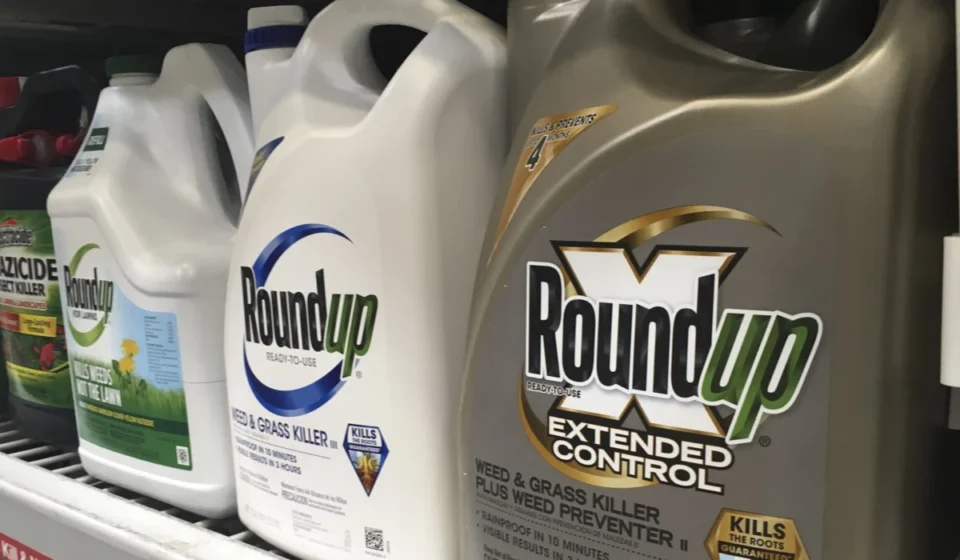
The $7.25 Billion "Sweetheart Deal": Mounting Legal Resistance Against Bayer’s Roundup Settlement

The landscape of American toxic tort litigation is currently defined by a high-stakes confrontation in a St. Louis courtroom, where a proposed $7.25 billion class-action settlement regarding Bayer’s flagship herbicide, Roundup, is facing an existential challenge. Critics, led by prominent plaintiffs’ attorneys, are characterizing the deal not as a resolution for victims, but as an unconstitutional "sweetheart deal" designed to insulate the corporate giant from meaningful liability while prioritizing massive legal fees over the health and recovery of cancer patients.
The legal maneuverings, which have unfolded throughout May 2026, represent a pivotal moment for tens of thousands of individuals who allege that long-term exposure to glyphosate-based herbicides—the active ingredient in Roundup—caused them to develop non-Hodgkin lymphoma (NHL). As the judicial process grinds forward, the case has become a lightning rod for broader questions regarding corporate accountability, the rights of future plaintiffs, and the integrity of class-action settlements.
The Core of the Controversy: A Constitutional Violation?
On May 21, 2026, a scathing court filing in Missouri’s Circuit Court for the City of St. Louis laid out a fundamental objection to the settlement agreement proposed by Bayer and a coalition of plaintiffs’ attorneys. The filing argues that the agreement "runs roughshod over basic due process rights" and effectively strips millions of current and future Roundup users of their constitutional right to seek damages through traditional jury trials.
The heart of the objection lies in the deal’s structure. While it earmarks $675 million for the legal teams that negotiated the agreement, critics argue that the actual payouts to cancer victims are "paltry." More controversially, the settlement attempts to create a "futures" subclass—a legal mechanism that would bind individuals who have not yet developed cancer, or even those not yet born, to the terms of the agreement simply because they were exposed to the product.
"Monsanto and class counsel walked into court hand in hand to ram through a deal that gifts $675 million to class lawyers while leaving present and future cancer victims with a pittance," said attorney Ashley Keller, a vocal critic of the deal who previously argued before the U.S. Supreme Court on related Monsanto litigation. The filing goes further, suggesting the deal serves as a "laundering" scheme, intended to shield Bayer from the financial volatility of individual jury trials.
Chronology of the Dispute
- 2018: Bayer acquires Monsanto, inheriting the massive liability associated with Roundup and its primary ingredient, glyphosate.
- 2016–2026: U.S. District Judge Vince Chhabria oversees a massive consolidation of Roundup litigation in California, frequently expressing skepticism toward the ethical and legal soundness of various settlement attempts.
- February 2026: Bayer and a select group of plaintiffs’ attorneys unveil a proposed $7.25 billion nationwide class-action settlement. The proposal receives rapid, preliminary approval from a Missouri state judge.
- April 2026: Ashley Keller argues a critical glyphosate-related case before the U.S. Supreme Court, setting the stage for a ruling that could fundamentally alter the landscape for future litigation.
- May 21, 2026: Legal teams representing objecting plaintiffs formally file an opposition in St. Louis, alleging the settlement is unconstitutional.
- May 22, 2026: A "notice of removal" is filed, attempting to shift the state-level proceedings into federal court to disrupt the settlement’s momentum.
- June 4, 2026: The deadline for Roundup users to "opt out" of the proposed settlement.
- Late June 2026 (Expected): The U.S. Supreme Court is expected to issue a ruling regarding the Federal Insecticide, Fungicide, and Rodenticide Act (FIFRA) and the ability of states to hold chemical companies liable for lack of cancer warnings.
- July 2026: A final approval hearing is scheduled in Missouri to determine the ultimate fate of the settlement.
Supporting Data and Legal Arguments
The objection filed by Keller and the Tennessee-based firm Frazer PLC emphasizes that the current plan is "comically difficult" for injured parties to opt out of. Under the proposed terms, victims must navigate a labyrinthine series of administrative hurdles to preserve their right to sue individually. Failure to complete these steps results in automatic inclusion in the class, effectively silencing the claimant.
Furthermore, the "futures" subclass is viewed by legal scholars as legally unprecedented. By attempting to bind millions of people who have not yet manifested symptoms, the settlement acts as a perpetual liability shield for Bayer. Critics argue that this violates the principles of standing, as a person who has not been injured cannot effectively waive their future rights to a jury trial in a way that satisfies the standards of the U.S. Constitution.
The "Notice of Removal" filed on May 22 attempts a novel legal strategy: it argues that the settling plaintiffs’ attorneys and Bayer are so "entirely aligned" that they should be considered partners. By framing the current plaintiffs’ attorneys as de facto defendants, the filing seeks to move the case to federal jurisdiction in California. If successful, this would bring the matter under the oversight of Judge Vince Chhabria, who has previously described the proposed settlement as "filthy" and "mind-boggling."
Official Responses and Corporate Strategy
Bayer remains steadfast in its defense of the settlement. In a series of public statements, the company has characterized the objections as typical of large-scale, nationwide litigation and expressed confidence that the deal will withstand judicial scrutiny.
"We remain confident that the long-term and well-financed proposed class settlement plan, which is supported by plaintiff law firms representing thousands of potential class members, is fair to all claimants, and warrants approval by the court," a Bayer spokesperson stated. The company argues that without this settlement, the weight of thousands of pending cases could push the herbicide business toward bankruptcy, ultimately leaving victims with nothing.
Chris Seeger, a lead attorney for the class, dismissed the "notice of removal" as a "baseless delay tactic." He maintains that the settlement is the only viable path to providing "guaranteed compensation" for victims who have been waiting over a decade for resolution, particularly given the unpredictability of the upcoming Supreme Court ruling.
The Shadow of the Supreme Court
The urgency surrounding the June 4 opt-out deadline is exacerbated by the looming Supreme Court decision. The Court is currently deliberating on whether federal law, specifically the Federal Insecticide, Fungicide, and Rodenticide Act (FIFRA), preempts state-level failure-to-warn claims.
Bayer’s legal team is betting on a ruling that would effectively render future lawsuits regarding Roundup’s cancer risk impossible if the EPA has not explicitly mandated such warnings. By leveraging this uncertainty, the company is effectively pressuring plaintiffs: settle now for a guaranteed, albeit potentially small, payment, or risk a Supreme Court ruling that could strip away the right to sue entirely.
Implications for Future Tort Law
The outcome of this battle in Missouri will resonate far beyond the specific case of Roundup. It serves as a test case for whether major corporations can utilize class-action settlements to preemptively clear the deck of future, unknown liabilities.
If the settlement is approved, it could establish a precedent where companies facing mass tort litigation can "buy their way out" of accountability by securing a broad release from liability, even for injuries that have not yet occurred. If the objections succeed, it may signal a judicial turning point that restores the power of individual litigation and forces companies to address the underlying toxicity of their products rather than simply managing the financial consequences through legal settlements.
As the July hearing approaches, the nation’s legal community watches closely. The question at hand is not just about the health of those who used Roundup; it is about the resilience of the American justice system against the influence of corporate financial engineering. For the cancer victims caught in the middle, the choice is a harrowing one: accept a compromise that some argue is an insult to their suffering, or hold out for a day in court that may never come.