






















































A Constitutional Pivot: How Minnesota Aims to Unlock Millions for Public Schools Without Raising Taxes

By [Your Name/Journalistic Byline]
In an era defined by political polarization and constant debates over tax burdens, Minnesota voters will face a rare, bipartisan proposition this November. The question on the ballot is simple, yet its implications are profound: Should the state amend its constitution to allow schools to tap into a long-standing financial reservoir that has been quietly growing since the days of the covered wagon?
The proposal concerns the Permanent School Fund, a state-managed financial endowment that dates back to Minnesota’s entry into the Union in 1858. With a balance of $2.3 billion as of 2025, the fund has served as a silent partner in public education for over 160 years. However, due to archaic constitutional restrictions, the amount of money that can be distributed to schools is severely capped. As districts across the state grapple with rising costs, shrinking budgets, and the political toxicity of property tax levies, lawmakers are asking the public to unlock a larger share of this investment interest—without raising taxes by even a single cent.
The Genesis of the Fund: A Legacy of Land and Learning
To understand the current proposal, one must first understand the historical mechanism that created it. When Minnesota was granted statehood in 1858, the federal government set aside millions of acres of public land to be held in trust for the benefit of public schools. The logic was visionary: as the state developed, these lands—rich in timber, minerals, and potential for development—would generate revenue that could be reinvested into the education of the next generation.
For over a century and a half, the Permanent School Fund has been fed by timber sales, mining royalties, and land transactions. These activities transformed vast swaths of wilderness into a multi-billion-dollar endowment. However, the constitutional framework governing these funds was written for a different century. Under current rules, the state is permitted to distribute only a small fraction of the interest generated by these investments to local school districts.
While the fund itself has ballooned to $2.3 billion, its utility has been artificially constrained. Legislators argue that while the "principal" must remain protected to ensure future stability, the current distribution cap—set at 2.5%—is unnecessarily conservative given modern investment returns, which have averaged 8% over the past decade.
The Legislative Push: A Rare Bipartisan Accord
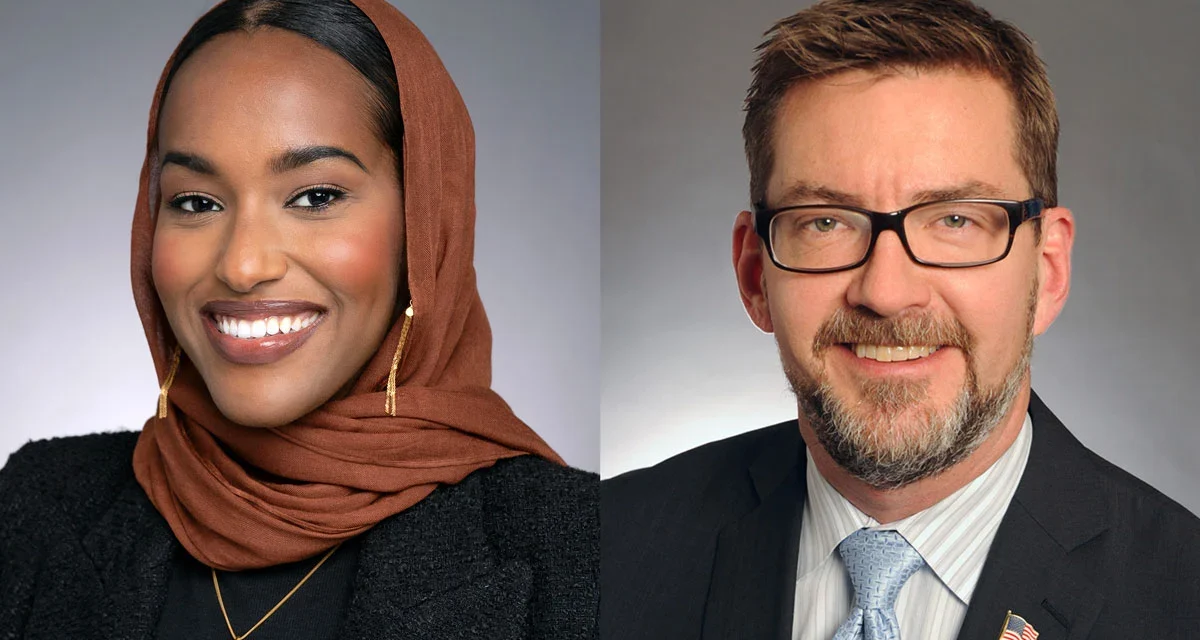
The push to modernize this fund has found an unlikely championing team in Senator Mary Kunesh (DFL-New Brighton) and Representative Spencer Igo (R-Wabana Township). Their collaboration on this constitutional amendment represents a rare moment of unity in a state Capitol that is often divided along strict party lines.
Senator Kunesh, a veteran educator, views the amendment as a common-sense solution to a persistent problem. "I think everybody recognizes the need for additional funding for public schools," Kunesh noted during the bill’s advancement. "This is a unique way to provide that support without putting an additional burden on our taxpayers."
Representative Igo, whose district includes parts of the Iron Range where much of the original trust land is located, emphasizes the fiscal responsibility of the measure. "Voting yes in November neither raises property taxes nor asks local residents to approve a levy or referendum," Igo said. By increasing the distribution rate from 2.5% to approximately 4.5%, the state can provide an immediate cash injection to school budgets while still allowing the principal of the fund to grow through market returns.
Supporting Data: The Case for Increased Distributions
The financial argument for the amendment relies heavily on data provided by a state task force convened in 2024 to review the fund’s performance. The task force’s findings were stark: the fund’s growth has consistently outperformed the state’s ability to distribute it to classrooms.
With an 8% average return on investments over the last ten years, the current 2.5% distribution cap is essentially causing the fund to grow faster than it can fulfill its primary purpose: funding education. Proponents argue that the fund is currently "over-saved" at the expense of students who are sitting in classrooms today.

The Impact on the Classroom
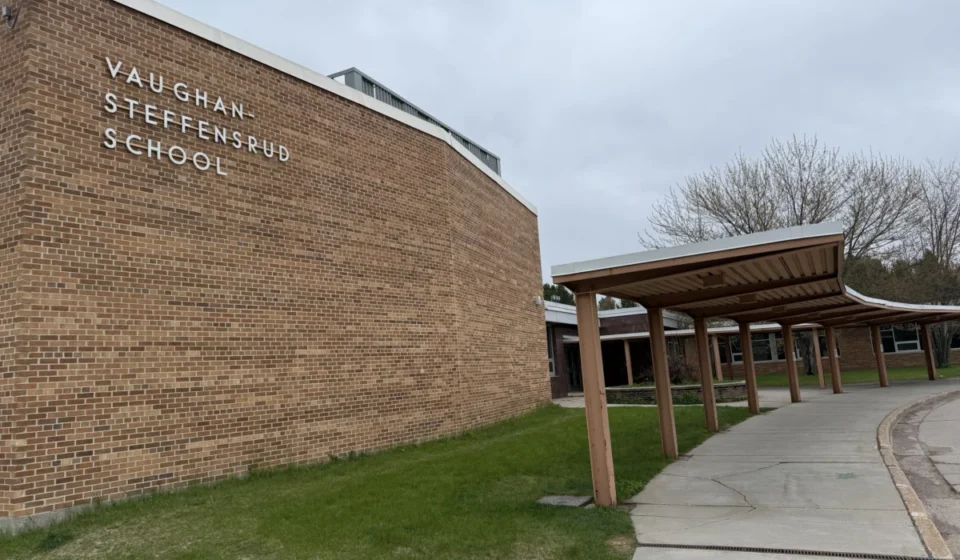
Currently, the annual distributions vary significantly depending on the size of the school district. Large urban districts, like Minneapolis Public Schools, received nearly $2 million in 2025. While that figure seems substantial, it is a drop in the bucket compared to total operating costs. For smaller, rural districts, the annual check is smaller but arguably more vital.
The practical impact of the proposed 4.5% distribution is tangible. Using a hypothetical district with 2,000 students as an example, the current payout of $65 per pupil would rise to approximately $95 per pupil. That $30,000 to $60,000 difference, while not a "silver bullet" for school budgets, could be the difference between maintaining a critical elective program or losing a staff member during a period of consolidation.
Implications for Greater Minnesota and Beyond
The implications of this change are particularly acute in Greater Minnesota, where school districts have struggled to pass property tax levies and referendums. As inflation drives up the cost of everything from school bus fuel to classroom technology, many districts have been forced to consolidate, cut programs, or rely on aging facilities.
Fred Nolan, the interim executive director of the Minnesota Rural Education Association, notes that the current climate makes local tax increases an extremely difficult sell. "Levies and referendums have been tough sells in Greater Minnesota," Nolan said. "Any bit of extra funding can relieve pressure. It might allow districts to not cut as much, to reduce class sizes, or to afford essential software and curriculum materials."
For the Iron Range, where the roots of the school trust land remain physically present, the initiative carries a sentimental weight. For Rep. Igo, the goal is long-term sustainability. "My dream for the school trust fund is that one day we’ll see it providing $300 to $400 per pupil across this state," he said. "Our forefathers who founded our state would be smiling knowing that we actually accomplished the goal of funding public education."
The Path to November: Educating the Electorate
While the proposal enjoys bipartisan legislative support, its path to becoming law is not guaranteed. Because it requires a constitutional amendment, it must clear a high bar: it needs a majority of "yes" votes from all ballots cast in the general election.
This is where the political reality of the "blank ballot" comes into play. In Minnesota, if a voter skips the amendment question, it is counted as a "no" vote. This quirk of election law makes voter education the top priority for proponents. Throughout the summer and fall, Kunesh, Igo, and a coalition of school advocates plan to blanket the state with information, ensuring that voters are aware that the question exists and understands what it means for their local schools.
The history of such amendments in Minnesota is mixed but generally positive. Since statehood, Minnesotans have voted on constitutional amendments 213 times, approving 120 of them. Proponents are confident that because this particular measure directly benefits local schools without asking for a tax hike, it will resonate with a broad spectrum of voters.
A Vision for the Future
The debate over the Permanent School Fund is, at its core, a debate about the state’s priorities. By unlocking these funds, Minnesota has the opportunity to honor the intent of its founders while addressing the very real, modern-day challenges facing its school districts.
Critics might worry about the long-term health of the fund, but the data suggests that a 4.5% distribution rate is well within the realm of fiscal safety. By maintaining a robust investment strategy, the state can ensure that the endowment continues to provide for students not just in 2026, but for the next 160 years.
As the election approaches, the message from the Capitol is clear: the money is there, it is growing, and it is intended for the students. Whether the voters of Minnesota choose to unlock that potential remains to be seen, but the debate serves as a rare reminder that even in a polarized environment, there are still avenues for progress that transcend party lines. For the students of Minnesota, the outcome of this vote could mean a future with slightly better resources, more stable programs, and a promise kept by the state’s early architects.