























































By [Your Name/Journalistic Desk]
The legal landscape of American professional sports has lost one of its most influential architects. David Doty, the long-serving U.S. District Judge for the District of Minnesota, passed away on Saturday at the age of 96. His death, confirmed by district officials just three days shy of his 97th birthday, marks the end of an era for the National Football League (NFL) and the federal judiciary alike.
While his resume included thousands of civil and criminal cases over a four-decade tenure, Judge Doty’s legacy is inextricably linked to the gridiron. For nearly 30 years, he served as the primary arbiter of NFL labor disputes, effectively acting as the league’s "shadow commissioner" for legal affairs. His 1992 ruling effectively dismantled the league’s restrictive labor practices, setting the stage for the modern era of free agency and the parity that has transformed the NFL into a multibillion-dollar global juggernaut.
A Life of Service: From the Marines to the Bench
Before he became a titan of the courtroom, David Doty was defined by a commitment to public service. A veteran of the United States Marine Corps, he carried the discipline and stoicism of his military background into his legal practice and, eventually, his judicial career.
After serving his country, Doty turned his attention to the law, earning his degree from the University of Minnesota in 1961. He spent the next 26 years in private practice, honing the analytical precision that would later define his time on the federal bench. In 1987, President Ronald Reagan appointed him to the U.S. District Court for the District of Minnesota.
Those who knew him describe a man whose professional gravity was balanced by a rare personal warmth. Whether dealing with high-powered league executives or the staff who maintained his chambers, Judge Doty was noted for his consistent, egalitarian demeanor.
"Judge Doty devoted his entire professional life to serving others," said Chief U.S. District Judge Patrick Schiltz. "Despite his remarkable accomplishments, he was a genuinely humble man. He treated everyone—from the guy who shined his shoes to Justices of the U.S. Supreme Court—the same way: with kindness and compassion and a sincere interest in their lives."
Chronology of a Legal Transformation
Judge Doty’s influence on the NFL did not begin with a single act, but rather a series of interventions that recalibrated the balance of power between labor and management.
The "Plan B" Era (1987–1992)
The spark for the transformation of professional football was the 1987 player strike. The dispute brought to light the NFL’s "Plan B" system, a restrictive mechanism that allowed teams to protect 37 players from the open market, effectively suppressing player salaries and mobility.
When the NFL Players Association (NFLPA) sued, the case landed on Judge Doty’s docket. Initially, Doty displayed a cautious approach, urging both parties to negotiate rather than relying on judicial fiat. However, as the league remained steadfast, Doty’s patience wore thin. In 1990, he granted players the right to pursue individual antitrust litigation, a move that signaled the end of the owners’ unchecked authority.
The 1992 Ruling and the Reggie White Era
The climax of the labor battle arrived in 1992. After a grueling three-month trial, a jury of eight women struck down the league’s remaining restrictive practices. Doty, following the jury’s lead, ruled in favor of the players, paving the way for unrestricted free agency.
The immediate result was the 1993 class-action lawsuit led by Hall of Famer Reggie White. The resulting settlement was historic. It introduced a salary cap—a concession to owners worried about skyrocketing costs—in exchange for true free agency. This deal fundamentally altered the career trajectory of stars like White, who famously left the Philadelphia Eagles for the Green Bay Packers, subsequently leading the latter to a Super Bowl title.
The "Doty Court": Maintaining the Balance
Following the 1993 settlement, Judge Doty retained jurisdiction over the implementation of the agreement. For the next three decades, whenever the league and the players union reached an impasse in arbitration, they found themselves back in Minneapolis.
His courtroom became the final word on everything from high-stakes contract disputes to sensitive player disciplinary actions. His approach was characterized by a "down-to-earth" style; he was known for being pleasant, yet he possessed the authority to deliver a stern rebuke to attorneys who drifted from the merits of their arguments.
Key Rulings and Interventions:
- The Michael Vick Case (2008): In a high-profile dispute, the Atlanta Falcons sought to recover over $16 million in bonuses from quarterback Michael Vick after his imprisonment for a dogfighting ring. Judge Doty ruled in favor of Vick, preventing the recoupment and setting a precedent for how "bonus" money is handled in player contracts.
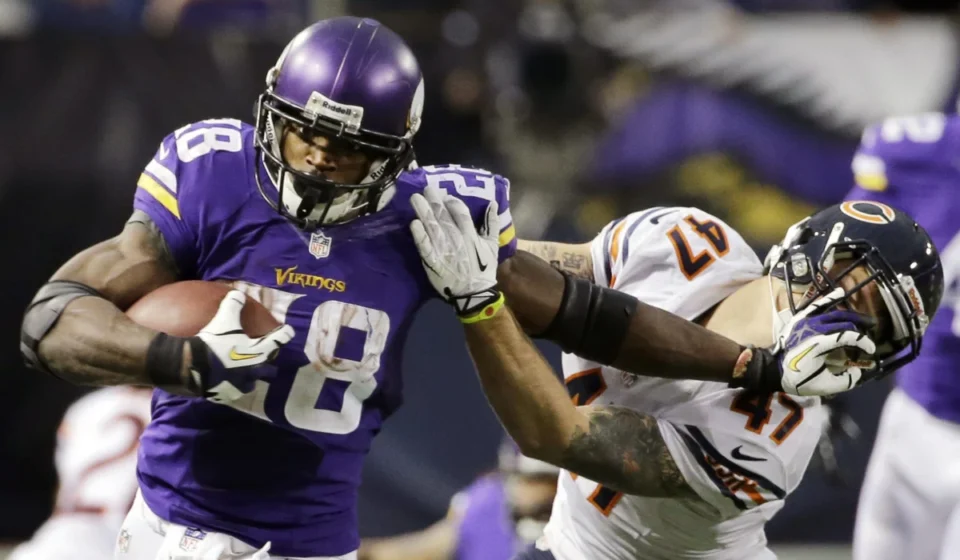
- The Adrian Peterson Suspension (2015): During the fallout of the domestic violence case involving Minnesota Vikings star Adrian Peterson, Doty sided with the NFLPA. He invalidated the league’s disciplinary ruling, asserting that the commissioner’s office had overstepped its bounds in the appeals process.
- The Collusion Cases: While Doty was often seen as an ally to the players’ rights, he was not a rubber stamp. In 2012, he denied a motion to reopen the White agreement in a collusion case, demonstrating his commitment to the letter of the law over the desires of either party.
Official Responses and League Legacy
The NFL, an organization that often found itself on the receiving end of Judge Doty’s rulings, issued a statement acknowledging his immense impact.
"Judge Doty devoted his life to public service and the law, presiding over NFL-related litigation for many years during his distinguished career," the league said. "We express our sincere condolences to his family, friends and colleagues."
The professional respect Doty garnered was bipartisan and cross-industry. He managed to navigate the toxic politics of NFL labor relations without ever appearing to lose his judicial independence. His ability to oversee a multibillion-dollar industry’s legal machinery while remaining a local, community-oriented jurist is a rarity in the modern federal judiciary.
Implications: The End of an Era
The passing of Judge David Doty signals a shift in how the NFL handles its internal legal conflicts. For 33 years, his presence was a constant. Whether it was the implementation of the salary cap or the evolution of player conduct policies, the "Doty Court" was the bedrock upon which the league’s competitive parity was built.
The league’s current popularity—its status as the most-watched and most-profitable entertainment product in America—is directly tied to the competitive balance that began in Doty’s courtroom. By forcing the NFL to move away from a closed, monopolistic system, he helped turn a regional sport into a modern economic engine.
As the legal community reflects on his life, the consensus is clear: Judge Doty was a man who understood that the law is not merely a set of statutes, but a living tool for balancing power. From his time as a Marine to his final days on the bench, he served with a quiet, unwavering integrity.
"I will particularly miss his sense of humor," Judge Schiltz noted. "He always had a smile on his face."
While the cases will now move to other chambers and the players will continue to sign contracts in a market he helped create, the shadow of Judge David Doty will loom over the National Football League for years to come. He was, in every sense, the referee who ensured that the game was played according to the rules, both on and off the field.