
































In an era defined by political instability and the persistent echo of state-sponsored violence, the Twin Cities theater and dance scene has emerged as a critical laboratory for societal reflection. Three recent productions—Marcie R. Rendon’s Sweet Revenge, Moriah Evans’ }[¦/+^%<>¬£¥$&@!!!!^^^], and Ananya Dance Theatre’s Prem—are not merely performances; they are visceral examinations of how historical trauma manifests in the present day. By weaving together the threads of institutional critique, community resistance, and personal catharsis, these works argue that the most vital art today must possess an uncompromising, decisive point of view.
The Haunting Legacy of Boarding Schools: Sweet Revenge at the Red Eye Theater
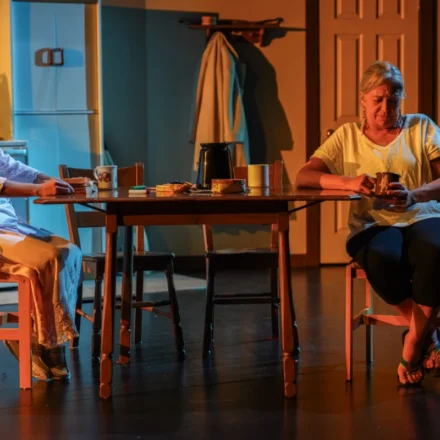
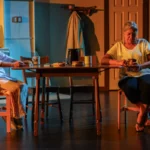
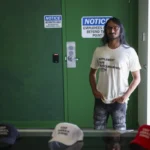
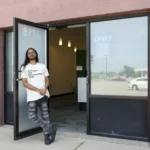
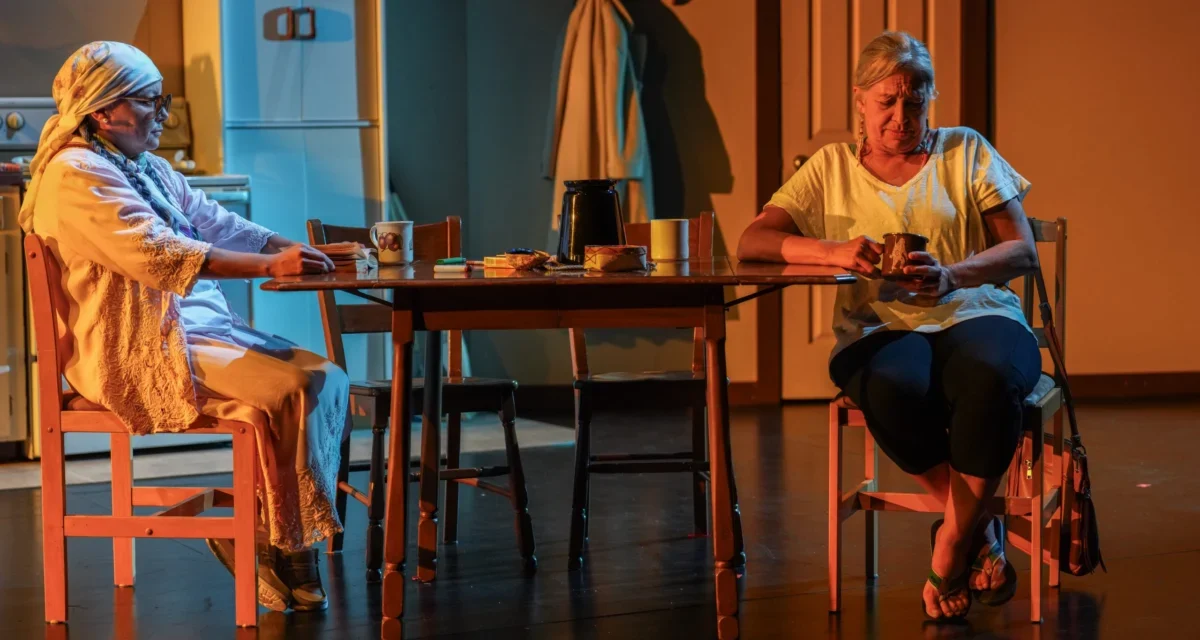
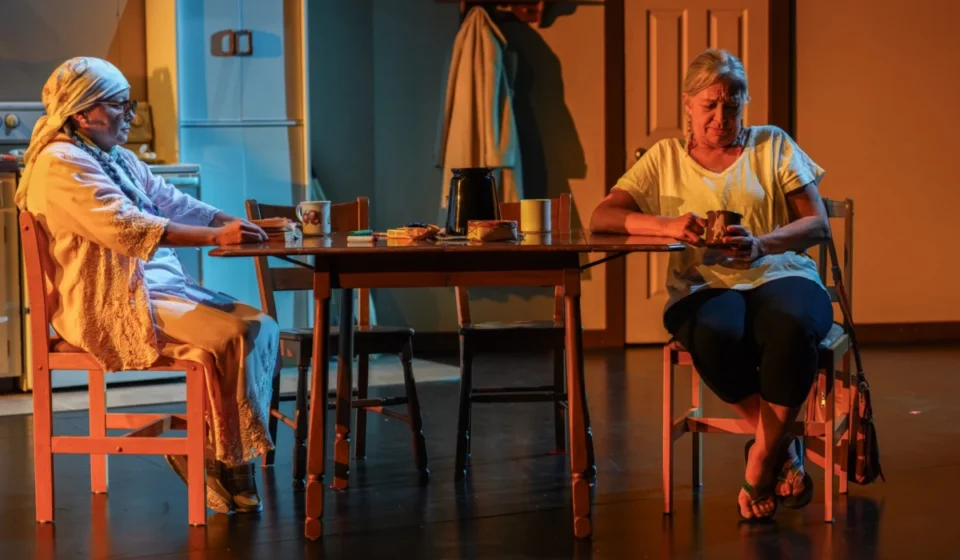
The stage at the Red Eye Theater currently serves as a conduit for the intergenerational trauma experienced by Native American families. In Sweet Revenge, written by Marcie R. Rendon and directed by Sequoia Hauck, the audience is introduced to Maggie, played with a weary, no-nonsense confidence by Fern Renville.
Maggie’s life, while outwardly stable—she runs a business providing spiritual and cultural care and raises two grandchildren—is haunted by the past. The play’s central conflict is triggered by a seemingly innocuous, yet deeply painful, symbol: the recurring tune of an ice cream truck that passes by her home every thirty minutes. For Maggie and her mother, Granny Josephine (Oogie Push), the melody is not a sign of childhood whimsy, but a jarring reminder of the cultural erasure inflicted by American Indian boarding schools. These institutions were designed specifically to strip Native children of their language, heritage, and, ultimately, their innocence.
The production, presented by the Mni Giizhik Theatre Ensemble and Exposed Brick Theatre, balances domestic realism with a macabre mystery: the serial killing of ice cream truck drivers. As Detective John Wiisagi-Mitigomizh (Brian B. Joyce) investigates the murders, the narrative explores the hypocrisies of the local urban Native community. One poignant sequence involves three professional women who seek Maggie’s spiritual expertise for a community event. Overwhelmed by their careers, they attempt to purchase "shortcuts" to tradition—buying prayer ties and food that they hope to present as their own labor. Maggie’s response—a blend of sharp-tongued business savvy and gentle spiritual guidance—highlights the tension between commodified culture and the lived reality of ancestral practice.
While the production faced opening-night hurdles, including minor logistical staging choices and a surreal "math problem" regarding the endless supply of doomed ice cream truck drivers, the emotional core remains potent. The integration of shadow puppetry by Ches Cipriano successfully bridges the gap between the mundane suburban setting and the ghostly, historical weight that presses down on the characters.
The Geography of Rage: Moriah Evans’ Institutional Critique
If Sweet Revenge addresses trauma through narrative and dialogue, Moriah Evans’ [¦/+^%<>¬£¥$&@!!!!^^^]{,* at the Walker Art Center addresses it through the physical architecture of the institution itself. The title, a chaotic string of symbols often used in comics to represent an unspoken curse word, sets the tone for a piece that interrogates the "geography of rage."

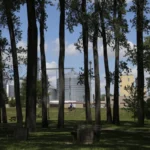
The performance unfolded across the Walker’s campus, utilizing both outdoor spaces and the controlled environment of the theater. Dancers, clad in neon-bright rain gear, moved against the wind on the hill and rooftops, creating a visual contrast to the rigid, sometimes militaristic movements they adopted once they entered the building. This shift was deliberate. Evans, who views the traditional proscenium stage as an "instrument of patriarchy," used her choreography to expose how institutions—be they museums or states—act as mechanisms of surveillance and confinement.
During the performance, dancers engaged in a frantic cycle of collapsing, screaming, and gyrating. The text they recited was harrowing, drawing direct parallels between the institutionalized violence of the past and contemporary tragedies, including the deaths of George Floyd and Renee Good. By forcing the audience to watch from fixed positions while the dancers occupied balconies and jagged platforms, Evans turned the theater into a panopticon, challenging the viewer to acknowledge their own role in the structures of authority. In the post-show talkback, Evans was clear: "I often think choreography is a violent project." Her work serves as a stark reminder that even in the most refined cultural spaces, the ghosts of state-sponsored violence remain present.
Collective Healing and the Resistance of Prem
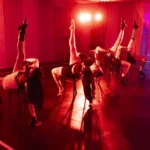
While Evans dismantles structure, Ananya Dance Theatre’s Prem seeks to reconstruct the community through the lens of survival. Directed by Dipankar Mukherjee and choreographed by Ananya Chatterjea, the work moves away from traditional character-driven storytelling, instead functioning like a Greek chorus that reflects the collective consciousness of those impacted by systemic oppression.
Prem (a word meaning "love," but in this context, signifying an occupation) frames its narrative as a progression through catastrophe, grief, and ultimately, community joy. The piece is a direct response to recent historical markers in Minnesota, including the 2020 uprisings and the federal immigration crackdowns known as "Operation Metro Surge."
A pivotal moment occurs when guest performer Mankwe Ndosi sings, "We make the future together" and "no one is coming to save us because we are the ones that we need." This mantra encapsulates the show’s philosophy: that in the face of state propaganda and police-led narratives, the only reliable path forward is horizontal, community-based care. The choreography emphasizes cycles, showing how individuals can lean on one another to endure the weight of external threats.
Implications: The Responsibility of the Artist
The convergence of these three works reveals a profound shift in the Twin Cities’ artistic landscape. Whether through the lens of a mystery play, a deconstructed dance performance, or a choral movement piece, the underlying message is identical: the status quo is unsustainable.

However, these productions also face a difficult question regarding the role of hope in art. While Prem offers a vision of collective strength, the reality of ongoing violence—shootings, systemic inequality, and threats to democratic institutions—remains undeterred by the beauty of a performance. As the audience leaves the theater, they are confronted with the reality that the "story" of resistance is only as powerful as the action it inspires offstage.
For the curators and directors behind these works, the goal is not to provide a neat, happy ending, but to document the endurance of the human spirit under immense pressure. By naming the rage, by documenting the history, and by singing the songs of self-reliance, these artists are performing an essential public service. They are, in effect, creating an archive of the present—a record of how we lived, how we suffered, and how we tried, despite everything, to survive together.
Performance Schedules and Further Information
For those interested in engaging with these works, the following information is provided for the remainder of their runs:
- Sweet Revenge: Playing at the Red Eye Theater (2213 Snelling Ave., Mpls). Performances occur at 7 p.m. Wednesday, Oct. 14, through Saturday, Oct. 17. Tickets are available on a sliding scale from $0 to $35. More information can be found at redeyetheater.org.
- PREM | Love: An Occupation: Performing at the Southern Theater (1420 S. Washington Ave.) at 7:30 p.m. Thursday, Oct. 15, through Saturday, Oct. 17. Ticket prices range from $0 to $50. Details are available at southerntheater.org.
In a world where narrative control is often held by those in power, these performances stand as defiant acts of storytelling. They remind us that while the institutions may be vast and the violence may be systemic, the power of a collective voice—raised in a theater, a gallery, or a community space—is a force that cannot be easily silenced.