
















































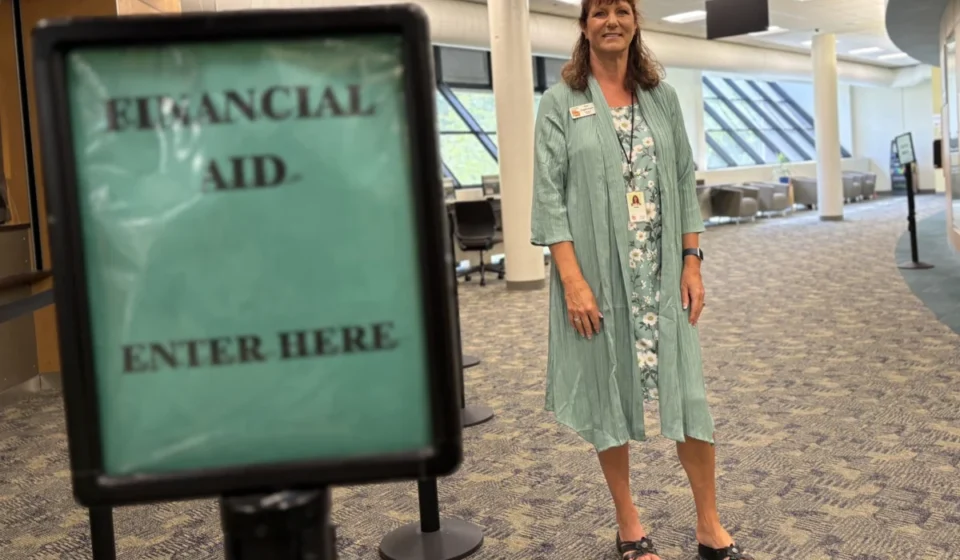

In the quiet suburbs of the Twin Cities, Century College, a two-year institution serving roughly 8,700 students, finds itself on the front lines of an invisible, high-stakes battle. While the academic calendar is marked by syllabi and examinations, the administration’s focus has shifted toward a more clandestine theater of operation. Employees at the college now spend an estimated 60 hours per week engaged in digital detective work, fending off a sophisticated wave of financial aid fraud.
The adversary? "Ghost students"—criminals who exploit stolen or synthetic identities to enroll in online courses, secure federal financial aid, and vanish into the ether before the semester’s first midterm. This phenomenon, which has surged across the American higher education landscape, is forcing institutions to evolve from centers of learning into hubs of cybersecurity and fraud prevention.
The Anatomy of the Scam: A Modern Heist
The mechanics of ghost student fraud are deceptively simple, yet the scale of the operation is vast. Perpetrators typically utilize stolen Social Security numbers or fabricated identities to complete the Free Application for Federal Student Aid (FAFSA). Once admitted, these "students" enroll in online courses, which require no physical presence on campus.
When the U.S. Department of Education releases federal financial aid funds to the college, the institution retains tuition and fees, but the remaining balance—intended to cover books, living expenses, and transportation—is disbursed directly to the applicant. By the time the college realizes the student is non-existent or a front for a criminal enterprise, the funds have long been laundered through a series of untraceable accounts.
For faculty members, the realization is often jarring. History professor Joe Haker first flagged the issue three years ago when he noticed a student submitted identical assignments in two different courses. "I thought, ‘Well, that’s weird. That probably could only happen if they were the same person,’" Haker recalled. His investigation revealed that nine distinct enrollments were, in fact, a single individual. By this past summer, Haker estimated that as many as one-third of the 90 students in his online courses were potentially fraudulent. "It’s so maddening," he said. "You can’t help but feel very, very strange when you realize that this student you’re devoting time to is just scamming."

Chronology of a Growing Threat
The rise of the ghost student can be traced back to the onset of the COVID-19 pandemic. As colleges pivoted to remote learning in 2020 and 2021, the barriers to entry for digital education were lowered, and the demand for online access skyrocketed. Fraudsters, recognizing that admissions departments were overwhelmed by the sudden shift, began testing the integrity of these systems.
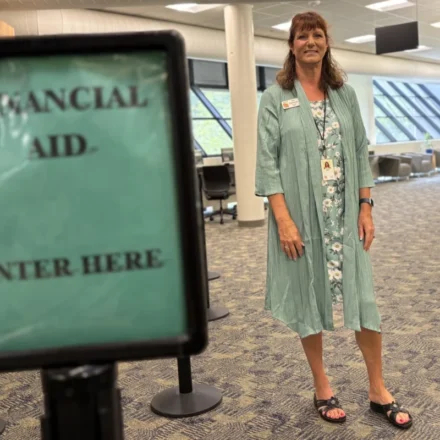
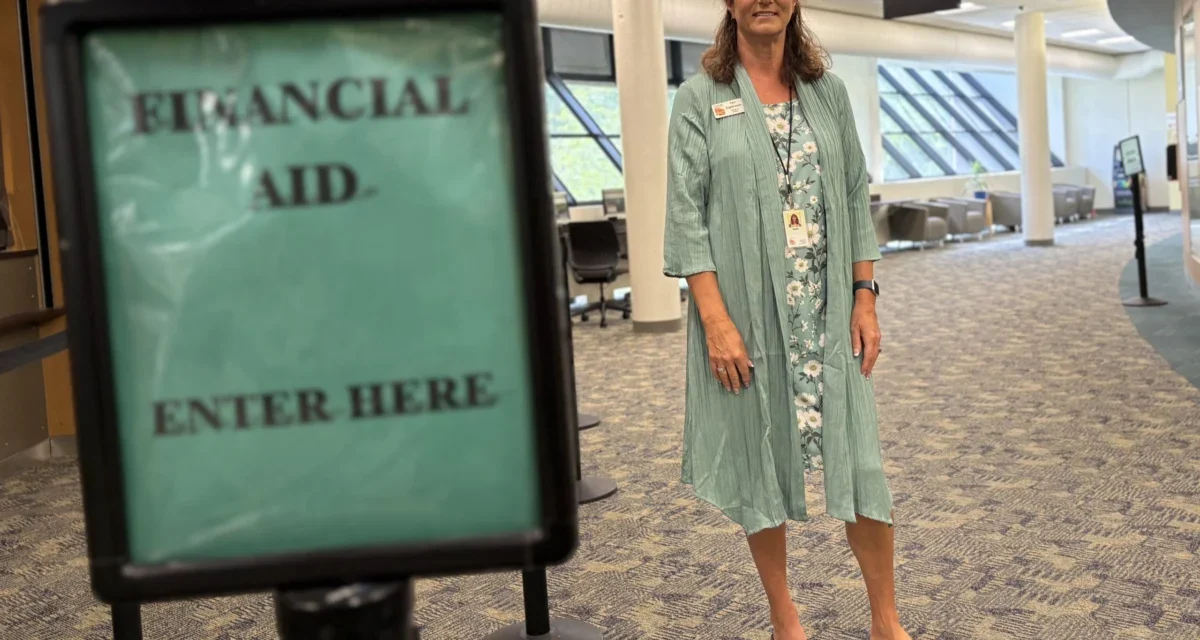
"We believe that they were testing our system to see how easy it was to be able to get financial aid," explained Pam Engebretson, director of financial aid at Century College. "And the answer was, it was easy."
Between 2021 and 2022, the frequency of these attacks accelerated. By 2023, the Minnesota State system of 26 colleges and seven universities recognized that local efforts were insufficient. They formed an enrollment fraud work group, which was subsequently formalized by the Legislature in 2025. This year, the Minnesota Legislature allocated $3 million toward a new, automated, system-wide identity verification platform, signaling a shift from decentralized, campus-by-campus defense to a unified, top-down strategy.
The Scope of the Damage: A National Perspective
The problem is far from contained within Minnesota’s borders. Nationwide, the U.S. Department of Education estimates it has lost nearly $90 million to such schemes, though many experts believe the true figure is significantly higher.
The scope of the financial impact is illustrated by major criminal cases across the country. In Detroit, a man pleaded guilty to a scheme involving nearly 1,300 fraudulent FAFSA claims across 100 schools in 24 states, resulting in over $10 million in stolen funds. Similarly, a North Carolina woman was sentenced to five years in federal prison for orchestrating a $3.5 million theft.

California’s community college system, often viewed as a bellwether for the rest of the country, has spent at least $150 million since 2022 on identity verification technology. Despite these investments, the system reported $1.5 million in losses to fraudulent aid in the spring of 2026—a figure that, while down from $5.6 million in 2025, underscores the persistent nature of the threat.
In Utah, a state audit published in June 2026 revealed that seven public institutions had expended over 15,000 staff hours and lost more than $830,000 to ghost students in a single year, even with existing detection protocols in place.
Official Responses and the "Patchwork" Problem
The federal government has attempted to stem the tide, launching a new verification system earlier this year that mandates government-issued ID and live, on-camera identity verification for high-risk FAFSA applicants. However, federal guidance remains firm: the responsibility for security rests with the institutions. If a school distributes federal aid to a ghost student, they are, in many cases, on the hook to repay the Department of Education.
In Minnesota, the response remains a "patchwork," according to Mark Grant, a communication studies professor at Dakota County Technical College. "We have campuses that are doing an enormous amount because they have the resources," Grant noted. "We have campuses that are less equipped because they have less resources."
This disparity has led to inconsistent experiences for both staff and students. At Minneapolis College, administrators experimented with an outside vendor for identity verification but eventually returned to an internal process, finding it more effective at keeping pace with the rapidly shifting tactics of fraudsters. At Normandale Community College, the situation is particularly acute; the school estimates that since 2025, 31% of all incoming applications have required manual review due to red flags.

"Even if it’s just a few minutes, it’s wasted time," said Susan Ant, director of financial aid and scholarships at Normandale. "We’re taking time that is meant for real students to get an education, graduate, do all those things, and there’s somebody who’s kind of working against that."
Implications for the Future of Public Education
The implications of this crisis extend beyond simple financial loss. For students, the prevalence of fraud creates a culture of skepticism. For faculty, it erodes the sanctity of the classroom. "Anything that we have gotten has been from Century College specifically," Haker said, highlighting the lack of systemic guidance. "If I’m going off of my own personal experience, it’s an enormous problem still."
Legislators are grappling with the balance between security and accessibility. Sen. Heather Gustafson, who sponsored the funding for Minnesota’s new verification tools, warned that the state must avoid becoming a "fraud target" while simultaneously ensuring that security measures do not inadvertently exclude legitimate, low-income, or diverse students who may lack traditional digital footprints.
"The more we do, the more it sends the signal that we are not open for fraud business here," Gustafson said. "We are not an easy target anymore."
However, industry experts like Maurice Simpkins, founder of the fraud-prevention firm AMSimpkins & Associates, caution that there is no "silver bullet." Fraud trends, he notes, can change daily. "It doesn’t take long for a security system to become antiquated," Simpkins said. "The fraudsters either find a way around it or just circumvent it as a whole."

A Call for Vigilance
As Minnesota State prepares to pilot its new automated verification system, the mood among college staff is one of cautious optimism tempered by deep exhaustion. The $3 million provided by the Legislature is a start, but as Craig Munson, who oversees information security for the system, admits, it is less than the total cost of the fraud and the labor required to combat it.
The goal is to reach a point where financial aid reaches those who truly need it, without requiring faculty members to spend their office hours acting as digital border guards. Until that happens, the "ghost students" remain a lingering presence in the virtual halls of academia—a reminder that in an increasingly digitized world, the most vulnerable institutions are often those with the most open doors.
For now, the work continues in the shadows of administrative offices, where staff like Pam Engebretson remain committed to protecting their institutions. "We’re doing everything we can on a local level," she says, "and any systemic changes that maybe alleviate some of the manual work that we’re doing would be awesome. In the meantime, we’re going to protect our students, we’re going to protect our institution, we’re going to try and mitigate the harm as much as possible."