








































A Guardian of the First Amendment Retires: Jane Kirtley’s Legacy and the Future of Journalism

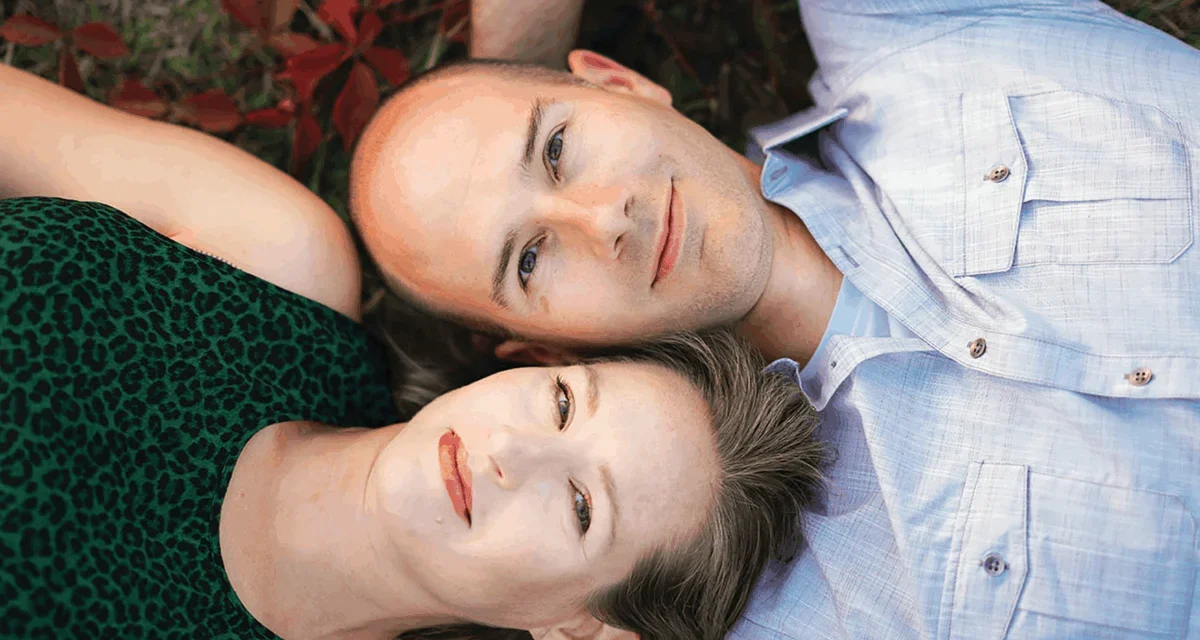
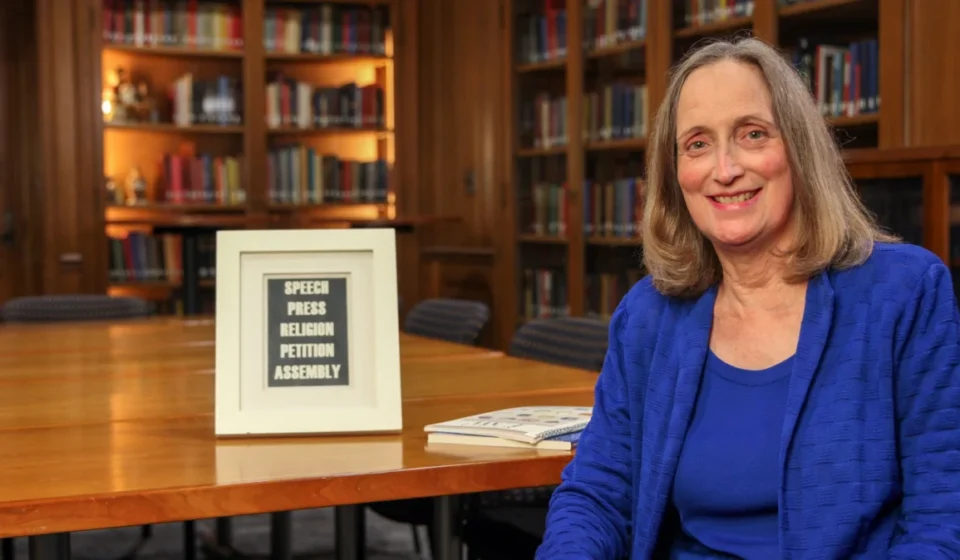
After a distinguished career that has spanned the evolution of modern media law, Jane E. Kirtley, the Silha Professor of Media Ethics and Law at the University of Minnesota’s Hubbard School of Journalism and Mass Communication, will officially retire on May 25. For decades, Kirtley has served as the preeminent voice on First Amendment protections and freedom of information, acting as a bridge between complex legal doctrine and the public interest. As she steps away from academia, her departure marks the end of an era for one of the most respected institutions in journalism studies.
A Career Defined by Advocacy
Kirtley’s influence on the media landscape is profound. Before joining the University of Minnesota in 1999, she spent 14 years as the executive director of The Reporters Committee for Freedom of the Press in Arlington, Virginia—a role that placed her at the epicenter of legal battles regarding government transparency and reporter protections. Prior to that, she honed her legal acumen during a five-year tenure at a New York and Washington, D.C.-based law firm.
Her transition into academia was marked by a commitment to the Silha Center for the Study of Media Ethics and Law. Throughout her tenure, she has been a frequent commentator for domestic and international media, translating the intricacies of the U.S. Constitution for a global audience.
The Timing of a Departure
The decision to retire at 72 was not reached lightly. Kirtley admits she began contemplating the move as early as 2019, shortly after her husband, Stephen Cribari, a law professor at Notre Dame, retired. However, the onset of the COVID-19 pandemic, which halted travel and shifted the pedagogical landscape to remote learning, provided a temporary reprieve.
"You just can’t take for granted you can keep doing the things you care about doing," Kirtley remarked, noting that she hopes to preserve her health to continue traveling and teaching abroad, citing a cherished five-month Fulbright scholarship in Riga, Latvia, as a highlight of her career.
She also reflected on her predecessor, Don Gillmor, the founding director of the Silha Center, who retired in 2009 but passed away in 2013 following health complications. Her decision to leave is, in part, a conscious choice to prioritize life outside the ivory tower while she is still able to fully engage with the world.
The Weaponization of the Law
In an extensive interview reflecting on the current state of the Fourth Estate, Kirtley offered a sobering assessment of the challenges facing contemporary journalism. She identifies the "weaponization of the law" against independent media as the most significant threat to democratic stability.
"I’ve been doing media law since the 1980s," Kirtley noted. "The biggest concern I have right now is the weaponizing of the law to go after the independent media. President Trump has been leading the charge on this."
While Kirtley acknowledges that tension between the executive branch and the press is not new—recalling the adversarial relationships during the Nixon, Reagan, and Obama administrations—she argues that the current climate is fundamentally different. The shift from political friction to legal warfare, characterized by novel lawsuits citing "consumer fraud" rather than traditional libel, represents an unprecedented tactical change.
The Vulnerability of New York Times v. Sullivan
Central to Kirtley’s concerns is the potential reversal of the 1964 Supreme Court ruling New York Times v. Sullivan, which established the "actual malice" standard for libel against public officials. For decades, this precedent has been the bedrock of investigative journalism.
"We know the current court has been willing in other contexts to reverse or overrule existing precedent of long standing," Kirtley warned. Should the Supreme Court decide to revisit the Sullivan standard, it would fundamentally alter the risk calculus for every newsroom in the country, likely leading to a chilling effect on investigative reporting.
Corporate Interests vs. Public Service
Kirtley also highlighted the shifting ownership structures of media outlets as a major operational hurdle. She observes that many modern media owners approach journalism not as a public service, but as a mechanism for maximizing profit or wielding political influence.
"Whether it’s the venture capitalists or the Silicon Valley ‘bros,’ they don’t approach their operations in an altruistic way," she said. While she acknowledges that historical media moguls like William Randolph Hearst were also driven by profit and power, she argues that they possessed a foundational understanding of the press’s role in holding power to account. The current era of media ownership, she suggests, lacks that same institutional commitment to the public good.
The Erosion of Credibility
The struggle to cover an administration that frequently employs obfuscation is, according to Kirtley, compounded by a 40-year systematic erosion of trust in the media.
"That kind of confidence that you were getting truthful, accurate reporting has been undermined quite deliberately, by a variety of forces," she explained. This loss of institutional credibility has allowed rhetoric like "fake news" to take root, creating a climate where factual reporting is dismissed by segments of the public as mere partisan agenda-setting.
When news organizations are successfully branded as "enemies of the people," the ability of the press to serve as a check on power is severely diminished. In a fragmented information landscape, where users can silo themselves into sources that confirm their existing biases, the traditional evidentiary model of journalism struggles to penetrate public consciousness.
The "Devil’s Tool": Journalism in the Age of AI
Perhaps the most striking aspect of Kirtley’s retirement is her candid disdain for the integration of artificial intelligence in newsrooms. She views AI as a fundamental threat to the intellectual integrity of the profession.
"I hate AI. To me, it’s the devil’s tool," Kirtley stated. "I don’t feel able to train my students in how to use it. I would feel complicit in a plot to undermine so many values that matter to me, like accuracy and critical thinking."
She argues that AI lacks the capacity for the critical questioning—the hallmark of a skilled journalist—that ensures accuracy. Her concerns extend to the loss of human copy editors, who historically provided the final layer of scrutiny that prevented errors and maintained ethical standards. While major organizations like The New York Times have implemented strict prohibitions on AI-generated text for freelancers, Kirtley fears that a generation of "AI natives" will struggle to maintain the rigor required for ethical reporting.
Regulatory Retaliation and the FCC
Kirtley also expressed grave concerns regarding the current direction of the Federal Communications Commission (FCC) under Chairman Brendan Carr. She characterized the FCC’s recent scrutiny of broadcast networks and late-night entertainers as a "blatantly political" departure from historical norms.
"The difference we’re seeing now with Brendan Carr is that his regulatory activity seems motivated by trying to discourage any kind of speech, satirical or otherwise, that criticizes President Trump," Kirtley said. She noted that while the FCC has historically regulated "indecent speech" via safe-harbor periods, the current focus on content-based retaliation violates the spirit of both the First Amendment and the Federal Communications Act of 1934.
Implications for the Future
As Jane Kirtley prepares to leave her post at the University of Minnesota, she leaves behind a void in the field of media law. Her career has served as a masterclass in the necessity of a free, independent, and ethical press.
The challenges she outlines—the erosion of legal protections, the decline of altruistic media ownership, the rise of misinformation, and the ethical dilemmas of AI—represent a defining struggle for the next generation of journalists. Kirtley’s departure is not merely a personal retirement; it is a signal that the profession is at a crossroads. Whether the next generation can maintain the standard of accountability that Kirtley defended for over four decades remains the central question for the future of American democracy.
Despite the gloom, Kirtley remains hopeful about the inherent drive of the next generation. "I know there are still many young people who want and who need to do journalism," she said. "They want to hold government and other powerful institutions to account. They want to provide the public with information they need to make good, informed decisions."