




















































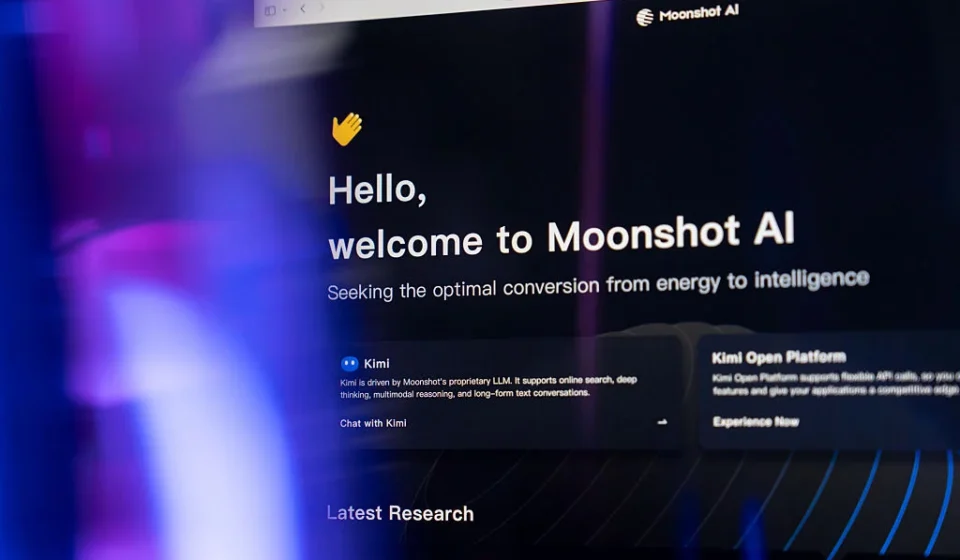

The release of Kimi K3, the latest open-source artificial intelligence model from the Beijing-based startup Moonshot AI, has sent shockwaves through the global technology sector. While the model itself marks a significant technical achievement, its arrival has served as a catalyst for a broader, increasingly volatile debate regarding the future of open-source development, the integrity of American innovation, and the intensifying geopolitical friction between Washington and Beijing.
As Kimi K3 hits the market, Wall Street has responded with palpable anxiety. The Nasdaq Composite index retreated roughly 1% on Friday, as investors offloaded holdings in high-profile chipmakers like Nvidia—a bellwether for the broader AI hardware supply chain. This market reaction, occurring in tandem with high-level rhetoric from Chinese leadership, underscores a new reality: AI capability is no longer merely a corporate competitive metric; it is now a fundamental pillar of national security.
The Technical Leap: Evaluating Kimi K3
Moonshot AI’s announcement highlights a model that, while acknowledging its current status as a runner-up to proprietary giants like Claude Fable 5 and GPT 5.6 Sol, claims "frontier-level performance" across its internal evaluation suites.
Independent analysis has largely corroborated these claims. Both the benchmarking platform Arena.ai and the research outfit Vals AI have indicated that Kimi K3 is not only competitive with Western flagship models but, in specific tasks, holds its own against the most advanced systems in existence. This performance is particularly striking given the open-source nature of the release, which stands in stark contrast to the closed-garden approach preferred by industry leaders like OpenAI and Anthropic.
A Chronology of Escalation
The current "Kimi Panic" is the latest in a series of developments that have defined the AI landscape over the last 18 months:
- January 2025: DeepSeek releases its R1 model, sparking the first major wave of Silicon Valley discourse regarding the viability of Chinese open-source AI.
- March 2026: Cursor, a popular AI coding tool, confirms that its latest iteration was built atop Moonshot AI’s Kimi, shattering the illusion that Western models exist in a vacuum.
- June 2026: Anthropic faces intense scrutiny from the U.S. government, with reports suggesting national security concerns regarding its models, followed shortly by major AI companies filing for long-awaited IPOs.
- July 2026: Chinese President Xi Jinping delivers a keynote at the World AI Conference in Shanghai, signaling state support for domestic AI, shortly followed by the public release of Kimi K3.
This sequence of events has occurred against the backdrop of the Trump administration’s aggressive tariff wars, which have complicated the flow of semiconductors and rare-earth minerals, effectively turning the AI supply chain into a battlefield.
Voices from the Frontlines: The Political Firestorm
The release has drawn sharp, often vitriolic, commentary from American political and tech figures who view the rise of Chinese models as a direct threat to U.S. technological hegemony.
David Sacks, former AI czar for the Trump administration and current co-chair of the President’s Council of Advisors on Science and Technology, has been particularly vocal. Sacks argues that the United States is "tying itself in knots" through excessive regulation. He contends that bureaucratic hurdles, the blocking of new data centers, and the push for federal pre-approval of frontier models are creating an environment where the U.S. will inevitably lose the AI race. Sacks did not hold back in his critique of American models either, dismissing Anthropic’s Claude as a "woke lobotomized model" that hampers American competitiveness.
Conversely, former Uber CEO Travis Kalanick has shifted the focus toward the practice of "distillation"—the process of training smaller models on the outputs of larger, more powerful ones. Kalanick warned that if the U.S. does not crack down on the ability of Chinese firms to distill American AI output, American companies will be forced to compete with one hand tied behind their backs. However, critics of this protectionist stance point to the irony that American platforms, such as Cursor, have already leveraged Kimi’s architecture, suggesting that the flow of innovation is far more bidirectional than the current political rhetoric acknowledges.
The "AI Communism" Hypothesis
Perhaps the most provocative analysis has come from Dean Ball, head of strategic futures at OpenAI. Ball, who previously served in the Trump administration, suggests that the performance of Kimi K3 cannot be explained away by simple distillation; it is, by all metrics, a world-class model.
"I am personally surprised the Chinese state continues to allow the open-sourcing of models this good, given the potential risks," Ball noted. He posited that the widespread adoption of open-weight models points toward a future of "AI communism," where artificial intelligence is treated as a public good—essentially "digital public infrastructure" provided by the state.
For Ball, this future is a "dystopian hellscape." He predicts that the current administration will not attempt to formally "ban" open source—a move he considers strategically shortsighted—but will instead utilize "soft law." By issuing federal advisory bulletins that stoke fear, uncertainty, and doubt (FUD) regarding potential "backdoors" in Chinese AI, the government could effectively freeze the adoption of these models by regulated enterprises, creating a regulatory moat that protects domestic products.
Implications: Reality vs. Rhetoric
Despite the high-stakes warnings, some experts argue that the panic is fundamentally misplaced. Shakeel Hashim, editor of the AI-focused publication Transformer, suggests that the alarmism surrounding Kimi K3 ignores the realities of both current technical capabilities and future government behavior.
Hashim points out that Kimi K3, while impressive, likely lacks the "dangerous cyber capabilities" that have become the focal point of AI safety discourse. Furthermore, he argues that the Chinese government will eventually face the same incentives as the U.S. government: as models become more powerful and potentially more dangerous, the pressure to restrict access to the underlying weights will grow, even within China. The current state-backed open-source trend may be a temporary strategic play rather than a permanent ideological commitment.
Conclusion: The Road Ahead
The rise of Moonshot AI’s Kimi represents a maturation of the global AI ecosystem. The days when the United States held a solitary, uncontested lead in foundational model development are over.
As we look toward the IPOs of major AI firms and the potential expansion of federal regulatory oversight, the industry faces a crossroads. Will the U.S. choose a path of isolationism and heightened regulation, or will it double down on the open-market principles that once defined the American tech sector?
For now, the Kimi K3 release serves as a stark reminder that in the race for artificial intelligence, the barriers to entry are lowering, the geopolitical stakes are rising, and the definition of a "national security threat" is being rewritten in real-time. Whether this leads to a new era of global cooperation or a fractured, bifurcated AI world remains the defining question of the decade.