




















































From the thawing permafrost of the Canadian Arctic to the flood-prone basins of the Ecuadorian Amazon and the rapidly shifting altitudes of the Himalayas, the world’s Indigenous peoples are standing on the front lines of a global climate emergency. Yet, while their ancestral territories are increasingly besieged by the compounding impacts of fires, catastrophic floods, and droughts, these communities are not merely passive victims. They are, as a groundbreaking new report from Land Is Life suggests, the architects of some of the most effective, scalable climate solutions currently in operation.
The report, which synthesizes data from 46 countries and over 200 distinct case studies, posits a critical shift in perspective: the global community must move beyond acknowledging "Indigenous knowledge" as an abstract resource. Instead, it must recognize that Indigenous governance—the systems of self-determination, collective responsibility, and land stewardship—is the essential engine that makes such knowledge actionable.
The Overlapping Crisis: A New Normal
The contemporary climate crisis is rarely a single-event phenomenon. For most of the world’s Indigenous populations, disasters have ceased to be isolated incidents. They are now overlapping, chronic conditions.
According to the Land Is Life findings, more than 80 percent of surveyed Indigenous leaders reported facing two or more simultaneous climate-driven threats, with over 90 percent noting a marked increase in the frequency of these events. This "polycrisis" environment—where a drought leads to crop failure, which then exacerbates food insecurity, leaving communities physically and economically weakened just before a major flood—demands a sophisticated, localized response that standard, top-down governmental aid is rarely equipped to provide.
"We show that it’s not that they are only the most impacted, but they are already implementing effective solutions," says Luisa Castañeda Quintana, executive director of Land Is Life. "When it comes to adaptation, we don’t really need to create new structures or systems. We just need to see what is working."
Chronology of Resilience: Indigenous Responses in Action
The effectiveness of these systems is best viewed through their historical and ongoing implementation in diverse ecosystems:

- Pre-2019 (Preparation): Across various regions, Indigenous communities have maintained traditional monitoring systems for generations. In the Ecuadorian Amazon, the Kichwa people of Sarayaku have utilized their traditional knowledge to track shifts in lightning and rain patterns at the river’s headwaters, providing early warnings for the community long before satellite-based meteorological systems might register a threat.
- 2019 (Crisis Management): When devastating floods struck the Bobonaza River in 2019, the Sarayaku community, numbering roughly 1,600 people, did not wait for external disaster relief. Their internal governance structures allowed for immediate, organized mobilization. Under the framework of minga—a Kichwa principle of collective responsibility and solidarity—they distributed resources, rehoused displaced families, and managed the recovery process with a speed that outperformed state-level responses.
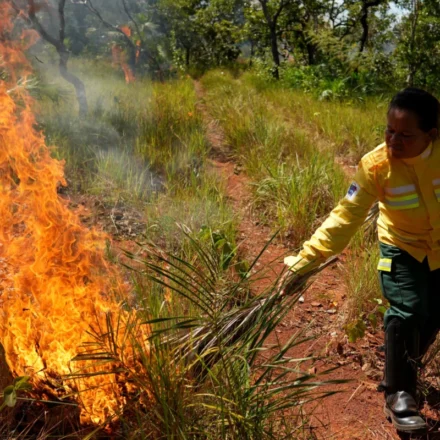
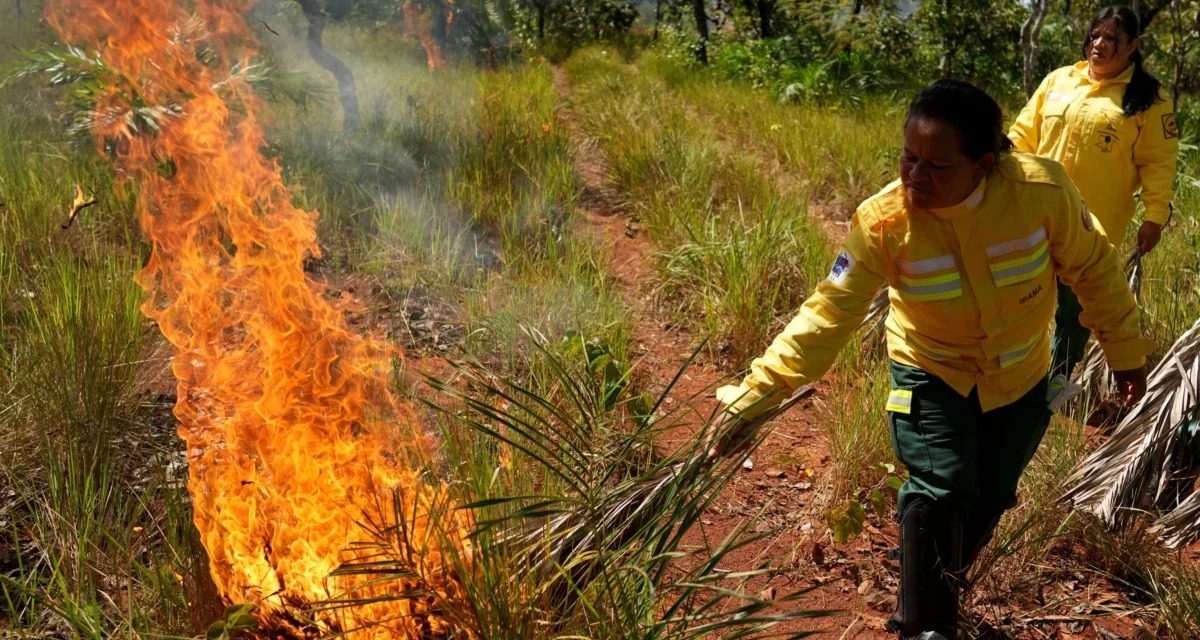
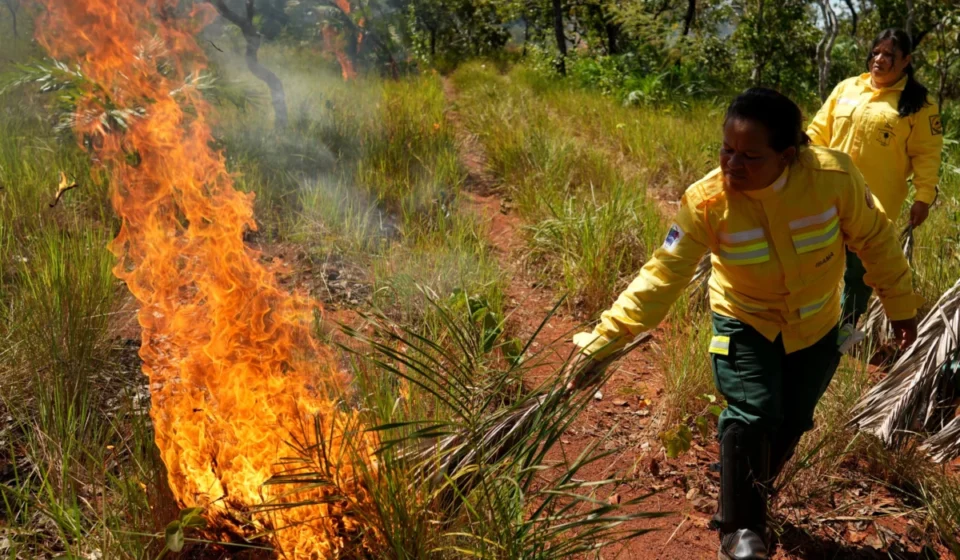
- 2026 (Modern Integration): In Brazil, the Coordination of Indigenous Organizations of the Brazilian Amazon (COIAB) has evolved into a sophisticated regional network. By 2026, these groups have integrated traditional fire management with modern communication technology, mobilizing specialized response teams to manage wildfires across vast territories that the state often struggles to reach.
- Ongoing (Adaptive Agriculture): In the drylands of Kenya, Indigenous Endorois and Tugen women have spent years cultivating drought-resistant strains of sorghum and millet. In years where conventional farming failed entirely, these indigenous crops provided the region’s sole harvest, demonstrating that agricultural adaptation is rooted in the preservation of genetic biodiversity.
Supporting Data: The Case for Sovereignty
The Land Is Life report draws on research spanning six primary biomes: forests, mountains, drylands, freshwater systems, grasslands, and coastal areas. The data reveals a direct correlation between the level of Indigenous self-determination and the success of climate mitigation.
One of the most compelling examples of this success is found in Peru’s Ausangate Regional Conservation Area. There, Quechua communities entered into a strategic partnership with conservationists. Rather than the external organization dictating the terms, the project prioritized the documentation of Indigenous environmental indicators. By blending traditional ecological knowledge with Western empirical research, the community improved its monitoring capabilities, creating a more robust, data-driven resilience strategy.
However, the report also highlights a "governance gap." While 65 percent of the world’s land is held under customary tenure by Indigenous peoples, only a fraction of that is legally recognized by national governments. This lack of legal standing creates a precarious situation: communities are expected to protect the world’s most critical carbon sinks—forests and grasslands—without the legal authority to prevent encroachment, illegal logging, or industrial exploitation.
Official Responses and the Funding Paradox
Despite the mounting evidence that Indigenous-led initiatives are more cost-effective and sustainable than state-run programs, the flow of global climate finance remains obstructed.
During New York Climate Week, leaders from Land Is Life and other advocacy groups highlighted a systemic failure: while billions of dollars in climate funds are pledged by the Global North, very little of that capital reaches the grassroots level.
Anisha Buda, a program officer at the National Indigenous Women Forum in Nepal, articulates the frustration felt across the globe: "It’s always the lack of resources and the lack of access to funding that makes it so difficult for us to work, especially when climate change makes us the most vulnerable."

Buda points out a recurring issue where funds designated for Indigenous-led projects are often intercepted or absorbed by non-Indigenous NGOs and international consultants. "There are so many projects that are supposed to be for Indigenous peoples, but they are implemented by non-Indigenous organizations," she notes.
The report urges a fundamental change in the "philanthropic architecture." It calls for:
- Flexible, Direct Funding: Bypassing intermediaries to ensure resources reach the community level.
- Legal Recognition: Formalizing land rights, which provides the stability necessary for long-term climate planning.
- Respect for Governance: Recognizing that Indigenous systems of decision-making are as vital to climate science as the data they produce.
The Global Implication: A Future-Proof Strategy
The implications of ignoring these findings are dire. As the world becomes increasingly volatile, the "traditional" ways of living, which prioritize deep ecological connection and long-term sustainability, are no longer just an alternative; they are a necessity.
Gisela Hurtado, the author of the Land Is Life report, argues that we are entering a period where the lessons learned in Indigenous territories will become the universal reality. "What they are seeing in the territories, we’re going to see it also in the future," she says. "They are the ones that are much more connected with the Earth to know what is going to happen in the future."
The path forward, according to the report, is not to force Indigenous communities to adapt to our systems, but for our systems to adapt to the reality of their success. By providing legal security, respecting governance structures, and ensuring direct financial support, the global community can leverage the most effective climate technology humanity has ever known: a deep, ancient, and evolving relationship with the land.
In an era of scarcity, the most logical investment is to fund what is already working. The resilience of the future is not a new invention; it is a memory, preserved in the governance and stewardship of those who have held the Earth in trust for millennia.