




















































A New Frontier: How Democratic Trifectas in Arizona, Pennsylvania, and Wisconsin Are Set to Reshape U.S. Climate Policy

The political landscape of American climate action has undergone a seismic shift this week. Following the 2024 presidential election, which solidified a federal administration openly hostile to environmental regulation, climate advocates braced for a period of stagnation. For years, the narrative was that climate progress would be confined to a handful of deep-blue coastal strongholds. However, the results of the 2026 midterm elections have fundamentally altered that trajectory, handing Democratic “trifectas”—total control of the governor’s mansion and both legislative chambers—to three states that have historically been battlegrounds or Republican bastions: Arizona, Pennsylvania, and Wisconsin.
The State-Level Shift: Beyond the Coastal Enclaves
For years, the "America Is All In" coalition has operated under the assumption that in the absence of federal leadership, state and local governments must carry the mantle of decarbonization. While this strategy has been effective in California, New York, and Massachusetts, it left a massive void in the heart of the American industrial and energy sectors.
The recent victories in the Rust Belt and the Southwest represent more than just a change in party control; they represent a potential "green pivot" for regions that have long relied on coal, natural gas, and intensive groundwater extraction. David Weiskopf, senior policy director at the climate advocacy group Climate Cabinet, notes that the combined economic and industrial output of these newly flipped states makes them a global powerhouse of emissions. "If these six states [including the restored trifectas in Michigan, Minnesota, and Nevada] were a single country, they would rank among the world’s largest emitters, rivaling Canada and Saudi Arabia," Weiskopf explained. "The opportunity to shift these massive economies toward clean energy is monumental."
A Chronology of Policy Stagnation and Impending Action
The political history of these three states is defined by long periods of legislative gridlock.
- Wisconsin: The state has not seen a Democratic trifecta since 2010. For over two decades, it has languished with a stagnant 10 percent renewable energy standard, failing to update its goals even as neighbors like Michigan and Minnesota leaped toward 100 percent clean energy mandates.
- Pennsylvania: The "Keystone State" has long been a battleground where energy policy goes to die. With the Senate historically locked under Republican control, ambitious climate legislation was routinely blocked. Even with a Democratic governor, the state’s massive natural gas and coal sectors created deep internal party divisions that paralyzed environmental reform for over 30 years.
- Arizona: The Grand Canyon State had not seen a Democratic trifecta since 1966. For decades, the legislature has operated under a mandate of deregulation, even going so far as to legally prohibit state agencies from regulating greenhouse gas emissions.
With the 2026 midterms, the logjam has broken. The next twelve months are expected to be a flurry of legislative activity as these states attempt to codify climate goals before the narrow margins of their majorities are tested in future cycles.
Wisconsin: Ending the "Wisconsin-Sized Hole"
Wisconsin currently suffers from a lack of long-term utility planning. Unlike its neighbors, the state does not mandate that utilities provide comprehensive roadmaps for future power generation, leading to an over-reliance on aging coal plants.

"We are currently looking at the ‘low-hanging fruit,’" says Erik Kanter, policy director at Clean Wisconsin. "The immediate priority is to force utilities to account for the long-term costs of fossil fuels versus renewables."
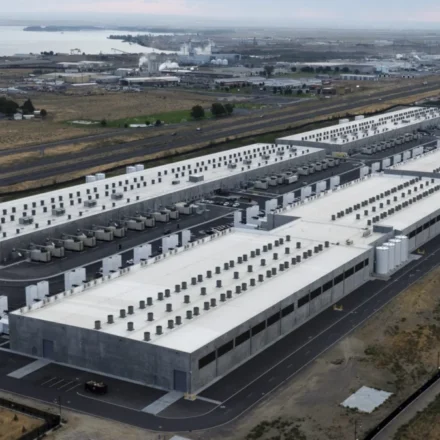
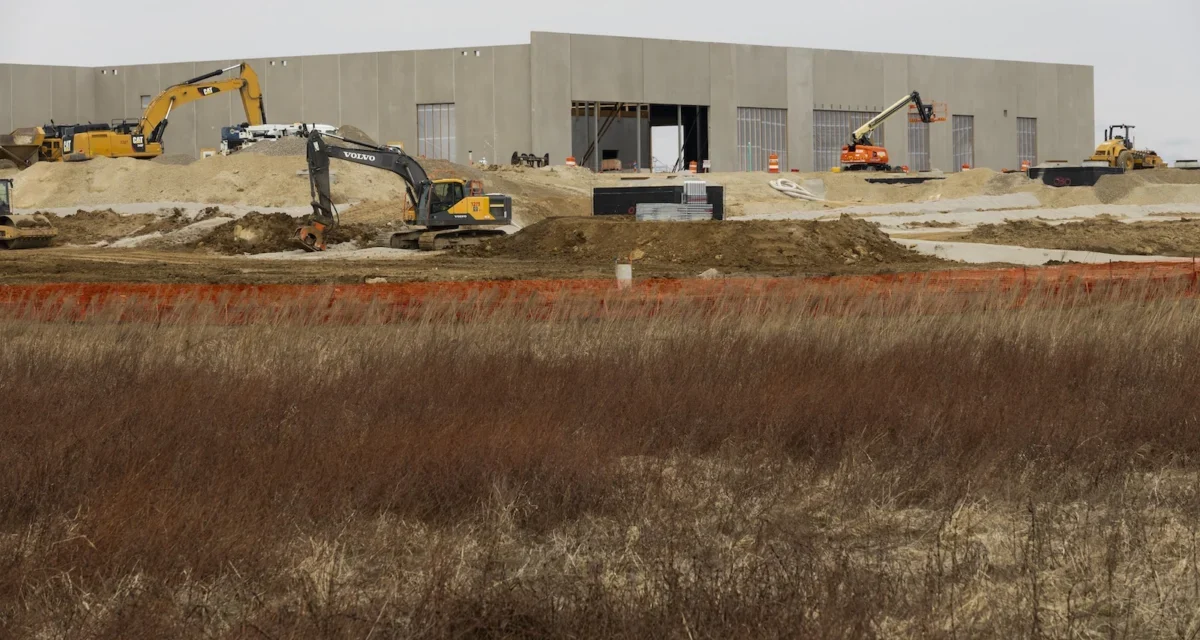
Legislators are expected to move quickly on two fronts. First, they aim to pass mandates requiring data centers—which are proliferating across the state—to source power from clean energy providers. Second, the legislature is expected to restore funding to the Knowles-Nelson Stewardship Program, a critical tool for land and water conservation that was gutted during years of Republican control. Beyond these measures, experts are pushing for a 100 percent clean electricity standard, which would finally fill the "Wisconsin-sized hole" in the regional energy grid, enabling neighboring states to integrate their renewable projects more effectively.
Pennsylvania: Overcoming the Fossil Fuel Legacy
In Pennsylvania, the tone is one of cautious optimism. State Senator Lindsey Williams, representing the Pittsburgh suburbs, has spent years fighting to pass appliance efficiency standards—a bill that would save consumers millions but was repeatedly blocked in the Senate.
"You learn to temper your expectations because you’ve been let down so many times," Williams said. "But now, we are looking at a real chance to finally pass a comprehensive agenda."
The priority list is ambitious. Beyond the efficiency standards, Democratic leadership is coalescing around a $1.5 billion rescue package for public transit systems, particularly Philadelphia’s SEPTA, which is currently facing a "death spiral" of budget cuts and declining ridership. Governor Josh Shapiro, a centrist who has previously walked a fine line on energy, has indicated he is ready to work with the legislature to establish a cap-and-trade system to replace the state’s former participation in the Regional Greenhouse Gas Initiative (RGGI).
However, the margin for error is razor-thin. With slim majorities in both chambers, the window to pass significant climate legislation may be as short as two years. The pressure to deliver tangible economic benefits alongside environmental gains is the central challenge for the new coalition.

Arizona: Water, Sunshine, and the "Corporation" Commission
Arizona represents the most dramatic shift of the three. Despite the state’s massive potential for solar and wind, it has been hampered by a utility regulator—the Arizona Corporation Commission—that has historically been hostile to renewable energy integration.
Legislator Lauren Kuby, who has been a vocal critic of the commission, believes the reform is the state’s first priority. "We need to change the culture of the commission to prioritize public utility over corporate interest," Kuby said. Her caucus is considering a formal name change to the "Public Utilities Commission" to signal a new era of transparency and environmental focus.
Beyond the energy grid, the state faces a critical water crisis. Climate change has exacerbated historic droughts, and rural areas are currently experiencing a "water free-for-all." Large, foreign-backed industrial farms have been accused of depleting aquifers and causing land subsidence. The Democratic legislature plans to push through stringent regulations on groundwater pumping, a move that previously had quiet support from some Republicans but was never allowed a floor vote.
Official Responses and Stakeholder Implications
The reaction from the fossil fuel and utility industries has been muted but expectant. In Pennsylvania and Wisconsin, utilities are already preparing for a transition toward cleaner portfolios, recognizing that federal tax incentives from the Inflation Reduction Act remain a powerful engine for profitability, regardless of the state-level political change.
However, the environmental justice community is watching closely to ensure that these transitions are equitable. The "America Is All In" coalition is urging these states to ensure that renewable energy jobs are unionized and that projects are sited in historically marginalized communities that bore the brunt of industrial pollution.
Implications: A New Model for the U.S.
The shift in these three states demonstrates that the climate movement is no longer solely dependent on the federal government. By capturing legislative power in states with high energy consumption and significant climate vulnerability, Democrats are effectively creating a "laboratory of democracy" for energy policy.

If Arizona can successfully regulate groundwater and reform its utility commission, it will serve as a template for other drought-stricken states. If Pennsylvania can successfully pass a cap-and-trade system in a state historically defined by its coal and gas industry, it could rewrite the playbook for how industrial states transition to a green economy.
The next 24 months will be the ultimate test of this strategy. These legislatures face immense pressure: they must satisfy a base hungry for rapid climate action while maintaining the support of centrist voters who are sensitive to energy prices and economic stability. As Senator Williams noted, "We need to be brave. It’s time to move past the low-hanging fruit and actually build the future we’ve been talking about for decades."
The results of this midterm cycle have provided the opportunity. Whether these states can turn that opportunity into lasting, structural change remains the most significant climate story of the coming years.