

























By [Your Name/Journalistic Desk]
Originally reported by Kate Sosin for The 19th.
For Juniper Simonis, the memory of 2012 remains as vivid as a cinematic frame. It was a humid summer evening in Ithaca, New York, and the air was thick with the scent of cut grass as she pedaled her bicycle through the city. Through her headphones, the folk melodies of Mariee Siou provided a rhythmic backdrop to a life-changing moment: an email notification confirming that the Ithaca League of Women Rollers had voted to accept her onto their team.
For Simonis, who is transgender, the acceptance was more than a roster spot; it was the reconciliation of two fractured identities. "As somebody who played sports and was queer, but those were two very separate parts of my life, the promise and the opportunity to integrate those was very hopeful for me," she recalls. "Getting a message that was like, ‘You are welcome,’ was very, obviously, very uplifting."
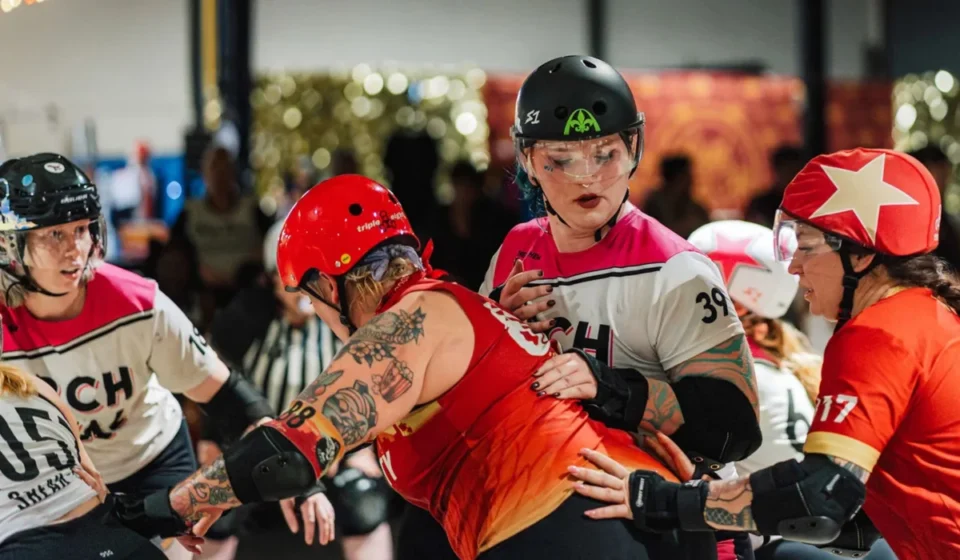
Years before the participation of transgender athletes became a flashpoint in national political discourse, the world of roller derby—a high-contact, punk-rock-infused sport defined by aggressive hits and colorful pseudonyms—was already navigating the complexities of gender inclusion. While the sport’s history is not without its own internal conflicts, discrimination, and imperfections, it remains a rare case study of a community that consistently chooses the path of radical inclusion over exclusionary regulation.
The Evolution of a Sport: From Endurance to Empowerment
Roller derby, in its modern iteration, is a stark departure from the kitschy, televised spectacles of the 1970s. Its roots, however, date back to the 1930s, when promoter Leo Seltzer organized endurance races on banked tracks. Even then, the sport was co-ed, though the pay gap between male and female skaters was stark and institutionalized.
As Rachel "Rotten" Johnston, a veteran skater and Director of the Angel City League Derby, explains, the sport’s transformation into a contact powerhouse was organic. "Over the course of these races, people start to run into each other. They get tired, they try to sabotage each other," Johnston says. "That’s the thing that people started to get really into."
By the early 2000s, the sport underwent a grassroots renaissance, led primarily by women in Austin, Texas. They codified rules, established leagues, and reclaimed the sport as a DIY, feminist counter-culture movement. This was the era of "riot grrrl" ethos, where the aesthetic was as much about rejecting mainstream beauty standards as it was about physical dominance. Teams adopted fierce, irreverent names—"Beyonslay," "Iron Maven," and "Belle Right Hooks"—replacing the commodified femininity of pop culture with something raw, authentic, and undeniably athletic.
Chronology of Inclusion: From Case-by-Case to Policy
As the sport exploded in popularity, with the Women’s Flat Track Derby Association (WFTDA) eventually overseeing more than 400 leagues across six continents, the question of gender became central to its identity.
In the early aughts, the WFTDA’s stance on trans athletes was largely unwritten, mirroring the prevailing "don’t ask, don’t tell" culture of the time. Nicole Williams, known on the track as "Bonnie Thunders"—widely regarded as the greatest derby skater in history—recalls that early efforts were primarily focused on creating spaces free from cisgender men. "At the time, ‘cis’ wasn’t really even a term we were using," Williams notes. "And it was cis men that we didn’t want."
For years, the policy was opaque, often relying on arbitrary criteria like hormone replacement therapy timelines or the gender marker on a state-issued ID. Penelope "Fifi Nomenon" Nederlander remembers joining the LA Derby Dolls in 2010, fearing the bureaucracy of her identity. When she told her mentor she was trans, the mentor’s response was simple: "Does your driver’s license have an ‘F’ on it?" When Nederlander confirmed it did, she was in.
"That was wild, that was unbelievable," Nederlander says. "It was the first group of friends who I met who only knew me as Penny, and that was huge."

This case-by-case approach eventually gave way to institutional policy. In 2015, the WFTDA officially updated its bylaws, stating that anyone of a "marginalized gender" is welcome to participate. This was a seismic shift, creating a home not just for trans women, but for nonbinary and gender-expansive athletes like Drew "OMG WTF" Flowers. For Flowers, who co-owns a skate shop with Nicole Williams, the decision to transition while remaining in the sport was a terrifying, yet necessary, leap of faith. "I had reached a point in my life where I was like, ‘I have to do this,’" they recall. Today, both skate for the elite Rose City Rollers Wheels of Justice.
The Reality of the Track: Microaggressions and Violence
Despite the inclusive policy, roller derby is not a utopia. The sport struggles with the same systemic issues as the broader society, including racism and transphobia. Donita "Blaxyl Rose" Green, a skater for Angel City Derby, points out that the intersection of race and gender identity creates a unique set of challenges.
"I’ve seen firsthand how much worse some of these microaggressions and problems happen when you are a dark-skinned Black skater," Green explains. "You add knowledge of trans identity, and it tends to be even worse. We talk often about ‘skating while Black.’ It just happens."
Furthermore, the sport’s inclusive culture hasn’t completely shielded trans athletes from direct harm. Juniper Simonis reports having been assaulted by other players specifically due to her transgender identity. These incidents serve as a sobering reminder that policy alone cannot eradicate prejudice; the work of building a truly equitable community is an ongoing, daily struggle.
Implications: The Price of Legitimacy vs. The Value of Community
For years, roller derby was considered for Olympic inclusion. However, the sport’s governing bodies—led by the athletes themselves—ultimately walked away from the process. The reason was clear: the Olympic Committee’s requirements for gender categorization were at odds with the core values of the derby community. By refusing to comply with international mandates that would have required them to exclude their own teammates, derby skaters chose their community over the "legitimacy" of a global stage.
This decision carries profound implications for the sports world. While many leagues across the globe are moving toward stricter, exclusionary gender policies under the guise of "fairness" and "protecting women’s spaces," roller derby offers an alternative philosophy.
Nicole Williams rejects the framing of these exclusionary policies. "When I see ‘protect women’s spaces,’ that feels so repressive," she says. "I don’t want to discount that women’s spaces are important. They are, but I don’t really identify with that in the way that I used to."
The Way Forward: Honesty over Orthodoxy
The path forward for roller derby, according to athletes like Nederlander, involves a more honest dialogue about the nature of sport. She argues that we can acknowledge physical differences without resorting to discrimination.
"I want to arrive at the same conclusion, but with honesty about it," Nederlander says. She contends that in the high-contact reality of the rink, the obsession with the "biological advantage" of trans women often misses the point. "In roller derby, there doesn’t seem to be an important difference. We really don’t have any complaints about trans skaters. So that’s awesome."
Ultimately, the sport’s veterans maintain that the "safety" concerns cited by critics of trans inclusion are often a smokescreen in a sport that is inherently violent. As Rachel Johnston puts it: "I think that people who are concerned about people getting hurt are missing the fact that we’re playing a full contact sport. You’re going to get hurt no matter what. You know, life isn’t fair, and sports most certainly are not fair."
By prioritizing the people on the track over the rigid adherence to the gender binary, roller derby has carved out a space that is as defiant as it is inclusive. It is a sport built by those who were told they didn’t belong, and in doing so, it has created a blueprint for what happens when a community decides that "everybody plays" is more important than the rules written by those who never skated.