










































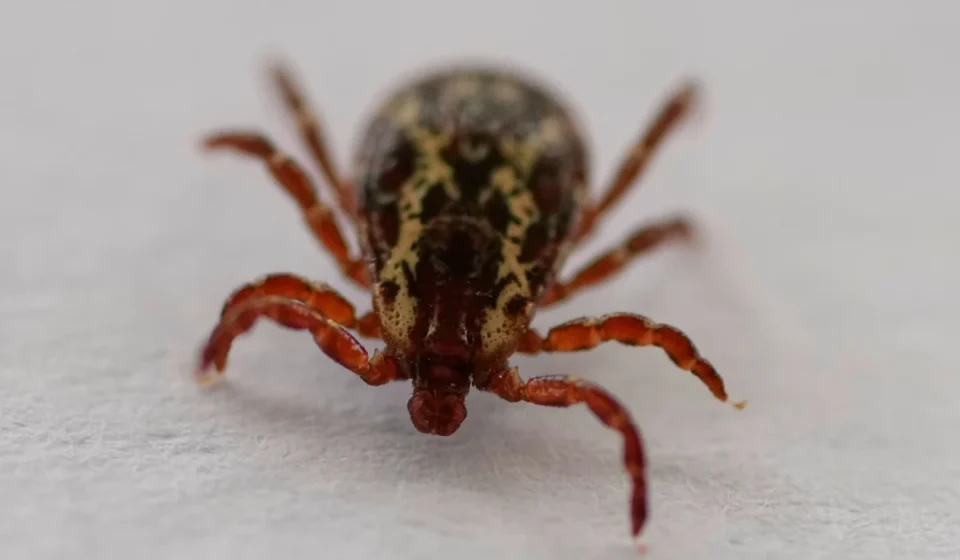

As the frost of winter retreats and the landscapes of the Northern Hemisphere burst into vibrant green, millions of Americans are eager to reclaim the outdoors. However, this seasonal migration toward nature comes with a growing, invisible threat: the black-legged tick. As the 2026 tick season begins to show alarming indicators of activity, public health officials are sounding the alarm on a pathogen that has silently expanded its reach across the country.
The 2026 tick season is currently trending toward an unprecedented level of intensity. According to data released by the Centers for Disease Control and Prevention (CDC) on April 23, emergency room visits specifically linked to tick bites have surged to their highest levels since 2017. This spike is more than a statistical curiosity; it serves as a harbinger of a potentially severe season for Lyme disease and a host of other tick-borne illnesses.
The Magnitude of the Crisis: Main Facts
Lyme disease, the most common vector-borne illness in the United States, is caused by the Borrelia group of bacteria—primarily the species Borrelia burgdorferi. Named after the town of Lyme, Connecticut, where it was first identified in 1975, the disease is transmitted through the bite of an infected black-legged tick (commonly known as the deer tick).
While state health departments officially recorded over 89,000 cases in 2023, these figures are widely considered to be a significant undercount. Public health experts estimate that the actual incidence of the disease in the United States is closer to 500,000 cases annually. The discrepancy arises from under-reporting, diagnostic challenges, and the fact that many patients with mild symptoms may never seek formal medical care.
The infection process is insidious. A tick must typically remain attached to a human host for 24 to 48 hours to successfully transmit the Borrelia bacteria into the bloodstream. Because tick bites are often painless and the ticks themselves can be as small as a poppy seed, many victims are unaware they have been bitten until the symptoms of the infection begin to manifest.
A Historical Perspective: Chronology of an Epidemic
The trajectory of Lyme disease in America has been marked by a steady, persistent expansion. Since 1995, the incidence of reported Lyme disease in the U.S. has nearly doubled. This growth is not merely a result of improved diagnostic awareness, but rather a direct response to ecological and climatological shifts.
- 1975: First clinical identification of Lyme disease in Lyme, Connecticut.
- 1990s: The disease begins to migrate beyond the initial coastal clusters, moving into the mid-Atlantic and parts of the upper Midwest.
- 2010s: Climate change begins to alter the survival threshold for tick populations, allowing them to remain active in regions previously protected by long, harsh winters.
- 2023: Reported cases reach 89,000, confirming the status of Lyme as a major public health challenge.
- 2026: Emergency room visits for tick bites hit a nine-year high, signaling a potentially record-breaking season for transmission.
Supporting Data: Why the Surge?
The expansion of Lyme disease is tethered to several overlapping factors: climate warming, habitat fragmentation, and wildlife population dynamics.
Climate and Geography
Warmer temperatures are the primary drivers of current tick range expansion. Ticks emerge when ambient temperatures rise above freezing. As winter seasons become shorter and more sporadic, ticks are emerging earlier in the spring and remaining active deeper into the autumn. In some regions where winters have become mild, ticks are now active year-round.
Furthermore, rainfall patterns have changed, creating humid micro-climates that are ideal for tick survival. Ticks are highly susceptible to desiccation (drying out); increased moisture in woodland undergrowth allows them to thrive in areas where they previously would have perished.
Ecological Shifts
Human activity has inadvertently created the perfect breeding ground for ticks. As urban and suburban sprawl encroaches into woodland areas, we are effectively fragmenting forests. This creates "edge habitats" where deer—the primary hosts for adult ticks—and white-footed mice—the primary reservoirs for Borrelia—frequently encounter humans. The removal of natural predators for these small mammals, combined with the proliferation of deer populations in suburban landscapes, has led to a population explosion of the vectors that carry the disease.
Official Responses and Clinical Implications
The medical community is currently grappling with how to treat a disease that can have profound long-term consequences. According to clinical experts, early symptoms—fever, muscle aches, and fatigue—usually appear within 3 to 30 days post-bite. The most distinct sign, the "bull’s-eye" rash (erythema migrans), occurs in roughly 70% to 80% of patients.
However, the diagnostic process is fraught with difficulty. Blood tests designed to detect antibodies against Borrelia are often ineffective during the first few weeks of infection, leading to potential false negatives. Consequently, physicians are urged to rely on clinical judgment and patient history when deciding whether to initiate a two- to four-week course of antibiotics.
The Looming Threat of Untreated Disease
When left untreated, Lyme disease can infiltrate the body’s major systems. Roughly 60% of untreated patients develop Lyme arthritis, characterized by severe, intermittent swelling of large joints, particularly the knees.
In rarer, more systemic cases, the bacteria can affect the heart (causing carditis) or the central nervous system. Neuro-Lyme disease manifests as meningitis, which triggers debilitating headaches, neck stiffness, and cognitive impairments. Even after the bacteria are cleared via antibiotics, some patients suffer from persistent inflammation. Researchers believe this occurs because bacterial cell wall fragments may persist in the joints, or because the initial infection may have triggered an autoimmune response where the body continues to attack its own tissues.
The Path Forward: Vaccines and Prevention
The most significant development on the horizon is the promise of a prophylactic vaccine. In March 2026, pharmaceutical giant Pfizer announced that a late-stage clinical trial for its Lyme disease vaccine candidate had shown a 70% efficacy rate in preventing the illness. While this is not a universal panacea, it represents the most significant breakthrough in Lyme prevention in decades.
Until a vaccine is widely available, the burden of prevention rests on individual vigilance. The CDC and health departments recommend the following "Three-Pillar" defense strategy:
- Barrier Protection: When hiking or working in wooded or tall-grass areas, wear light-colored clothing, tuck pant legs into socks, and use EPA-registered insect repellents containing DEET, picaridin, or oil of lemon eucalyptus.
- Daily Vigilance: The most critical step is the daily "tick check." Because transmission requires 24 to 48 hours of attachment, performing a thorough body scan—including the scalp, behind the ears, and skin folds—immediately after returning indoors can prevent the majority of infections.
- Environmental Management: Property owners should focus on creating "tick-safe" zones. This includes clearing brush, mowing tall grass around homes, and creating a three-foot-wide wood chip or gravel barrier between lawns and wooded areas to restrict tick migration.
Conclusion
As the 2026 season progresses, the message from the scientific and medical community is clear: while the environment has become more hospitable to ticks, human behavior can significantly reduce risk. Lyme disease is no longer a localized curiosity of the Northeast; it is a national health reality. By understanding the biology of the tick, recognizing the early symptoms of the disease, and employing rigorous prevention strategies, the public can navigate the warmer months without becoming a statistic in the annual surge of this persistent, evolving threat.