

















































Subaru Recalls Over 540,000 SUVs Due to Rear Axle Weight Labeling Error: What Owners Need to Know

Subaru of America has initiated a voluntary safety recall affecting more than half a million sport utility vehicles (SUVs) in the United States. Unlike typical automotive recalls that demand urgent mechanical repairs, park-outside warnings, or complex component replacements, this campaign addresses a administrative and regulatory compliance issue: an incorrectly printed federal certification label.
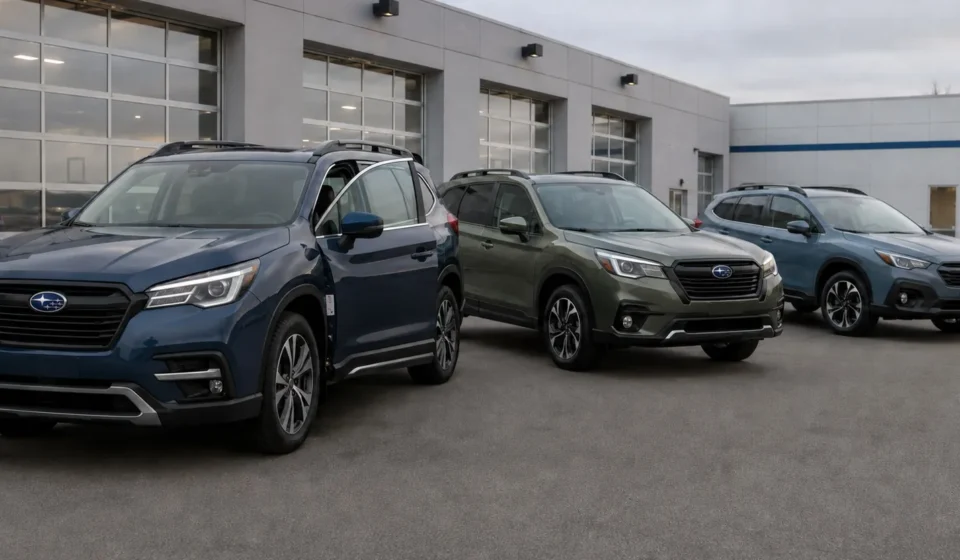
The recall impacts 541,237 vehicles across the Ascent, Forester, and Crosstrek model lines. According to regulatory filings, the certification labels affixed to the affected vehicles display an inaccurate Gross Axle Weight Rating (GAWR) for the rear axle. While the physical integrity of the rear axle, suspension, and drivetrain is not compromised, the incorrect safety information violates federal motor vehicle safety standards, prompting a coordinated corrective action plan between Subaru and federal regulators.
1. Main Facts of the Recall
The core of the issue lies in the federally mandated certification label, typically located on the driver-side B-pillar or door jamb. This label provides essential safety and loading limits, including the Gross Axle Weight Rating (GAWR) for both the front and rear axles.
Subaru determined that a production oversight resulted in the installation of labels with incorrect, elevated weight ratings for the rear axle. Because the printed rating is higher than the vehicle’s actual engineered capacity, drivers who rely on the label to calculate cargo, passenger, or towing configurations could inadvertently overload the rear suspension.
Key Details:
- Total Vehicles Affected: 541,237 SUVs.
- The Defect: An incorrect (overstated) Gross Axle Weight Rating (GAWR) printed on the safety certification label.
- The Safety Risk: Overloading the rear axle can degrade vehicle handling, compromise braking efficiency, increase tire heat and wear, and potentially lead to a loss of control or a crash.
- The Remedy: Subaru will mail corrected adhesive labels directly to registered owners. Owners can apply the new label over the incorrect one themselves, or have a certified Subaru retailer perform the application free of charge.
- Current Status: No crashes, injuries, or mechanical failures have been reported in connection with this labeling discrepancy.
2. Chronology of the Recall Campaign
The timeline for this campaign spans several months, reflecting the logistical challenges of identifying, organizing, and distributing half a million vehicle-specific compliance labels.
[Discovery & Investigation]
       │
       ▼
[NHTSA Filing & Public Announcement] (Campaign 26V436000)
       │
       ▼
[Phase 1: Interim Notification Letters] ──► Scheduled for August 25, 2026
       │
       ▼
[Phase 2: Remedy Distribution (New Labels)] ──► Scheduled for January 2027
Discovery and Regulatory Filing
Upon discovering the labeling error through internal quality audits, Subaru of America notified the National Highway Traffic Safety Administration (NHTSA). The campaign was formally registered under NHTSA recall ID 26V436000. Because the issue spans multiple model years and vehicle platforms, Subaru had to cross-reference manufacturing databases to isolate the exact vehicle identification numbers (VINs) printed with the incorrect specifications.
Notification Timeline
Because of the scale of the recall and the precision required to print vehicle-specific compliance stickers, Subaru is executing the notification in two distinct phases:
- Interim Notifications (August 25, 2026): Subaru will mail initial letters to affected vehicle owners. These letters will inform owners of the discrepancy, advise them on how to safely manage vehicle loads in the interim, and outline the forthcoming remedy.
- Remedy Rollout (January 2027): A second mailing will contain the corrected physical label and step-by-step instructions for installation. The delay between the initial notice and the remedy is due to the administrative complexity of printing and distributing hundreds of thousands of serialized compliance labels that must perfectly match each vehicle’s specific VIN and configuration.
3. Supporting Data and Affected Vehicles
The recall spans four distinct model configurations across three of Subaru’s most popular utility platforms. The three-row Subaru Ascent represents the largest share of the recall population, given its extensive production run.
Affected Models and Production Years
| Vehicle Model | Model Years Included | Notes / Powertrain |
|---|---|---|
| Subaru Ascent | 2019 through 2026 | Represents the longest production window in the campaign. |
| Subaru Forester | 2025 and 2026 | Redesigned generation models. |
| Subaru Forester Hybrid | 2025 and 2026 | Hybrid variant of the compact SUV. |
| Subaru Crosstrek Hybrid | 2026 | Plug-in / standard hybrid variant. |
Note: Not every vehicle manufactured during these model years is affected. Specific inclusion is determined by exact assembly dates, trim configurations, and VIN sequences.
Understanding Weight Ratings: GAWR vs. GVWR
To understand the safety implications of this recall, drivers must distinguish between the various weight metrics listed on a vehicle’s certification plate:
┌────────────────────────────────────────────────────────┐
│               VEHICLE WEIGHT TERMINOLOGY               │
├────────────────────────────────────────────────────────┤
│  GVWR (Gross Vehicle Weight Rating)                     │
│  └─► The maximum allowable weight of the entire        │
│      loaded vehicle (chassis, passengers, cargo, fuel).│
├────────────────────────────────────────────────────────┤
│  GAWR (Gross Axle Weight Rating)                       │
│  └─► The maximum allowable weight distributed onto a   │
│      single axle (Front or Rear).                      │
└────────────────────────────────────────────────────────┘
A vehicle may be well under its total GVWR, yet still exceed its rear GAWR if heavy cargo, third-row passengers, and tongue weight from a trailer are concentrated entirely over the rear wheels.
4. Official Responses and Regulatory Context
The Federal Regulatory Framework
Under the United States Code of Federal Regulations (CFR), specifically Title 49, Part 567 (Certification), manufacturers are legally obligated to affix a label to each vehicle certifying compliance with all applicable Federal Motor Vehicle Safety Standards (FMVSS). This label must display accurate weight ratings.
Even if a vehicle is mechanically flawless, displaying incorrect loading limits constitutes a violation of federal law. The NHTSA enforces these labeling standards strictly, as incorrect data can lead commercial operators, consumer renters, and everyday drivers to operate vehicles in unsafe configurations.
Subaru of America’s Statement
Subaru has emphasized that the physical components of the affected vehicles—including the axles, bearings, suspension coils, dampers, and wheels—meet all engineering specifications and are free of defects.
In a statement to dealers and the public, the manufacturer clarified:
"The physical vehicle remains unchanged. The printed information is wrong… No mechanical repairs are necessary, and owners can continue to drive their vehicles safely, provided they do not overload the rear axle."
NHTSA’s Assessment of Risk
In its official safety recall report, the NHTSA warned that incorrect GAWR information can lead to unintentional overloading. When an axle is subjected to weights beyond its engineered limit, several safety risks emerge:
- Tire Overheating: Excess weight increases rolling resistance and sidewall flex, causing rapid heat buildup that can result in sudden tire blowouts.
- Altered Steering and Braking: An overloaded rear axle lifts weight off the front steering axle, reducing front-wheel traction, lengthening braking distances, and compromising steering precision.
- Dynamic Instability: High-speed maneuvers or crosswinds can cause severe sway, especially when towing a trailer with excessive tongue weight.
5. Implications for Owners and the Automotive Industry
What Should Subaru Owners Do Now?
Drivers do not need to park their vehicles or rush to a dealership. However, they should take the following precautionary steps:
- Verify Recall Status: Owners should locate their 17-character Vehicle Identification Number (VIN)—found on the driver’s side dashboard near the windshield or on current registration documents—and enter it into the Subaru Recall Lookup Tool or the NHTSA recall database.
- Practice Safe Loading: Until the corrected label is installed, drivers planning road trips, camping excursions, or towing operations should refer to the vehicle’s owner’s manual or contact a local dealer to verify the correct rear GAWR.
- Keep the Original Label Intact: Owners should not scratch off, peel, or deface the existing certification label. The replacement label sent by Subaru is designed to adhere directly over the incorrect portion of the original plate, ensuring the vehicle remains in compliance with federal labeling laws.
- Prepare for Used Market Impact: For consumers purchasing a used Ascent, Forester, or Crosstrek, recall campaigns remain open indefinitely. Prospective buyers should check the VIN to ensure the recall has been completed. If the previous owner did not apply the label, the new owner can obtain it free of charge by calling Subaru Customer Support at 844-373-6614.
The Broader Automotive Context
This recall highlights a growing trend in the automotive industry where administrative, software, and labeling issues trigger massive campaigns. In an era of strict federal oversight, paperwork and compliance errors are treated with the same legal gravity as mechanical failures.
For Subaru, a brand built on safety, outdoor adventure, and utility, ensuring accurate loading limits is critical. The Ascent and Forester are frequently marketed to families, campers, and outdoor enthusiasts who routinely maximize cargo capacities and utilize hitch-mounted accessories. By proactively addressing this labeling error, Subaru and the NHTSA are working to prevent overloading incidents before they can lead to highway accidents.