







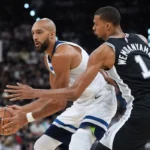





































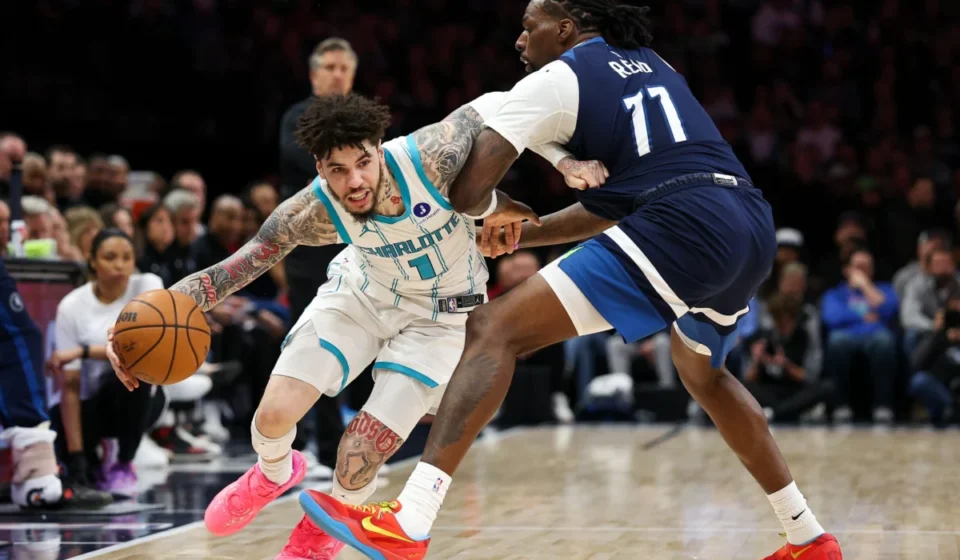

The Minnesota Timberwolves have once again set the NBA landscape ablaze, signaling a seismic shift in their competitive strategy. In a move that prioritizes offensive ceiling over roster continuity, Timberwolves President of Basketball Operations Tim Connelly has orchestrated a blockbuster trade to bring point guard LaMelo Ball to the Twin Cities. The cost of this ambition? The departure of fan-favorite Naz Reid, a treasure trove of future draft capital, and a complete reimagining of the team’s backcourt philosophy.
This latest maneuver is quintessential Connelly—a high-wire act executed with the calm detachment of a man who views job security as an afterthought compared to the pursuit of a championship.
The Chronology of a Roster Overhaul
The transformation began in earnest on Tuesday when Connelly offloaded Julius Randle and his $33-million contract. While the primary goal of the Randle trade was salary-cap flexibility, it sparked immediate speculation that Naz Reid—the long-suffering, high-producing sixth man—would finally ascend to the starting power forward role.
For 48 hours, the Minnesota faithful prepared for the "Reid Era." Instead, on Thursday, the front office delivered a stunning blow to the fanbase. In a move that echoes the 2024 trade of Karl-Anthony Towns, the Timberwolves dealt away their longest-tenured player. Reid, a folk hero whose likeness is immortalized in tattoos and whose promotional beach towels command triple-digit prices on secondary markets, was shipped to Charlotte.
The compensation package sent to the Hornets is a testament to the "all-in" nature of the deal. Minnesota surrendered the rights to swap first-round picks in 2028, 2029, and 2030, alongside second-round picks in 2029, 2032, and 2033. In exchange, the Wolves acquired LaMelo Ball and veteran wing Josh Green. By clearing the decks, Connelly has effectively stripped the draft cupboard bare to tether the franchise’s future to the Anthony Edwards-LaMelo Ball tandem.
Supporting Data: Why the Move for Ball?
The logic driving this trade is rooted in advanced analytics and the specific need to unlock Anthony Edwards’ full potential. Last season, Edwards displayed elite efficiency as a catch-and-shoot threat, hitting 49.6% of such attempts. However, he was forced into a high-usage, ball-dominant role that suppressed his ability to play off-the-ball—the very role where he thrives.
Data provided by NBA.com’s John Schuhmann highlights a stark disparity in Edwards’ efficiency: he shot just 35.3% on pull-up threes while shouldering the playmaking burden, compared to his lethal accuracy on catch-and-shoot plays. Connelly’s objective is clear: by installing a true, elite-level playmaker like Ball, the Timberwolves intend to transition Edwards into a more efficient, dangerous off-ball weapon.
LaMelo Ball’s resume supports this ambition. Despite playing for a struggling Hornets team, Ball’s offensive impact is undeniable. When Ball was on the floor last season, the Hornets scored 123.2 points per 100 possessions—a mark that would have challenged for league-best status. His assist percentage ranks among the elite, trailing only superstars like Luka Dončić and Trae Young. The hope in Minnesota is that Ball will not only facilitate for Edwards but also provide the pick-and-roll dynamism necessary to maximize Rudy Gobert’s interior presence.
The Connelly Philosophy: Embracing the Risk
Tim Connelly has never been one for the "safe" path. Five weeks ago, following a disappointing second-round exit at the hands of the San Antonio Spurs, Connelly was characteristically candid about his approach.
"The thing about risk is it is all self-induced pressure," Connelly stated. "If you don’t win, what’s the risk? I’d rather get fired than sit here being in job-survival mode. If we mess up, we will mess up loudly. We are going to try and be as aggressive as possible."
This philosophy defines the current Minnesota era. By trading for Ball, Connelly is betting that the synergy between a healthy Ball, an ascending Edwards, and a defensive anchor like Gobert can overcome the loss of depth and the lack of future draft flexibility. He has effectively bet the next half-decade of Timberwolves basketball on the ability of his coaching staff to integrate a high-usage, occasionally erratic playmaker into a team-first defensive system.
Implications for the Future: A New Identity
The trade leaves several questions unanswered regarding the team’s identity. With both Randle and Reid gone, the power forward rotation is a vacuum. Will Jaden McDaniels, the team’s defensive backbone, be asked to slide up to the four? Is the young Joan Beringer prepared to absorb heavy minutes as a backup center?
Furthermore, the arrival of Ball introduces significant challenges. Ball is notoriously streaky and has struggled with durability, playing over 70 games only twice in his six-year career. His shot selection has been labeled "capricious" by critics, and his defensive effort has often been secondary to his offensive output. For this trade to be deemed a success, head coach Chris Finch must instill a level of discipline in Ball that he has yet to demonstrate in the NBA.
Conversely, the roster is now incredibly young. There are eleven players under the age of 26, including Edwards, Ball, McDaniels, and newcomers like Josh Green and Isaiah Evans. This mirrors the "youth-first" templates seen in Oklahoma City and San Antonio, but with a crucial difference: Minnesota is currently operating without the same cache of future assets.
The Character Equation
Perhaps the most significant implication of this trade is the pressure it places on Anthony Edwards. Connelly and the coaching staff have long touted Edwards as a future "two-way guard," yet there remain moments of inconsistency in his defensive rotations and on-ball engagement. With Ball acting as the primary facilitator, the burden of leadership—and the accountability that comes with it—will rest squarely on Edwards’ shoulders.
The 2025-26 season will serve as the ultimate referendum on Connelly’s "finger painting" strategy. The team has traded away its veteran heart (Reid) and its long-term financial flexibility to chase a championship window that closes the moment Ball or Edwards suffers a significant setback.
If the chemistry gels, the Timberwolves could emerge as the most dangerous offensive team in the Western Conference. If the gamble fails, the lack of draft capital and the void in leadership left by the departure of franchise staples will make for a very "loud" collapse.
For now, the Minnesota Timberwolves are a team in transition, having opted for the volatility of a superstar playmaker over the stability of a known commodity. It is a bold, uncompromising, and potentially defining moment for the franchise. Whether it secures the Larry O’Brien trophy or necessitates a total rebuild remains to be seen, but one thing is certain: Tim Connelly has ensured that the Timberwolves will not be forgotten.