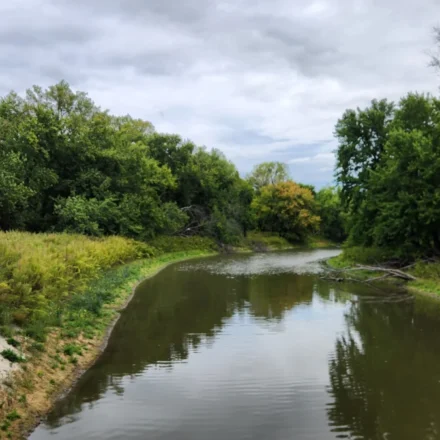











































For over three decades, the Minnesota River has been trapped in a state of environmental crisis, long holding the unenviable title of one of the most polluted waterways in the United States. While state leaders set ambitious goals for restoration as early as 1992, the river remains a testament to the friction between agricultural productivity and ecological health. Today, a unique, volunteer-led coalition known as the Minnesota River Collaborative (MRC) is attempting to do what government agencies have struggled to achieve for a generation: provide a rigorous, persistent, and expert-driven check on the drainage projects that continue to degrade the basin.
The coalition, a loose but formidable network of nearly 50 engineers, retired lawyers, former agency officials, and environmental advocates, represents an unusual cross-section of Minnesota society. Bridging the gap between the eras of Governor Arne Carlson’s early environmental initiatives and the modern realities of climate-driven flooding, the group has become a persistent presence in the, at times, obscure world of ditch drainage and water management.
The Chronology of a Crisis
The history of the Minnesota River Basin is a story of radical landscape transformation. Since the era of European settlement, the natural hydrology of the region—once characterized by wetlands that acted as nature’s sponges—has been systematically dismantled to facilitate large-scale industrial agriculture. By installing millions of miles of underground drain tiles and converting complex, meandering streams into straight-line ditches, the basin has been fundamentally re-engineered.
In 1992, the state government formally acknowledged that this path was unsustainable, setting high-level targets for water quality improvement. Yet, as David Minge, 84, a former U.S. Congressman and judge, observes, the needle has moved agonizingly slowly. Minge, who represented western Minnesota during his time in Congress, now spends his retirement hours alongside 31-year-old Tom Crawford, an organizer with the Friends of the Minnesota Valley and the Izaak Walton League.
The generational divide between Minge and Crawford is bridged by a shared frustration: a sense that the institutional mechanisms meant to protect the state’s waters have been overwhelmed by the pace of private drainage projects. While Minge brings the institutional memory of legislative and judicial battles, Crawford brings the modern, data-driven approach of tracking thousands of miles of unmapped tile systems that drain the landscape.
The “Fire Hose” Effect: Understanding the Science
The core of the MRC’s advocacy lies in addressing what they call the “fire hose effect.” In a natural state, rainfall is absorbed by soil, vegetation, and wetlands, filtering nutrients and slowing the flow of water into the river. In the modern, tiled Minnesota River Basin, the water is effectively “piped” into the main channel at high velocity.
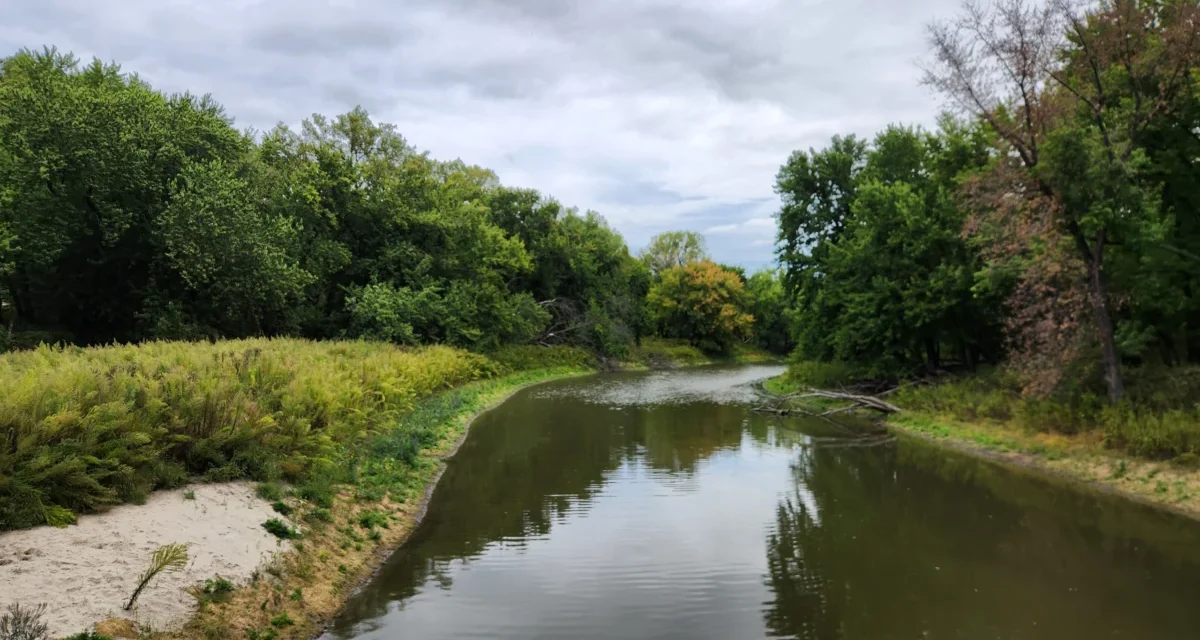
This altered hydrology does more than just move water; it physically remakes the river. The high volume and speed of the runoff scour the soft, sandy banks of the Minnesota River, pulling vast quantities of sediment into the current. This sediment, laden with agricultural nitrogen and phosphorus, is the primary reason the Minnesota River is the single largest source of pollution for the Upper Mississippi.
The consequences are not merely local. This nutrient-heavy plume flows all the way to the Gulf of Mexico, fueling the massive seasonal “dead zone” where aquatic life cannot survive. As Tom Crawford explains, the more water that is forced into the river, the more erosive it becomes, creating a self-reinforcing cycle of destruction. “The soft sandy banks of the Minnesota River get chewed up and sent down into the Gulf,” he says, underscoring the regional scale of the problem.
Data-Driven Advocacy: The MRC Strategy
Unlike traditional environmental groups that might focus on public awareness campaigns or broad legislative lobbying, the MRC operates in the weeds of technical policy. Their approach is focused on “high-level” review of drainage projects.

Crawford maintains a comprehensive, public-facing spreadsheet that tracks the status of 17 major drainage projects across 11 counties. By analyzing engineering reports, work timelines, and agency comments, the group identifies projects that lack adequate environmental safeguards.
One of their most effective tools is the “redetermination of benefits.” Under Minnesota law, when drainage ditches are modified or expanded, the costs are spread among landowners based on the increased value the drainage provides. The MRC, utilizing the expertise of former University of Minnesota agricultural economist Steven Taff, scrutinizes these financial calculations. By pointing out when the economic justification for a project is flawed or when it ignores the negative impact on natural features—such as rare calcareous fens—the coalition creates a bottleneck for projects that would otherwise proceed with little oversight.
Official Responses and Judicial Roadblocks
The path to regulation is fraught with legal and jurisdictional complexity. A central tension exists between the desire of environmental advocates to regulate drainage as a “point source” of pollution and the reluctance of the Minnesota Pollution Control Agency (MPCA) to claim authority over private agricultural drainage systems.
The Minnesota Center for Environmental Advocacy (MCEA) recently led a legal challenge seeking to compel the MPCA to regulate these outlets. In a significant setback for the movement, a Ramsey County District judge ruled in August that the agency does not have the legal authority to regulate agricultural drainage systems as they currently exist. MCEA is currently appealing that decision, and the case is expected to reach higher courts by the end of the year.
The MRC is also watching the work of a state-level water quality task force, convened by Attorney General Keith Ellison. While the task force has provided a venue for discussing the complexities of water stewardship, it has not been without its own controversies. Members have reported frustration with “stalling tactics” and a persistent avoidance of the most difficult questions regarding mining and agricultural drainage. With the task force’s mandate coming to a close, the prospects for systemic, statewide reform appear to rest on the shoulders of the next legislative session.
Implications for the Future
The implications of the MRC’s work extend far beyond the banks of the Minnesota River. Their efforts highlight a glaring vacuum in state governance: the absence of a central, unified authority to manage the drainage of the entire landscape. With an estimated 100,000 miles of private drain tile that is largely unmapped and unregulated, the state is currently managing its water resources through a fragmented, county-by-county approach that is ill-equipped to handle the challenges of a changing climate.
The group’s proposal for a dedicated Minnesota River Commission remains their primary long-term goal. Such a commission would, in theory, provide the integrated oversight needed to synchronize water management across county lines. While efforts to establish this body were delayed in the last legislative session, advocates like Scott Sparlin of the Coalition for a Clean Minnesota River remain optimistic that after the current election cycle, they can secure the legislative support necessary to move the proposal forward.
For the members of the MRC, the work is a labor of love—a persistent, voluntary effort to prevent the further degradation of a river that is central to the state’s identity. By turning the spotlight on the technicalities of engineering reports and the legal nuances of drainage law, they have forced a conversation that many in the agricultural sector would prefer to avoid.
As the river continues to face the dual pressures of extreme weather events and legacy land-use decisions, the Minnesota River Collaborative serves as a vital, if underfunded, watchdog. Their work proves that even in a landscape defined by industrial-scale agriculture and opaque regulation, informed and persistent citizen oversight can move the needle, even if only one ditch project at a time. The question remains whether the state of Minnesota will choose to empower this kind of oversight or continue to allow the “fire hose” of the basin to dictate the future of its most troubled waterway.