
















































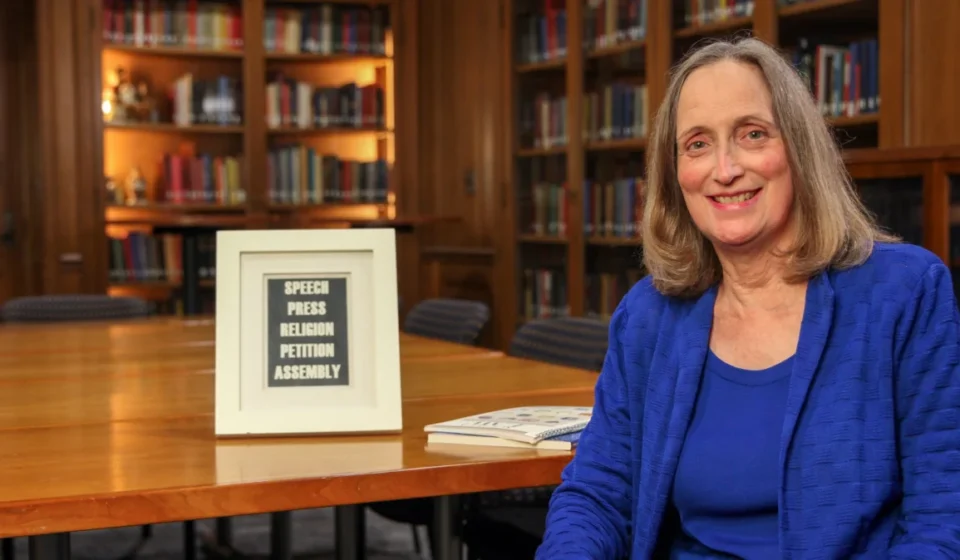

On May 25, the University of Minnesota’s Hubbard School of Journalism and Mass Communication will bid farewell to a titan of the First Amendment. Jane E. Kirtley, the Silha Professor of Media Ethics and Law, is stepping down after a quarter-century of shaping the minds of future journalists and serving as the nation’s preeminent voice on the legal protections of the press. For those within the corridors of media law, her name is synonymous with the defense of information freedom; to the public, she has been a steady, authoritative guide in an era defined by the rapid erosion of democratic guardrails.
A Legacy Forged in the Crucible of Law
Kirtley’s career has been defined by a relentless commitment to the structural integrity of the American press. Before arriving at the University of Minnesota in 1999, she spent 14 years as the executive director of The Reporters Committee for Freedom of the Press in Arlington, Virginia. That tenure followed a five-year stint as a private attorney in New York and Washington, D.C.
Her transition to academia was not a retreat from the front lines but a relocation to a position of intellectual influence. As the Silha Professor, she mentored generations of students, instilling in them the importance of critical inquiry. However, as she approaches her 72nd birthday, Kirtley admits that the decision to retire was not made lightly. She had considered the move since late 2019, shortly after her husband, Notre Dame law professor Stephen Cribari, retired. The onset of the COVID-19 pandemic, which shuttered classrooms and grounded international travel, initially kept her in the lecture hall.
“You just can’t take for granted you can keep doing the things you care about doing,” Kirtley remarked, reflecting on the mortality of her predecessor, Don Gillmor, who passed away four years after his own retirement in 2009. “I loved my five-month Fulbright teaching media law and ethics in Riga, Latvia. I want to make sure I’m healthy enough to do it again.”
The Weaponization of the Legal System
Kirtley’s departure comes at a moment of profound crisis for the Fourth Estate. In an extensive interview, she identified the weaponization of the legal system as the single greatest threat to independent journalism today. While she notes that presidents from Nixon to Obama have had antagonistic relationships with the press, the current political climate—led by the rhetoric and litigation strategies of Donald Trump—marks a departure from historical norms.
“I’ve never seen a president of the United States sue media organizations for libel, much less other suits based on novel legal theories like consumer fraud,” Kirtley observed. Her concern centers on the precarious state of New York Times v. Sullivan, the 1964 Supreme Court ruling that established the “actual malice” standard. This precedent has shielded journalists from crippling lawsuits for six decades, but Kirtley believes the current composition of the Supreme Court, with its willingness to overturn long-standing precedents, puts that vital protection at risk.
The Erosion of the Public Interest Model
Beyond the courtroom, Kirtley points to an operational crisis within media ownership. The transition from family-owned or mission-driven legacy outlets to profit-seeking entities—or vehicles for ideological influence—has fundamentally altered the mission of journalism.
“So many of the owners of media outlets today do not see them as vehicles for serving the public interest,” Kirtley argued. “They see them as means for wielding power or maximizing profit, or both.” She contrasts this with the era of Hearst or the Grahams, who, despite their flaws, understood the necessity of a free press as a check on power. The modern influx of venture capital and Silicon Valley ownership has, in her view, severed the altruistic bond between the institution and the public it serves.
The Credibility Gap and the Silo Effect
When asked how journalists should navigate an administration that relies on blatant obfuscation, Kirtley suggests the problem is structural rather than purely tactical. The public’s trust in mainstream media has been systematically undermined for over four decades, creating a landscape where objective facts are easily dismissed as partisan maneuvering.
“Once you have done that, it becomes very easy for someone like President Trump to use terminology like ‘fake news,’” Kirtley said. “People bought that, and continue to buy that.” The internet has compounded this by allowing citizens to retreat into information silos, where they consume only what reinforces their pre-existing biases. For a journalist, providing evidence or documentation no longer guarantees a breakthrough; it is often viewed through the prism of “liberal bias,” rendering the truth increasingly subjective.
The Artificial Intelligence Conundrum
Perhaps the most personal aspect of Kirtley’s retirement is her candid disdain for artificial intelligence in the newsroom. She describes A.I. as “the devil’s tool,” a sentiment that informed her decision to leave the university.
“I don’t feel able to train my students in how to use it,” she admitted. “I would feel complicit in a plot to undermine so many values that matter to me, like accuracy and critical thinking.” Kirtley views the rise of A.I. not just as a labor-saving device, but as a direct threat to the editorial oversight—such as that provided by copy editors—that ensures accountability. By outsourcing the craft of writing to machines that cannot distinguish between truth and hallucination, she fears the industry is courting a disaster of misinformation and ethical failure.
Regulatory Retaliation: The FCC Under Scrutiny
Kirtley also expressed grave concern over the current direction of the Federal Communications Commission (FCC) under Chairman Brendan Carr. She characterized the commission’s recent actions toward late-night broadcasters as an unprecedented, politically motivated assault on free speech.
“I’ve never seen anything so blatantly political in modern history as what Brendan Carr is doing now,” she noted. While the FCC has historically regulated indecency, it has traditionally operated within a framework of protecting the public sphere rather than policing political viewpoints. Kirtley warns that the targeting of satirical programs—traditionally protected as "bona fide news" or commentary—signals a dangerous expansion of executive regulatory power that could silence legitimate dissent.
Implications for the Future of Journalism
As Kirtley prepares for her final lectures, her outlook for the next generation of journalists is a mixture of anxiety and tempered hope. She remains worried that the combination of economic instability, the threat of legal retaliation, and the rise of A.I. will drive away the brightest minds.
Yet, she refuses to count out the profession entirely. “I know there are still many young people who want and who need to do journalism,” she said. “They want to hold government and other powerful institutions to account. They want to provide the public with information they need to make good, informed decisions.”
The departure of Jane Kirtley marks the loss of a standard-bearer, but her legacy is embedded in the thousands of students she has mentored—journalists who now carry the responsibility of defending the First Amendment in a digital age. As she steps away to pursue travel and personal reflection, the industry she served for decades remains in a state of flux, standing at a crossroads between technological convenience and the fundamental requirement for a free, informed society.
The questions she raised—about the stability of legal precedents, the integrity of ownership, and the moral hazards of technology—will remain the defining challenges for the next generation of media practitioners. For Kirtley, the work of defending the truth was never about the tools of the trade, but about the bedrock principles that ensure those tools are used in the service of the public good.