


























































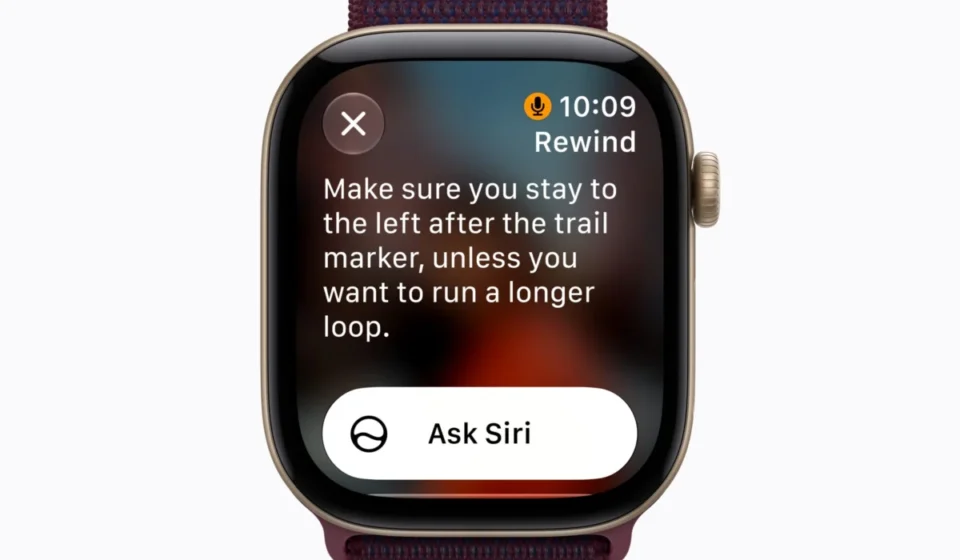
The Strategic Gambit: How Apple’s ‘Siri Recap’ is Weaponizing Regulation to Define the Ambient AI Era

In the high-stakes theater of modern technology, Apple rarely makes a move without considering the long-term regulatory landscape. The recent introduction of "Siri Recap" for the Apple Watch is not merely a feature update; it is a calculated strategic maneuver that challenges the status quo of ambient artificial intelligence. By bringing persistent, AI-driven data processing into the public sphere, Apple is effectively forcing global regulators to confront the murky ethics of ambient monitoring—a move that could ultimately define the boundaries for every tech giant currently racing toward an AI-augmented future.
Main Facts: The Intersection of Convenience and Surveillance
At its core, Siri Recap represents a shift in how wearable technology interacts with the physical world. The feature is designed to process ambient audio, summarize conversations, and provide users with a digital digest of their day. However, this convenience arrives at a complex legal junction. Unlike traditional recording devices, which are subject to stringent "two-party consent" laws in many jurisdictions, Apple is positioning Siri Recap as an ephemeral, privacy-centric tool.
Apple maintains that it has implemented robust guardrails: the system does not store permanent audio files, nor does it retain raw transcripts or personal data in a way that allows for re-identification. Yet, the inherent reality of "ambient" tech is that it operates in environments where bystanders have not explicitly consented to being processed by an AI. By normalizing this technology, Apple has placed itself in the crosshairs of privacy advocates and data regulators, a position the company seemingly occupies by design rather than by accident.
Chronology: The Evolution of Apple’s AI Posture
The path to the current regulatory standoff was not sudden; it was a deliberate evolution of Apple’s "Privacy First" branding.
- Pre-2023: Apple established its reputation by limiting third-party data tracking, positioning its ecosystem as a "walled garden" where user data is shielded from advertising conglomerates.
- Early 2024: As the generative AI boom accelerated, Apple faced pressure to integrate advanced models into its hardware. The challenge was maintaining its privacy promise while offering the predictive power of its competitors.
- Mid-2024: The unveiling of Apple Intelligence signaled a shift toward on-device processing. The company began emphasizing the "Private Cloud Compute" architecture to keep data localized.
- Late 2024: The rollout of Siri Recap on Apple Watch introduced the concept of ambient monitoring. This move immediately sparked internal and external debates regarding the ethics of capturing information in public or semi-public settings.
- Present Day: Apple is actively navigating the fallout, utilizing the "notebook and pen" analogy to frame its technology as a mere digital extension of human note-taking, thereby inviting—and accelerating—a formal regulatory review.
Supporting Data: The Privacy-Utility Tug-of-War
The friction between Apple and regulators stems from a fundamental disagreement on the definition of "privacy." Apple argues that by stripping away PII (Personally Identifiable Information) and utilizing local processing, it is compliant with GDPR and other regional mandates.
However, data suggests that consumers remain deeply wary. Surveys from privacy advocacy groups indicate that while users value the utility of AI, nearly 68% of respondents express discomfort with devices that "listen" to their surroundings. Apple’s challenge is to bridge this gap.
Industry analysts note that Apple’s move is a defensive hedge. Companies like Meta and OpenAI are aggressively developing wearable AI hardware (such as smart glasses and multimodal assistants) that rely heavily on cloud-based data ingestion. By forcing a conversation on regulation now, Apple is compelling these competitors to adopt a more restricted, privacy-heavy architecture—a move that effectively levels the playing field in Apple’s favor by neutralizing the "data-scraping" advantage held by its rivals.
Official Responses and Corporate Strategy
The public messaging from Apple has been carefully choreographed. Greg Joswiak, Apple’s Worldwide Marketing VP, has been a central figure in defining the narrative. His recent public commentary attempted to demystify the technology by comparing it to the most analog tool in history: the pen and notebook.
"It is simply a digital assistant capturing what is already being said," the company suggests. By positioning the feature as a passive tool rather than a proactive surveillance mechanism, Apple is attempting to set the "Terms of Reference" for what constitutes acceptable AI behavior. If regulators accept the "digital notepad" framework, it sets a precedent that will become the industry standard. If they reject it, Apple has already built the necessary hardware and software to pivot to even stricter, user-controlled consent models, leaving competitors who rely on broader data harvesting scrambling to redesign their fundamental product architectures.
Implications: A Blueprint for the Future of AR
The implications of this strategy extend far beyond the Apple Watch. Apple is currently laying the groundwork for its future in Augmented Reality (AR). When Apple eventually releases a more advanced iteration of its wearable hardware—likely an AR glasses product—it will need to capture and process visual data from the real world.
If Siri Recap establishes a legal framework for "summarized" audio, it creates a pathway for "summarized" video. The argument would likely be that the device never saves the video footage, but rather extracts metadata to assist the user. If Apple can secure a regulatory "green light" for its audio-summarization tech in the European Union, it essentially unlocks the door for more sophisticated visual-processing technologies to enter the same market.
The "Equal Playing Field" Argument
This is a zero-sum game. Companies that have built their business models on the ingestion of massive datasets—specifically those utilizing AI to profile users for advertising—will find themselves at a severe disadvantage if they are forced to adopt Apple’s "privacy-by-design" constraints. By forcing the hand of legislators, Apple is essentially lobbing a grenade into the business models of its primary rivals.
The European Union Impasse
Perhaps the most critical implication concerns the EU. Currently, the regulatory environment in Europe has stalled the full deployment of Apple Intelligence. By engaging directly with regulators through the introduction of Siri Recap, Apple is testing a "blue-print" of intermediary architecture. If the EU accepts the privacy safeguards inherent in the Apple Watch feature, it could serve as the compromise that finally allows the full suite of Apple Intelligence to launch in the European market.
Conclusion: The Long Game
Apple’s bet is audacious: by intentionally moving into a controversial space, they are forcing the government to play referee. While this creates short-term friction and invites scrutiny, it grants Apple the ultimate advantage of being the company that helped write the rules.
If the resulting regulations favor privacy-focused, local-processing models, Apple wins. If the regulations are too restrictive, Apple possesses the engineering depth to pivot, whereas its data-dependent competitors may find their business models legally untenable. In the battle for the future of ambient AI, Apple isn’t just building a product; it is building the legal and ethical cage in which all other players will be forced to compete. As the tech industry moves into the "always-on" era, Apple’s strategic gambit may prove to be its most significant product launch of the decade.