












































By [Your Name/Journalistic Staff]
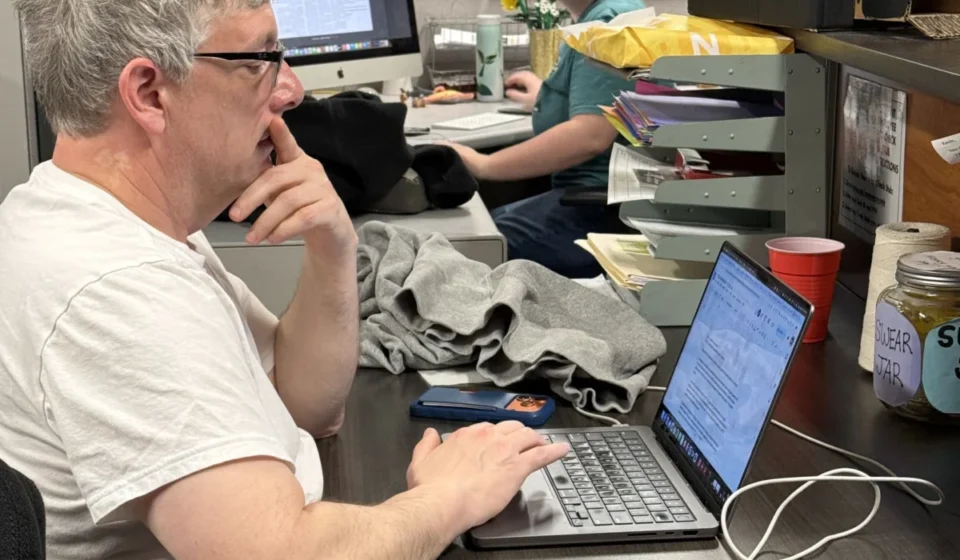
It is 8:00 p.m. on a Monday in Mankato, Minnesota. Inside the offices of The Reporter, the student newspaper of Minnesota State University (MSU), the air is thick with the rhythmic clatter of mechanical keyboards and the low murmur of collaborative debate. For Anahi Zuniga, the publication’s editor-in-chief, the final hour before the print deadline is not a time for panic—it is a time for precision.
While the broader newspaper industry has grappled with a decade of retrenchment, layoffs, and the evaporation of print editions, the scene at The Reporter remains remarkably traditional. Articles are being polished, photos are being cropped, and the final layouts are being locked into place. In just sixty minutes, Zuniga will hit "send," dispatching the digital files to a local printing press. By Tuesday morning, the physical paper will be distributed across campus, featuring a lead story on a proposed 7% tuition increase—a topic of vital concern to the student body.
For Zuniga, holding the finished product is more than a professional milestone; it is an act of preservation. "It’s a satisfying feeling," she says, tracing the layout she helped shepherd from draft to newsprint. "It keeps history alive."
The Chronology of a Deadline
The lifecycle of an edition of The Reporter is a high-stakes, recurring drama. The process begins days in advance, as reporters hit the pavement, interviewing faculty, attending administrative meetings, and covering local sports. By Monday morning, the newsroom transitions from a creative space to an assembly line.
Editors Addie Larson, Alexis Darkow, Isaac Rozwadowski, and Logan Schlosser work in tandem, reviewing copy and coordinating with the business office. The operation is lean: it is supported by only two full-time university staff members, Jane Tastad (business manager) and Dana Clark (advertising design and production coordinator). They are bolstered by the expertise of Robb Murray, an editor at the Mankato Free Press, who provides professional mentorship and proofreading.
The deadline is the gravity that holds the operation together. As the clock ticks toward 9:00 p.m., the tension in the room is palpable but contained. Once the final PDF is transmitted to the printer, the cycle resets immediately. There is no time for long-term celebration; the editors pivot instantly to planning the next edition. For these students, the deadline is not just a barrier to entry—it is the heartbeat of their academic and professional development.
A Century of Institutional Memory
The Reporter recently marked its 100th year of publication, a milestone that serves as a testament to the resilience of the campus press. On March 24, alumni returned to the MSU campus to honor the paper’s centennial. Among the speakers was Myron Medcalf, a prominent ESPN senior college basketball writer and Star Tribune columnist, who served as the paper’s first African-American editor-in-chief in 2003.
Medcalf’s reflection on his time at the paper underscores the fundamental purpose of student journalism. "I learned the ins and outs of actually being on deadline, the accuracy that’s necessary in your reporting, the fact that you are communicating to an audience that’s much bigger than you are," Medcalf told the crowd. "It’s not about you. It’s about the people who are going to pick up your story and read it."
Medcalf emphasized that in an age of information saturation, the role of the journalist—student or professional—remains a pillar of democracy. "One-hundred years from now, all of us are gone and what we will have left is what we contributed to this world," he noted. "A big part of that, no matter what anyone tells you, will be the written word. It’ll be the archives from the MSU Reporter and all of these publications."
The State of the Campus Press: Data and Trends
While The Reporter continues to maintain a twice-weekly print schedule, the landscape across Minnesota is varied. The decline of the traditional newspaper industry has forced many student publications to innovate or, in some cases, retreat.

The Minnesota State system and the University of Minnesota system provide a window into these shifting trends:
- Adaptation: The Minnesota Daily at the University of Minnesota-Twin Cities, once a print stalwart, has pivoted to a digital-first, daily-update model. Similarly, The Bark at the University of Minnesota-Duluth combines a monthly print magazine with daily online content.
- Reduced Frequency: Some institutions have opted for a "less is more" approach. The Winonan at Winona State University, for instance, publishes on a bi-weekly basis.
- The Shift to Digital: The Advocate at Minnesota State Moorhead has moved almost entirely online, with print editions limited to once per semester. Bemidji State University’s Northern Student has transitioned into a quarterly magazine format.
- The "News Desert" Phenomenon: Some campuses, such as Minneapolis College, currently lack an active student paper, though student government leaders are exploring ways to revive a publication.
Interestingly, the existence of a journalism department is no longer a prerequisite for a healthy student newspaper. Publications like The Olaf Messenger at St. Olaf College and The Carletonian at Carleton College operate successfully without dedicated journalism degree programs, proving that the drive to report is a cultural phenomenon rather than purely an academic one.
Expert Perspectives: Why It Matters
Doug Westerman, an advisor to student journalists at Winona State University, views the "chugging along" of college papers as a vital component of the campus ecosystem. He acknowledges that student papers deal with "natural attrition"—the constant cycle of seniors graduating and freshmen arriving—but notes that this turnover is also a source of constant renewal.
Westerman, who often receives calls from employers looking to hire his former students, maintains that the core tenets of journalism remain unchanged, regardless of the medium. "You still have to check sources, you still need to do research, whether it’s going on a printed page or going on a post," he says.
The professional value of this experience is immense. For many students, the newsroom is their first encounter with ethical dilemmas, conflict resolution, and the demands of public accountability. It is a laboratory where students learn to synthesize complex information into coherent, accessible narratives.
Implications for the Future
The survival of student newspapers carries significant implications for the future of the media landscape. As local news outlets across the country shrink, college papers are increasingly filling the void, covering campus administration, local government, and student life in ways that no other entity does.
For Anahi Zuniga, the impact is deeply personal. Reflecting on her growth since enrolling at MSU, she admits she was initially uncertain of her identity. Through the rigors of the newsroom, she found her voice. "I feel so sure of myself now and who I want to be after graduation," Zuniga says. "I can use my words as a way to express what I feel and think is necessary."
This sentiment is echoed by students across the state. Whether the medium is a glossy magazine, a fast-paced website, or a traditional broadsheet, the act of student reporting fosters a unique perspective. It forces students to step outside their personal bubbles and engage with the broader community.
"We get to have all these very meaningful conversations with classmates and see their thoughts," Zuniga concludes. "I think, overall, working at a college newspaper just opens up a completely different lens on how you view the world."
As the industry continues to evolve, the student press remains a bedrock of campus life—a place where history is recorded, one deadline at a time. While the methods of distribution may shift, the core mission of these young journalists—to bear witness, to verify, and to inform—remains as relevant in the 21st century as it was when the first issues were printed a century ago. The ink may eventually dry on some pages, but the spirit of inquiry that drives these students is, for now, showing no signs of fading.