

















































Originally published by The Daily Yonder, this report examines a transformative shift in preventative healthcare for rural Minnesota.
In the quiet corridors of rural medical clinics, a silent epidemic is being fought with a deceptively simple tool: a conversation. Lung cancer, the leading cause of cancer-related death in the United States, carries a survival rate of 80% to 90% when detected in its earliest stages. Yet, for thousands of rural Minnesotans, this life-saving window of opportunity remains firmly shut, obscured by a combination of geographic isolation, systemic barriers, and the lingering, corrosive weight of social stigma.
A pioneering research initiative led by Dr. Abbie Begnaud of the Masonic Cancer Center at the University of Minnesota is seeking to dismantle these obstacles. By integrating lung cancer screening into the foundational workflow of primary care, the project aims to transform how rural healthcare providers approach one of their most vulnerable patient populations.
The Urgency of Early Detection
"Anybody with lungs can get lung cancer," Dr. Begnaud stated in an interview with the Daily Yonder. The statistical reality, however, is stark: while early detection offers a path to long-term survival, fewer than 20% of eligible Minnesotans currently undergo the recommended screenings.
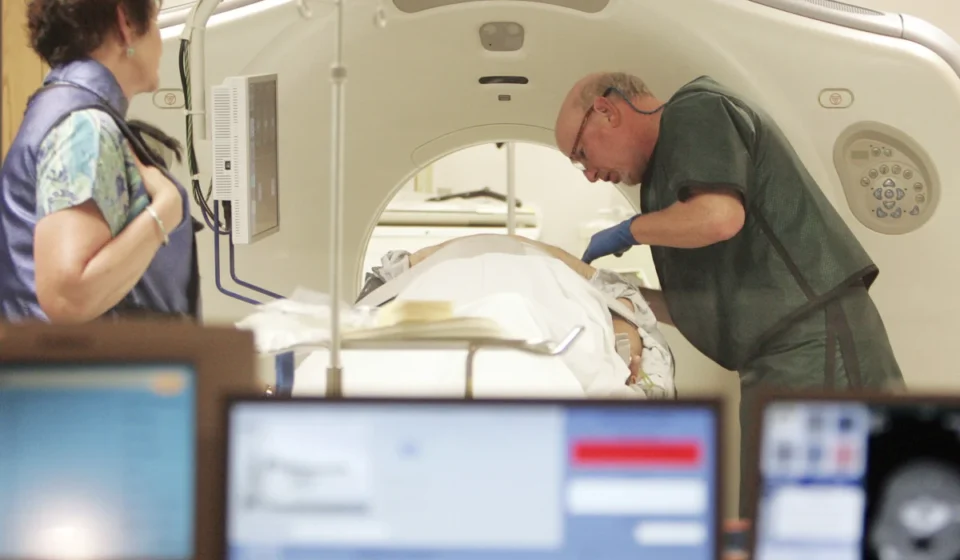
The medical consensus is clear: annual low-dose computed tomography (LDCT) scans are the gold standard for individuals aged 50 and older with a history of heavy smoking. Despite this, the screening gap in rural communities remains profound. This is not merely a matter of patient choice; it is a multifaceted issue involving logistics, resource allocation, and a complex psychological landscape that researchers are only just beginning to navigate.
Chronology of a Public Health Challenge
To understand the current crisis, one must look at the historical trajectory of anti-smoking advocacy. Over the past several decades, public health campaigns have been remarkably successful in curbing smoking rates nationwide. However, this success came at a cost. The aggressive messaging used to discourage smoking often conflated the health behavior with moral failing, leading to pervasive stigma.
The Evolution of Stigma
Dr. Begnaud notes that the very campaigns designed to save lives inadvertently created a barrier to care. "People who have smoked or continue to smoke are certainly aware that it’s bad for their health, and they know that everyone else is thinking about it," she explained. "I think they internalize these messages of blame. It’s really important to get people to be open to screening to try to decouple the kind of shame or blame that goes along with [smoking]."
This internal dialogue, combined with the logistical difficulty of accessing specialized imaging centers in sparsely populated regions, has created a "perfect storm" for delayed diagnoses. Patients often present with advanced-stage disease—Stage 3 or Stage 4—when treatment options are limited and the prognosis is significantly poorer.
The "Whole-of-Office" Model: A Pilot Success
The pilot program launched by the Masonic Cancer Center and the Minnesota Cancer Clinical Trials Network (MNCCTN) represents a shift in strategy. Instead of relying on individual physicians to remember to order screenings during brief consultations, the program involves the entire clinic staff.
How the Process Works
The model decentralizes the responsibility of screening. By training administrative staff, nurses, and medical assistants to identify eligible patients and guide them through the process, the clinic ensures that no patient falls through the cracks. Crucially, the program facilitates the scheduling of the scan while the patient is still in the exam room.
"Typically, patients are handed a piece of paper with information to make their own appointments," Dr. Begnaud said. "This is often where the process breaks down—the patient gets busy, forgets, or feels overwhelmed by the logistical hurdles. By bringing the scheduling process into the clinical workflow, we remove that friction."
The results of this pilot were promising: the six participating primary care clinics saw a 30% increase in the number of screening orders for eligible patients. While the study size was limited, the proof-of-concept suggests that the "whole-of-office" approach is both feasible and highly effective in a rural primary care environment.
Supporting Data: The Rural-Urban Divide
The necessity of such programs is underscored by recent data from the U.S. Surgeon General and the American Lung Association. As of 2023, national smoking rates hovered around 10.8%, but this figure masks deep geographic disparities.
Disparities in Prevalence and Access
- Smoking Prevalence: According to the 2024 Surgeon General’s report, 15.4% of rural adults smoke, compared to 10.1% of their urban counterparts.
- Intensity of Use: Rural smokers are not only more numerous proportionally, but they also tend to consume more—averaging 15 or more cigarettes per day.
- Regional Trends: Adults in the Midwest and Southeast are 40% more likely to smoke than those in the Northeast or West.
- Cessation Struggles: The report found that rural adults face significant challenges in quitting. "Quit ratios and the prevalence of a past-year quit attempt have been significantly lower among people who lived in rural counties than among those who lived in large central metropolitan areas," the report stated.
This cycle of higher smoking rates, lower quit success, and limited access to preventative imaging creates a compounding effect on mortality rates in rural America.
Implications for Future Policy and Care
The success of the pilot program has prompted the research team to seek expansion into statewide trials. Dr. Begnaud emphasizes that the goal is not just to prove a point, but to create a scalable, sustainable model that can be implemented in clinics across the country.
Expanding the Scope
The next phase of the research will involve a broader range of rural clinics, allowing the team to collect the longitudinal data necessary to definitively link the intervention to increased screening rates. If successful, the model could serve as a template for other cancer screenings, including colon and breast cancer, where similar access disparities exist.
"What we really wanted to see was: ‘Is this approach feasible? Is this doable in clinics?’" Dr. Begnaud remarked. "The answer is ‘yes.’ The clinic teams were excited to be part of the solution. It empowered them to take an active role in preventing the very illnesses they see devastating their own neighbors and friends."
Official Perspectives: The Human Element
Beyond the clinical data and the logistical frameworks, the driving force behind this research remains deeply personal. For Dr. Begnaud, an associate professor at the University of Minnesota Medical School and a practicing pulmonologist, the motivation is found in the patients she treats every day.
"Every time I see somebody who comes to me who should have been screened and wasn’t, and now they have a stage 3 or a stage 4 lung cancer, it motivates me to get up and work harder tomorrow," she said.
This empathy is the cornerstone of the project’s design. By humanizing the patient experience and moving away from the stigma-laden language of the past, the researchers are creating a space where rural residents feel supported rather than judged.
A Path Forward
The implications for public health are profound. By addressing the "last mile" of healthcare—the transition from being eligible for a screening to actually receiving one—this program offers a roadmap for rural health equity.
The strategy is simple but profound:
- Educate the staff: Ensure the entire clinic team understands the importance of screening.
- Remove the burden: Take the scheduling responsibility away from the patient and embed it into the clinical encounter.
- De-stigmatize the conversation: Approach smoking history with empathy, focusing on lung health rather than past habits.
As the program looks to expand, it carries with it the hope that lung cancer will no longer be a diagnosis that catches families off guard, but a manageable condition detected early enough to ensure long-term health. The research proves that when the healthcare system meets the patient where they are—both geographically and emotionally—the results can be life-saving. For the rural clinics of Minnesota, this project is not just a study; it is a vital tool for survival.