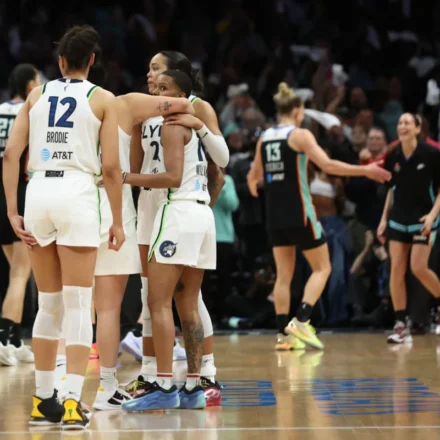





















































The Minnesota Timberwolves’ 2025-26 season ended not with a bang, but with a sobering, 139-109 realization. As the San Antonio Spurs dismantled them in a decisive second-round elimination, the final buzzer signaled more than just the end of a campaign; it marked the conclusion of a six-month experiment that ultimately failed to align talent with tactical execution.
The Wolves finished their season with the uncomfortable clarity that they lacked the physical, emotional, and fundamental cohesion required to secure an NBA championship. What began as a season of high expectations dissolved into a campaign defined by miscalculations, identity crises, and a front office now tasked with navigating a difficult transition.
A Season Bracketed by Tactical Gaffes
The 2025-26 season for Minnesota was, in retrospect, an exercise in trying to thread a needle with its eye closed. Head coach Chris Finch, while widely respected for his offensive ingenuity, found himself at the helm of a roster that struggled to balance conflicting objectives.
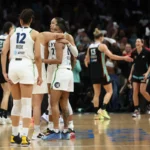
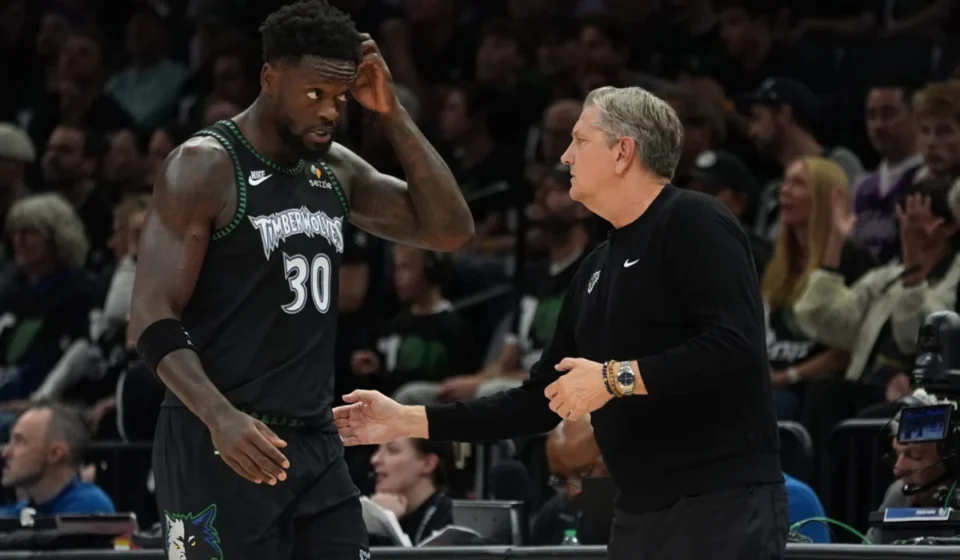
The final blow came in the second-round series against the Spurs. In a desperate attempt to neutralize the generational force of Victor Wembanyama, Finch implemented a high-risk defensive scheme: switching assignments to place Julius Randle on Wembanyama, effectively allowing Rudy Gobert to roam. While the scheme initially stifled the Spurs’ superstar—limiting him to just four points in the first quarter—it left the perimeter vulnerable. Spurs guard Stephen Castle, the reigning Rookie of the Year, exploited the space, hitting three-pointers and attacking the rim with clinical precision. The resulting 30-point drubbing was the third time in six games the Spurs had dismantled the Wolves by such a margin, highlighting a fundamental failure in defensive identity.
Finch was quick to accept responsibility. "We lost some of our aggression," he admitted post-game. "We needed to come out more aggressive. That’s on me."
The "Original Sin": A Chronology of Disruption
The roots of the dysfunction, however, ran much deeper than a single game-plan adjustment. During exit interviews, Finch offered an uncharacteristically candid assessment of the team’s early-season struggles, pointing to a unilateral decision made on the eve of the season opener.
In an effort to integrate Donte "Ragu" DiVincenzo into the starting lineup, Finch shifted Anthony Edwards to the point guard position and moved 19-year veteran Mike Conley to the bench.
"Putting Ant at the point guard spot on the eve of the season, it certainly helped with Donte, but it hurt putting everybody in the best position," Finch explained. "It threw off the rhythm and the style in which we had to play. It ate into the continuity, and we had conflicting goals."
This shift created a ripple effect. Conley, the team’s stabilizing floor general, never found his footing in a secondary role, and the younger players were thrust into positions for which they were unprepared. The decision, intended to "preserve" Conley, ironically hampered the team’s ability to establish a consistent, championship-caliber identity.
Supporting Data: The Randle Factor
The statistical reality of the season tells a story of poor fit, particularly concerning the acquisition of Julius Randle. Brought in as part of the blockbuster trade that sent Karl-Anthony Towns to New York, Randle was expected to provide a secondary scoring punch. Instead, his presence created a logjam.
The advanced metrics from the elimination loss to the Spurs were damning: in the 23:42 minutes Randle was on the floor, the Timberwolves were outscored by 34 points. In the 24:18 he sat on the bench, Minnesota was actually +4.
Furthermore, Randle’s 32.9% three-point shooting percentage over his two-year tenure in Minnesota exacerbated the team’s spacing issues. When paired with Rudy Gobert, whose offensive utility is limited to the paint, the floor became perpetually cramped. This forced Anthony Edwards into a high-usage role that acted as an energy drain, preventing him from operating as the lethal, opportunistic scorer he is at his best.
Official Responses and Internal Climate
The post-elimination atmosphere was notably quiet regarding Randle, who was the only member of the core rotation to avoid the media entirely. Conversely, long-time stalwarts like Naz Reid and Jaden McDaniels used their platform to advocate for a return to a more structured, traditional point guard-led offense.
For President of Basketball Operations Tim Connelly, the upcoming offseason represents a crossroads. Having already traded away significant future draft capital—a byproduct of the original Gobert acquisition—Connelly’s options are limited. The team needs to inject playmaking back into the roster, but the market for players like Randle remains speculative.
Connelly’s history suggests he will not be passive. Known for his aggressive pursuit of talent—evidenced by his documented interest in Giannis Antetokounmpo and Kevin Durant—Connelly is expected to explore all avenues to retool the roster. However, the prevailing sentiment within the organization is that the "super-team" approach may be a trap. The modern NBA, as evidenced by the success of the Thunder and Spurs, is increasingly rewarding teams with deep, homegrown, and versatile rosters.
Implications: The Path Toward 2026-27
The Timberwolves face two primary, interlocking imperatives if they hope to return to contention:
- Re-establishing Floor Generalship: The team must acquire a reliable, Conley-esque point guard who can manage the half-court offense, allowing Edwards to thrive as a primary scoring wing without the burden of constant initiation.
- Addressing the Frontcourt Logjam: Moving on from Julius Randle appears necessary. His overlapping skill set with Edwards and his lack of perimeter gravity make him a poor fit for the team’s long-term tactical vision.
While trading Rudy Gobert would likely yield a higher return on the trade market, his defensive presence remains vital to the team’s defensive identity. Replacing him would create a void that the current roster is ill-equipped to fill. Thus, the front office faces a delicate balancing act: how to offload redundant salary while maintaining the structural integrity of the defense.
Conclusion: Lessons from the Hardwood
Despite the disappointment of the final result, the 2025-26 season was not without its merits. The Timberwolves showcased stretches of beautiful, high-quality basketball and proved their grit by defeating a formidable Denver squad in the first round.
The lesson learned from the Spurs and the Thunder is clear: talent alone is insufficient. When a team cheats on its own intentions—by forcing lineups that don’t fit or failing to maintain defensive discipline—it will inevitably be exposed.
As the organization looks toward the draft and free agency, the focus must shift from "super-team" aspirations to the cultivation of the core. Anthony Edwards, Naz Reid, and Jaden McDaniels are entering their primes. The onus is now on the coaching staff and the front office to provide them with the support, structure, and spacing necessary to turn their potential into a championship reality. Whether this iteration of the Timberwolves can learn from their own "original sin" remains the defining question of the upcoming offseason.