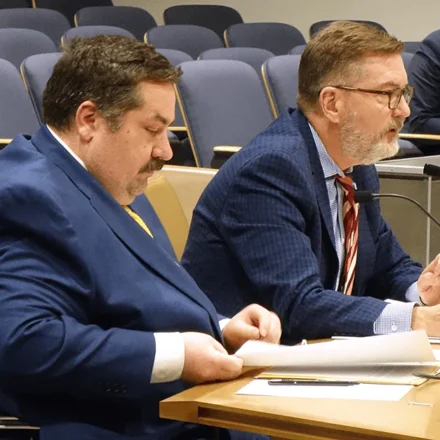





























































St. Paul, MN – In a legislative session marked by contentious social debates, Minnesota State Representative Peggy Scott, R-Andover, ignited a familiar firestorm this April. She brought a bill to the Minnesota House floor aimed at prohibiting students who have transitioned from male to female from participating in girls’ interscholastic sports. With a warm smile, Scott declared her motivation deeply personal: "This is for my granddaughter. She’s only 15 months old, but I know she’s going to be a stellar athlete one day."
Scott’s invocation of a toddler, rather than a currently disadvantaged female athlete, speaks volumes about the peculiar nature of this debate in Minnesota. Despite the impassioned rhetoric, concrete examples of female athletes being "injured, cut, or denied a scholarship" due to the participation of a transgender athlete are remarkably scarce within the state. This disconnect between the perceived threat and documented incidents forms the core of a complex narrative, weaving together legal precedent, deeply held beliefs, and the lived experiences of a handful of young people.
The proposed ban, and similar legislative efforts across the nation, positions itself as a defense of fairness and equal opportunity for girls in sports, a right hard-won through Title IX legislation decades ago. Yet, its proponents often struggle to provide local evidence of the widespread harm they claim to prevent. This article delves into the legislative push, the legal challenges, the personal stories of transgender athletes, and the broader implications of a debate often driven by national narratives rather than local realities.
Chronology: A Legislative and Legal Timeline Unfolding in Minnesota
The discussion around transgender athletes in Minnesota is not a sudden phenomenon but a layered narrative built over several years, marked by both legislative attempts and pivotal legal battles.
Early Seeds of Controversy (2017-2019): The Anoka-Hennepin Locker Room Case
One of the earliest high-profile cases in Minnesota highlighting the challenges faced by transgender students involved "Nick," a transgender swimmer at Coon Rapids High School. In April 2017, Nick was forced to use a single-person locker room, complete with a lone shower, toilet, and changing stall, despite identifying as male and competing on the boys’ swim team. This isolating experience prompted Nick to transfer out of Coon Rapids within a month.
The controversy surrounding facility use for transgender individuals was a growing national trend at the time. North Carolina had recently repealed its controversial "bathroom bill," and a group of parents in Virginia, Minnesota, had filed a lawsuit challenging a school district’s policy allowing students to use facilities matching their gender identity – a case that was ultimately dropped within months.
Adding fuel to the Anoka-Hennepin situation, Douglas Wardlow, then chief legal counsel for the Scottsdale, Arizona-based Christian legal advocacy group Alliance Defending Freedom (ADF), penned a 10-page letter to the Anoka-Hennepin School Board. Wardlow, who later served in the Minnesota House and was the Republican nominee for state attorney general in 2018, claimed to represent "concerned parents and students." He argued that gender-affirming locker room access "seriously endangers students’ bodily privacy and undermines parental authority." Notably, his letter, like many subsequent arguments, lacked a single instance where someone had complained about Nick or any other transgender student within the Anoka-Hennepin district, which is Minnesota’s largest by student population.
The Anoka-Hennepin district itself had a troubled history concerning LGBTQ+ student welfare. In 2011, the Obama administration entered a consent decree with the district following a series of suicides among students who identified as gay. This decree mandated the district end its "neutrality" policy on sexuality and actively work to prevent harassment based on sexual orientation. This precedent underscored a broader responsibility of the district to protect its vulnerable student populations.
In 2019, Jess Braverman became legal director of the advocacy group Gender Justice, and one of their first cases was representing Nick. Their efforts culminated in a significant victory when, in 2020, the Minnesota Court of Appeals ruled in Nick’s favor. Judge Peter Reyes, writing for the court, stated, "It is difficult to imagine how requiring only the transgender student to use a separate locker room would not stigmatize that student." A year later, Nick received a $300,000 settlement, and Anoka-Hennepin agreed to let students use the bathroom and locker room matching their gender identity, setting a crucial legal precedent for trans student rights in the state.
Escalation in Minnesota (2021-2025): Legislative Push and National Influence

While Minnesota saw its legal battles unfold, a national movement against transgender inclusion in sports gained momentum. In 2019, the Alliance Defending Freedom filed a complaint with the U.S. Department of Education against the Association of Connecticut Schools, alleging that two transgender track athletes were not just competing in, but "dominating," girls’ interscholastic races. ADF argued these athletes stripped cisgender high school girls of their Title IX right to participate equally. This Connecticut case, though distinct from Minnesota, became a foundational narrative, frequently referenced by legislators across the country as proof of a problem.
By 2021, the Associated Press reported a striking pattern: "Legislators in more than 20 states have introduced bills this year that would ban transgender girls from competing on girls’ sports teams in public high schools. Yet in almost every case, sponsors cannot cite a single instance in their own state or region where such participation caused problems." The Connecticut runners remained the primary, often singular, example.
In Minnesota, Republicans like Representative Scott began to echo concerns about transgender girls undermining other sports. Scott herself recalled her high school basketball days, stating, "I played basketball in high school and there is no way I could have competed with the boys’ team." This sentiment resonated with a significant portion of the American public, as a Pew Research Center poll from 2023 showed 66% of U.S. adults favored or strongly favored laws requiring transgender athletes to play on teams based on their sex assigned at birth.
For years, Minnesota Republicans watched as "red states" enacted such bans. Their opportunity came in 2025 when they gained partial control of the Minnesota House, and Lisa Demuth emerged as House Speaker. This shift in power allowed Representative Scott’s bill to be heard by the Education Committee. Buoyed by a U.S. Supreme Court ruling in June that let states ban trans athletes from women’s sports, Minnesota Republicans signaled a ban as a priority if they were to fully control the Legislature and governor’s office. Speaker Demuth affirmed this, stating, "My goal has been consistent since day one: protecting girls’ sports."
The Champlin Park Softball Saga (2025-2026): A Defining Case
The narrative in Minnesota truly solidified around a specific local incident involving a junior pitcher from Champlin Park High School. In June 2025, this pitcher led her team to victory at the Minnesota 4A state softball tournament, pitching all 21 innings across three games and surrendering only two runs. Her success, however, soon became the subject of intense scrutiny after Reduxx, an anti-trans publication, revealed she had transitioned to female a decade prior. Conservative news sites, particularly Alpha News, published nine different stories about her between May and June 2025, detailing her performance and identity.
The pitcher and her mother faced severe harassment, both online and in person, prompting the mother to seek to seal court records related to the daughter’s transition. Despite this, the Fort Worth, Texas-based nonprofit Female Athletes United, represented by lawyers from the Alliance Defending Freedom, filed a lawsuit seeking to disqualify the pitcher. The lawsuit, brought in federal court, gathered testimony from four softball players who claimed the pitcher’s "prowess" violated their Title IX rights, citing her "speed and unmatched movement on the ball" as unlike any other pitcher they had faced.
In September 2025, Trump-appointed U.S. District Judge Eric Tostrud ruled in favor of allowing the pitcher to play her senior year. Judge Tostrud’s ruling critically scrutinized the "folk wisdom" that boys are vastly superior to girls in sports, even if they transition to female. He cited Gregory Brown, a professor of exercise science at the University of Nebraska Kearney and a witness for ADF, who asserted that "higher testosterone levels in males as compared with females give males a tremendous physical advantage." However, Brown also acknowledged "very limited research" on whether puberty blockers, medications designed to thwart the development of physical sex characteristics, negated such advantages.
In April 2026, a federal appellate court affirmed Judge Tostrud’s ruling. Judge Raymond Gruender, a George W. Bush appointee, stated that a Title IX claim requires an allegation of intentional discrimination. Female Athletes United, he noted, supplied "no case law and other legal support that a single transgender girl’s participation in a team sport speaks to an intent to discriminate."
Despite these legal victories, the personal cost to the young athlete was immense. Hannah Edwards, executive director of Transforming Families in Minneapolis and an advocate for the pitcher’s family, revealed that the pitcher chose to become team manager her senior year. "She didn’t participate on the team because it wasn’t worth the turmoil and the hurt that it caused her," Edwards said, adding, "It just wasn’t worth having that larger federal and state level eye toward her and her team."
Federal Intervention: The Trump Administration Lawsuit

Further complicating the landscape, the Trump administration sued Minnesota in March 2026, claiming that allowing students to play sports based on their gender identity violated Title IX, the federal law banning sex discrimination in federally funded education programs. This 45-page filing largely centered on the Champlin Park softball player, whom it referred to as "Athlete A," meticulously cataloging her earned run average, complete games, shutouts, strikeouts, and winning percentage.
However, the lawsuit’s other examples were less robust. "Athlete B" was described as a "male student" competing in girls’ track and cross country races in southeast Minnesota, with no mention of complaints or concerns about the runner. "Athlete C" was even more tenuous, described only as someone who shared a locker room with "someone she called a boy," with no evidence that Athlete C was even an athlete herself. The lawsuit also named the Minnesota State High School League (MSHSL) as a defendant, yet it failed to produce a single instance of a complaint filed directly with the MSHSL regarding transgender athletes. The Minnesota attorney general has since moved to dismiss the Trump complaint, with a hearing set for September.
Supporting Data: Facts, Figures, and Perspectives
The legislative debate in Minnesota, like many across the nation, often proceeds with a profound scarcity of concrete, local data regarding the purported "crisis" of transgender athletes impacting girls’ sports.
The "Elusive" Trans Athlete: A Statistical Rarity
One of the most striking pieces of data comes from advocacy groups working directly with transgender youth. Kat Rohn, executive director for OutFront Minnesota, plainly states, "The number of trans athletes in the state at a competitive level can be counted on one hand." This anecdotal but informed observation suggests that the issue, while politically potent, affects a tiny fraction of the student athlete population.
Further supporting this, official channels in Minnesota show a distinct lack of formal grievances. There is not a single record of a complaint regarding a transgender athlete filed with the Minnesota Department of Human Rights or the state attorney general. Beyond the Champlin Park softball pitcher and the related Trump administration lawsuit, a thorough search for state lawsuits in Minnesota Court Records Online and federal complaints in Public Access to Court Electronic Records turned up no other cases in which a transgender athlete, or the Minnesota State High School League sanctioning their participation, was sued.
Rep. Scott suggests this absence of formal complaints might be due to fear of retaliation: "People are afraid to speak out because they could get retaliated against." However, even at a House Education Committee hearing on her bill, where 30 Minnesotans provided written statements in support, not one gave a specific example of a transgender girl disrupting the experience of a female athlete. The only testimony even tenuously affected by the issue came from a St. Paul ninth grader who said a "biological man who identified as a female" made her "uncomfortable beyond words" by walking into a locker room to grab something. Her primary fear was hypothetical: a "biological male" taking her spot at the state tournament. Other testifiers resorted to purely imaginative scenarios, such as LeBron James playing for the WNBA in his later years to collect more trophies.
The Athletic Advantage Debate: Physiology vs. Reality
At the heart of the debate lies the argument about biological advantage. State Senator Carla Nelson, R-Rochester, a high school athlete in 1974 when Title IX was amended, vividly recalls being in "the first class of girls that were able to fully participate in sports." She excelled in track and cross country, breaking records, and her experiences inform her strong stance.
Nelson points to stark physiological differences, particularly in track. The world record for the 400-meter dash for men is just over 43 seconds, while for women, it’s slightly under 48 seconds. In Minnesota high school sports, the boys’ record is just under 47 seconds, and the girls’ is just over 54 seconds. "In other words," the original article notes, "the best 400-meter sprint in the world history of women’s track is slightly slower than the best 400-meter race ever in Minnesota boys’ sports." This data leads Nelson to find it "really unconscionable" for a transgender girl to take away "trophies, roster spots and scholarships."
However, this argument often simplifies the complex physiological realities of transgender individuals, particularly those who have undergone puberty blockers or hormone therapy. Gregory Brown, the exercise science professor cited in the Champlin Park case, acknowledged that while "higher testosterone levels in males as compared with females give males a tremendous physical advantage," there is "very limited research" on whether puberty blockers undo such advantages.

The experience of Alex Bertram, a transgender boy who swam for Bloomington Jefferson High School, offers a nuanced perspective. Having transitioned and gone on puberty blockers, then later a "low dosage" of testosterone, Bertram competed on the boys’ swim team for four years. If the "biological advantage" argument were absolute, a transgender boy would theoretically be at a significant disadvantage against cisgender male opponents. Yet, Bertram described himself as neither the best nor the worst, typically placing "in the top 10 or top eight of the 400 [meter] butterfly." He recounted instances where opposing parents claimed his testosterone medication gave him an unfair speed advantage, to which he responded that it mostly caused acne. His story challenges the simplistic notion that hormone therapy unilaterally confers or removes athletic dominance.
Public Opinion and Mental Health Impact
The Pew Research Center poll from last year, showing 66% of U.S. adults favoring or strongly favoring bans based on sex assigned at birth, indicates a significant segment of the public aligns with the concerns raised by Scott and Nelson. This public sentiment, whether based on data or intuition, undoubtedly fuels the political drive for such legislation.
However, the mental health implications for transgender youth are a critical, often overlooked, aspect of the debate. Mollie McQuillian, an education policy professor at the University of Wisconsin-Madison, testified in the Champlin Park case that sports can be a "critical buffer against mental health challenges that trans students face." Yet, she also noted, "trans youth are less likely to participate in physical activities and athletics," a trend that has "certainly intensified over the last couple of years," according to Kat Rohn of OutFront Minnesota. The constant public scrutiny, legislative threats, and social ostracization contribute to heightened anxiety and isolation for these vulnerable students. Hannah Edwards of Transforming Families expresses a wish that high school sports could simply be recognized as a "low-stakes activity where kids of all genders can make friends and feel more comfortable in their body."
Official Responses: Voices from Across the Spectrum
The debate over transgender athletes in Minnesota has drawn sharp distinctions among political leaders and advocacy groups, each articulating their stance with conviction.
Proponents of the Ban: Protecting "Biological Girls"
Representative Peggy Scott’s dedication to her bill is unwavering, rooted in a vision of protecting future generations of female athletes. "Women have had their own sports teams for 50 or 60 years and now we’re going backward," she argues, encapsulating a sentiment shared by many who view transgender inclusion as an erosion of Title IX’s original intent. When pressed for specific instances of harm in Minnesota, Scott initially struggled, referencing an adult transgender powerlifter (who actually won her Minnesota Supreme Court case) and the Women’s Hockey Association of Minnesota (which deals with adult leagues). Eventually, she provided contacts for parents. One anonymous parent described his daughter’s injury during an ultimate frisbee match, attributing it to a transgender female opponent who was "more muscular and taller" and displayed "athleticism beyond any other female player on the field." For this parent and Scott, the issue boils down to "common sense": "Biological males in girls sports is not common sense," a mantra Scott frequently repeated.
House Speaker Lisa Demuth, the GOP’s nominee for governor, echoes Scott’s stance with equal resolve. "My goal has been consistent since day one: protecting girls’ sports," Demuth stated. She emphasizes the need to give "biological girls" a "safe place on the field, on the court, in the locker room, and every other space where girls have an expectation of privacy." Demuth explicitly rejects the notion that the issue is a "hypothetical problem," claiming it "erases the experiences of women and girls across the state and across the country." Yet, like Scott, Demuth declined to provide specific Minnesota examples to counter the "hypothetical" claim. Her caucus rallied to allow Scott to use a procedural maneuver to bring the bill to the House floor in April, bypassing legislative committee review, underscoring the GOP’s commitment to the issue.
Senator Carla Nelson, a former high school athlete herself, shares their conviction, finding it "really unconscionable" for transgender girls to potentially deprive cisgender girls of "trophies, roster spots and scholarships." She, too, avoids specific local examples, stating, "I don’t know. I wouldn’t want to know. I want kids to have their privacy. But the premise is that even one student taking a spot is not fair." This perspective highlights a preemptive concern, arguing that the potential for unfairness, even if not yet widely documented, warrants legislative action.
The Alliance Defending Freedom, a powerful national organization with reported $109 million in donations in 2024, plays a significant role in shaping this discourse. While declining to answer specific questions for this article, ADF’s senior counsel, Hal Frampton, issued a statement: "No girl should feel sidelined in their own sport and that is exactly what happened in Minnesota and should never happen again." Their involvement in lawsuits like the Champlin Park case demonstrates their strategic influence in pushing this agenda through legal and public channels.
Opponents of the Ban: Upholding Inclusivity and Settled Law

On the Democratic-Farmer-Labor (DFL) side, the approach is markedly different, focusing on established legal precedent and broader educational opportunities. U.S. Senator Amy Klobuchar, the DFL Party’s nominee for governor, provided a statement that strategically avoided direct mention of the rights of either cisgender girls or transgender girls. Instead, her campaign spokesperson alluded to legal precedent, noting, "Trump-appointed judges have denied challenges to the law as recently as this year," a clear reference to the Champlin Park softball pitcher’s decisive wins in court. Klobuchar "views the matter as settled law and as governor will be focused on improving student achievement and giving every child the education and opportunities they need to succeed." This position emphasizes stability, legal consistency, and a focus on educational fundamentals over what they perceive as a manufactured controversy.
Advocacy groups like OutFront Minnesota and Gender Justice are vocal in their opposition to the ban, emphasizing the mental health benefits of inclusion and the lack of evidence for widespread harm. Kat Rohn of OutFront Minnesota highlights the scarcity of transgender athletes in the state and the negative impact of such debates on vulnerable youth. Jess Braverman of Gender Justice points to legal victories like Nick’s case as proof that existing laws and human rights protections are adequate and effective in ensuring equitable treatment for transgender students.
Hannah Edwards of Transforming Families articulates the profound personal toll these debates take on transgender athletes. Speaking about the Champlin Park pitcher, she noted the "turmoil and hurt" that led the athlete to step back from competitive play despite legal victories. Edwards advocates for a shift in perspective, wishing for high school sports to be seen as a "low-stakes activity where kids of all genders can make friends and feel more comfortable in their body," rather than a battleground.
Unanimous DFL opposition has consistently stymied Representative Scott’s measure, including when Republicans attempted to bring it to the House floor in April. This political stalemate reflects the deep ideological chasm within the state legislature, where one side sees a fundamental threat to girls’ sports, and the other sees an attack on the rights and well-being of a marginalized group, driven by unfounded fears.
Implications: Broader Societal and Personal Impact
The debate over transgender athletes in Minnesota extends far beyond the confines of high school sports fields and locker rooms. It represents a microcosm of a larger national cultural conflict with significant societal, legal, and personal implications.
Political Battleground and Wedge Issue:
Despite the scarcity of documented local incidents, the issue of transgender athletes in girls’ sports has become a potent political wedge issue, particularly for the Republican Party in Minnesota and across the country. By framing it as a matter of "common sense" fairness and the protection of "biological girls," proponents successfully tap into widely held concerns about sex-based differences and anxieties about changing social norms. This strategy allows them to mobilize a conservative base, even if the actual number of affected individuals is minimal. For Republicans like Speaker Demuth, it’s a clear platform for galvanizing voters, promising to safeguard traditional values and protect what they view as fundamental rights for women. The DFL’s opposition, emphasizing inclusion and settled law, positions them as defenders of LGBTQ+ rights and progressive values, highlighting the deep ideological divide that defines much of contemporary American politics.
Legal Precedent and a Patchwork of Laws:
The ongoing legal battles, from Nick’s case to the Champlin Park softball pitcher’s multiple court victories, underscore the evolving interpretation of anti-discrimination laws like Title IX and state human rights acts. The fact that Trump-appointed judges have ruled in favor of inclusion in Minnesota demonstrates the complexity of applying these laws to gender identity, even within a