









































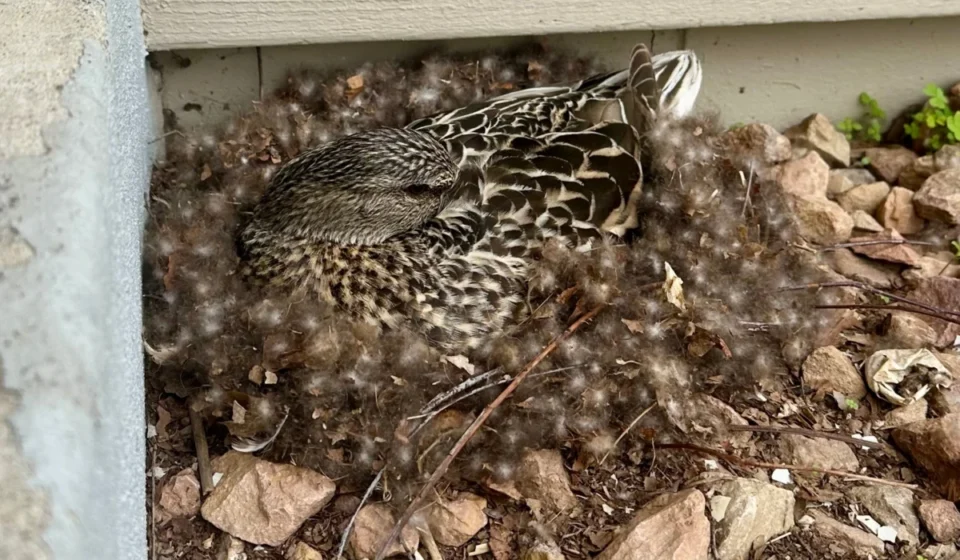

For the past four years, the front porch of a suburban home in Eagan, Minnesota, has played host to a ritual as reliable as the change of seasons. A female mallard, affectionately dubbed "Martha" by the Deal family, returns each spring to nest behind a modest shrub just inches from the front door. For homeowner Caitlin Deal, the annual visitor has become more than just a bird; she is a seasonal neighbor who has provided a living, breathing biology lesson for her four-year-old son, Owen—whose very first word, fittingly, was "duck."
As spring breathes new life into the landscape, the lines between human residential spaces and natural habitats frequently blur. From the suburbs of the Twin Cities to the coastal regions of the Pacific Northwest and the humid wetlands of Florida, wildlife is increasingly reclaiming corners of the human environment to raise the next generation. While the sight of a nesting mallard or a fawn tucked away in a garden can be enchanting, it also presents a complex set of challenges for homeowners unaccustomed to playing landlord to the animal kingdom.
The Chronology of a Backyard Nesting Season
The phenomenon begins with the arrival of spring—the season of the vernal equinox—when the lengthening days trigger hormonal shifts in wildlife across the continent. For the Deal family, the timeline is predictable: Martha arrives in the early spring, establishing her nest under the cover of the bush. She remains in a state of quiet incubation for approximately one month.
"It feels nice that she trusts that area, that she trusts us to be able to come back year after year," says Deal. For the family, the experience requires a temporary adjustment to their daily routine. To accommodate their guest, the family keeps their own dog, Piper, on a short leash when stepping out the front door, ensuring the predatory instincts of their pet do not disrupt the delicate cycle of life taking place just feet away. By the time Mother’s Day arrives in May, the eggs typically hatch, and within a short window, the mother leads her ducklings away, leaving behind a quiet porch and a wealth of memories.
This narrative is playing out in millions of yards across the country. However, the specific timeline depends heavily on the species. While mallards prefer the shelter of shrubs, other animals have different schedules. Deer fawns are often discovered in early spring, curled tightly in tall grass or behind air conditioning units. Alligators in the southern United States follow a slightly later cycle, nesting between April and June. Understanding these temporal patterns is the first step toward successful coexistence.
Supporting Data: The Science of "Leaving It Alone"
The most prevalent error humans make when encountering a nest or a young animal is the assumption that it requires human intervention. According to wildlife experts, this is almost universally incorrect.
Brittney Yohannes, a spokesperson for the Wildlife Rehabilitation Center of Minnesota, emphasizes a two-pronged approach: "My two biggest things are: stay away from the nest or the little family as much as possible, and stay curious."

The data supports a "hands-off" policy. For instance, in the case of white-tailed deer, a doe will often leave her fawn alone for hours at a time while she grazes nearby. This is a survival strategy designed to keep the scent of the mother away from the vulnerable, odorless fawn. To a human observer, the fawn looks abandoned, shivering and motionless. In reality, it is performing exactly as nature intended.
Similarly, rabbits, which are among the most common species encountered in Midwest yards, often nest in open grass. The Wildlife Rehabilitation Center of Minnesota suggests that if a dog is a threat, a homeowner can safely place a laundry basket over the nest during the day to prevent the pet from reaching the kits, provided the basket is removed in the evening so the mother can return to feed them.
Official Perspectives: Legalities and Public Safety
While the interaction between humans and wildlife is often characterized by curiosity, authorities warn that the situation can escalate into a legal or physical hazard if not managed with respect.
Federal Protections and Local Guidance
Removing a nest, even one that seems inconveniently placed, is often illegal. Many migratory birds are protected under federal law, such as the Migratory Bird Treaty Act in the United States. Beth Quillian, a spokesperson for the Oregon Department of Fish and Wildlife, advises that if a bird has nested in a particularly hazardous spot—such as a high-traffic entryway—homeowners should refrain from touching the nest and instead contact their local wildlife agency for a professional assessment.
The Dangers of Protective Parents
The "cute" factor often blinds people to the inherent danger of wild animals, particularly those with offspring. John Coluccy of Ducks Unlimited points out that while mallards are generally docile, other waterfowl are significantly more volatile. "Canada geese and swans are very, very aggressive," Coluccy explains. "They are long-lived and they protect their reproductive investment very vigorously." A goose, if it feels threatened, can easily knock a human to the ground and exert enough force to break bones.
This defensive behavior is not limited to birds. In the Pacific Northwest, cow elk can weigh upwards of 500 pounds and are notoriously protective of their calves. In Florida, female alligators guard their leaf-pile nests with extreme ferocity, often lurking just beneath the surface of nearby water. Darian Dowse, animal care manager at the North Florida Wildlife Center, stresses that the primary defense against such encounters is vigilance: keeping dogs on paved paths and maintaining a wide buffer zone from any suspicious mounds of leaves near water.
Practical Strategies for Managing Wildlife Conflicts
When wildlife takes up residence in a location that is truly untenable—such as a shed, a covered boat, or under a deck—experts suggest non-invasive deterrents before resorting to live traps or pest control services.

Tami Vogel, executive director of the Wildlife Rehabilitation Center of Minnesota, recommends the "light and noise" method. "A mom will usually move her young within a couple of days if the environment becomes uncomfortable," Vogel says. Installing a shop lamp to flood a dark, nesting area with light is often enough to signal to the animal that the location is no longer safe.
Furthermore, structural prevention is the most effective long-term solution. Installing heavy-gauge metal mesh to seal off crawlspaces under decks or sheds prevents animals from seeking shelter there in future seasons. Vogel views the education of the public as a crucial part of the center’s mission. By providing homeowners with the tools to resolve their own conflicts, the center acts as a safety net, ensuring that these interactions serve as a bridge to understanding local biodiversity rather than a source of stress.
The Broader Implications: A Changing Urban Ecology
The increasing frequency of these encounters is not merely a result of human curiosity, but a reflection of how our urban landscapes have evolved. Suburban sprawl, manicured lawns, and artificial ponds have created "human-made habitats" that are surprisingly attractive to opportunistic species.
The implications for the future are clear: as we continue to develop land, we must learn to be better neighbors. The story of the Deal family and "Martha" the mallard highlights a shift in perspective. Instead of viewing wildlife as an intrusion to be eradicated, they have chosen to view the nest as a temporary, shared space.
This philosophy of coexistence holds profound potential for the next generation. By teaching children like Owen how to observe, respect, and maintain a distance from wildlife, we foster a culture of environmental stewardship. As Yohannes notes, "One of the best pieces of advice I can give is just understanding that that period of coexisting with this nest or this family will be temporary."
Ultimately, the presence of wildlife in our backyards is a testament to the resilience of nature in the face of human expansion. Whether it is a rabbit in a flowerbed, a deer in the tall grass, or a mallard at the front door, these moments offer a rare, unfiltered connection to the natural world. By maintaining a respectful distance, securing our pets, and following the guidance of wildlife professionals, we can ensure that our backyards remain safe havens for both our families and the creatures that share our neighborhoods.