













































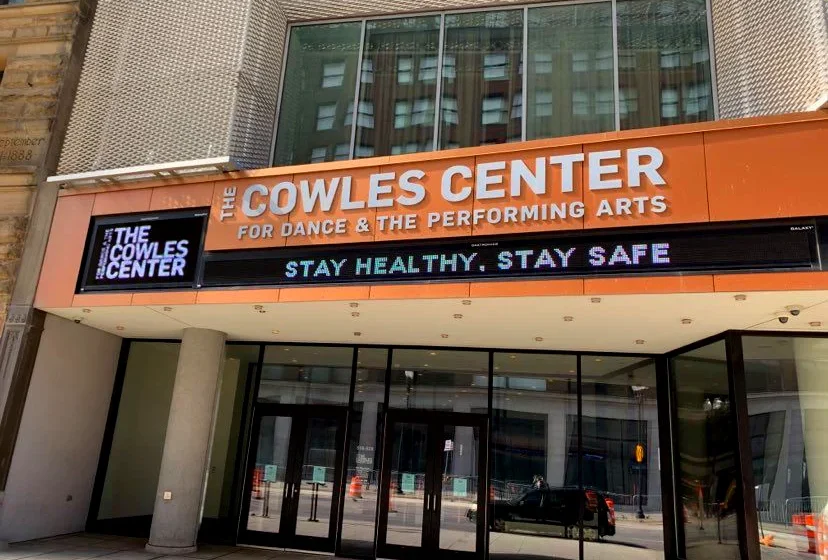
A Stage in Limbo: The Cowles Center’s Fragile Revival and the Future of Twin Cities Arts

The Cowles Center for Dance and the Performing Arts, once the heartbeat of downtown Minneapolis’s cultural corridor, flickered back to life this past weekend. As the South Asian Arts and Theater House (SAATH) debuted its high-energy production of Made in INDIA, the historic venue hummed with a rare, resonant vitality. For the audience members filling the 500-seat theater, the experience felt less like a standard weekend performance and more like a symbolic resurrection of a space that has been largely shuttered since 2024.
Yet, beneath the cheers and the vibrant choreography, a stark reality persists: the Cowles Center remains in a state of suspended animation. Despite a year-long selection process that identified Arts’ Nest—in partnership with Zenon Dance—as the facility’s new management team, the official lease remains unsigned. As the Twin Cities arts community grapples with a wave of closures and economic contraction, the Cowles stands as a testament to both the enduring hunger for live performance and the profound uncertainty facing the sector.
A Legacy of Movement: From Shubert to Cowles
The building at 528 Hennepin Avenue is no stranger to transformation. Originally constructed in 1910 as the Shubert Theatre, the venue was designed by the visionary William Albert Swasey. The interior, crafted with the signature touch of designer John S. Bradstreet, originally boasted two ornate balconies and a sophisticated trap door system that spanned the entirety of the stage—a marvel of engineering for its era.
Over the next century, the theater underwent numerous identity shifts. The exterior marquee transitioned through various iterations, eventually settling into the sleek, geometric lines of Art Deco, while the interior lobby was remodeled three times to keep pace with changing tastes. However, its most famous chapter began in 1999, when the entire 5.8-million-pound structure was physically rolled three blocks down Hennepin Avenue to its current location.
Following a $12 million infusion of state funding, the site reopened in 2011 as the Cowles Center. For over a decade, it served as a beacon for Minnesota’s dance and theater companies. But the post-pandemic landscape proved unforgiving. Rising operational costs and the broader economic downturn forced the Cowles to close its doors in 2024, leaving a gaping hole in the downtown cultural map.
The Production: Made in INDIA as a Catalyst for Joy
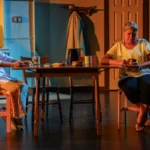
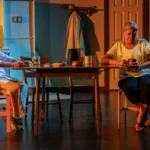
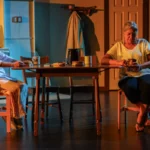
Against this backdrop of institutional instability, SAATH’s Made in INDIA has become an unlikely, yet powerful, catalyst for the venue’s return. Written by Kristen Marx, the production explores the nuanced realities of transracial adoption through the lens of two Indian-born sisters raised by a white adoptive mother in the United States.
The show is a tapestry of movement, blending traditional South Asian martial arts, classical Indian dance, Bollywood, and contemporary hip-hop. The cast, largely comprised of non-professional performers, brings an earnestness to the stage that has clearly resonated with local audiences. Surya Saathi’s lighting design, which utilizes the full scale of the Cowles’ technical infrastructure, highlights the emotional stakes of the performance, turning the cavernous, formerly dormant stage into an intimate space of storytelling.
For Divya Maiya, the executive director of SAATH, the opportunity to return to the Cowles was personal. The company had previously performed at the center in September 2023, and the experience left a lasting impression. "It was very exciting to have that access to so much more tech and staging and options," Maiya noted. "It almost felt like a big growth for us, so we were pretty sad that it went away [in 2024]."
When SAATH discovered through a flyer earlier this year that the city was making the Cowles available as a rental space, the decision to return was instantaneous. The result has been a series of performances that not only showcase SAATH’s commitment to exploring complex themes—such as race, neurodiversity, and immigration—but also provide a rare glimpse of the venue’s untapped potential. During intermission, the sight of patrons mingling in the lobby, surrounded by the fading names of corporate sponsors who have long since exited, served as a poignant reminder of what the space was—and what it could be again.
The Administrative Labyrinth: Why the Lease Remains Unsigned
Despite the successful run of Made in INDIA, the administrative future of the Cowles is far from settled. The city of Minneapolis, which currently holds the keys to the facility, has yet to finalize the transition to Arts’ Nest.
Currently, Arts’ Nest operates in a precarious intermediary role. They act as a liaison between the city and independent renters, managing bookings and overseeing technical staff using a portion of the rental revenue. The remainder of the income is funneled back to the city. While this "soft opening" approach allows for some programming, it is not a long-term solution for the venue’s sustainability.
Jenny Moeller, acting executive director of Arts’ Nest, remains pragmatic about the hurdles. An initial announcement regarding a formal grand opening for the fall was recently scrubbed from the organization’s website. "We probably won’t have a grand opening," Moeller admitted. "Mostly that has to do with just the timeline of state approval and the next steps after that. Everything’s been taking longer. It’s like we’re having a very soft opening."
Beyond the bureaucratic delays, the primary challenge is capital. The facility requires ongoing maintenance and technical upgrades—handled by city contractors—but the organization’s long-term success hinges on its ability to secure private and philanthropic backing. "Arts’ Nest needs to do a little more fundraising," Moeller stated. "We need a few more backers behind us."
Implications for the Twin Cities Art Scene
The struggle to keep the Cowles Center afloat is not an isolated event; it is emblematic of a broader, more alarming trend within the Twin Cities arts sector. Earlier this year, the renowned Jungle Theater, a pillar of Minneapolis’s theater community, announced the cancellation of its season. The situation turned dire when the company listed its Lyndale Avenue building for sale and moved to auction off everything from set-shop tools to dressing-room furniture—a clear signal of a permanent retreat.
This "cautious optimism" mentioned by industry observers is frequently punctuated by news of closures, funding gaps, and organizational burnout. The arts sector is currently navigating a "perfect storm" of high overhead costs, changing audience habits, and a contraction in donor giving. In this context, the Cowles Center represents a high-stakes test case: can a historic, city-owned venue successfully transition to a lean, community-driven management model, or is the infrastructure simply too heavy to sustain in the current economic climate?
Madhu Bangalore, co-director of the current production, emphasized the importance of the venue’s scale. "This is a massive theater. It’s got 500-plus seats," Bangalore said. "We would love to have 2,000 more people watch it." His sentiment underscores the gap between the venue’s physical capacity and the current, limited throughput of its programming.
A Path Forward?
As Made in INDIA concludes its final run this week, the spotlight on the Cowles Center will dim once more. The question that remains for the city of Minneapolis and for organizations like Arts’ Nest is whether the "soft opening" can eventually harden into a permanent, sustainable residency.
The building itself has proven it can endure. It has been moved across city blocks, repurposed from theater to dance center, and weathered a global pandemic. Yet, buildings do not sustain culture on their own; it requires the intersection of consistent leadership, reliable funding, and an engaged public. For now, the Cowles Center remains a monument to resilience—a beautiful, historic shell waiting for the administrative green light to finally, and truly, reopen its doors to the future.
“Made in INDIA” runs August 26, 28, and 29 at 7 p.m. at the Cowles Center, 528 Hennepin Ave. S., Minneapolis. Tickets range from $25–$40, with student pricing at $15 and children under 5 admitted free. The performance on Wednesday, August 26, is a "pay-what-you-like" event.