






















































In an era defined by accelerating climate volatility, a quiet but significant revolution is taking place in American high schools. As students grapple with the existential anxiety of a warming planet, a growing number of states are moving beyond traditional textbook instruction to offer a formal "Seal of Climate Literacy." This credential, which appears on high school diplomas and transcripts, serves as a tangible recognition of a student’s mastery of Earth’s climate systems and their commitment to hands-on, community-based environmental stewardship.
From the ozone-monitoring gardens of Colorado to the coastal restoration projects in Maine, this initiative is transforming climate education from a passive academic requirement into an active, workforce-ready discipline.
The Genesis of a Movement: From Theory to Practice
The concept of the climate literacy seal emerged from a desire to bridge the gap between abstract scientific theory and the tangible realities of local environmental change. For Anthony Muñoz, a student at Vista Academy near Denver, the connection was personal. Living in the flight path of a major international airport, Muñoz became concerned about the long-term health impacts of aviation-related air pollution.
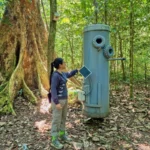
Rather than merely reading about ozone in a textbook, Muñoz partnered with the National Center for Atmospheric Research (NCAR) in Boulder. He spearheaded the creation of an "ozone garden" on his campus—a living laboratory where native plants serve as biological indicators of air quality. By monitoring the condition of leaves and tracking monarch butterfly migration patterns linked to milkweed health, Muñoz turned his curiosity into a high-level data collection project.
"One garden is a very good data source," Muñoz reflects. "Colorado is so beautiful, and I would hate to see it wilt away." His capstone project became a template for the Colorado state initiative: a requirement that students complete at least two advanced courses in climate science and a verified community project.
Chronology of Adoption
The journey toward institutionalizing climate literacy has been rapid, driven largely by grassroots youth advocacy and non-profit organization support.
- 2024: Colorado officially approves the Seal of Climate Literacy, becoming the first state to formalize the initiative. Lyra Colorado, a Denver-based non-profit, provides the framework and administrative support.
- Early 2025: Following the success in Colorado, Maine adopts its own climate seal, integrating it into existing educational frameworks, including their established "Seal of Biliteracy."
- Mid-2025: California passes landmark legislation (SB 1048) to establish the seal for high school graduates, signaling a shift toward large-scale adoption in the nation’s most populous state.
- Ongoing: Youth coalitions in states like Hawaii and Minnesota continue to lobby their legislatures, with the Minnesota Youth Council formally recommending the adoption of the seal during the most recent legislative session.
Supporting Data: Building the Green Workforce
Proponents of the climate seal argue that it is more than an environmental statement; it is a strategic investment in the future workforce. As the global economy pivots toward renewable energy, the need for expertise in solar grid management, sustainable agriculture, water resource management, and urban heat mitigation is skyrocketing.
The program is designed to be flexible. Students must complete one core science class—such as biology or environmental studies—and a second, cross-disciplinary course, which can range from humanities to fine arts. This interdisciplinary approach ensures that students understand not just the chemistry of carbon emissions, but the social, political, and economic dimensions of climate adaptation.
For rural schools, this has proven especially vital. In Maine, educators like Melissa Luetje at Freeport High School are leveraging the state’s unique coastal geography to teach students about the impacts of warming oceans on local economies, including lobster fishing and seaweed farming. By framing the curriculum around local industry, the seal helps students see the direct link between climate science and their own economic futures.
Official Responses and Political Hurdles
The initiative is not without its critics. The movement faces significant pushback, particularly from organizations that argue for a "back-to-basics" approach to education. Lance Izumi, senior director of education studies at the Pacific Research Institute, has been a vocal opponent, arguing that the seal diverts precious resources away from foundational STEM subjects.
"Diverting focus away from foundational science learning could worsen California’s already abysmal performance levels," Izumi stated in a recent critique. He maintains that schools should prioritize core testing rather than what he characterizes as "activist community projects."
Conversely, advocates argue that the seal provides a necessary sense of agency for students facing "climate anxiety." Laura Schifter, a senior fellow with the Aspen Institute’s This is Planet Ed, characterizes the seal as a "promising policy" that fills a void in K-12 education. "Where we can make the most difference is often in our local community," Schifter notes. By localizing the action, students move away from feelings of helplessness toward concrete, measurable outcomes.
Implications: A Shifting Political Landscape
The climate literacy movement is currently navigating a complex and often hostile political environment. Recent federal rhetoric labeling climate change as a "hoax" and increased scrutiny of the non-profit sector have created an atmosphere of uncertainty.
The funding landscape is particularly precarious. In Colorado, the state provided less than $20,000 for the initial rollout of the seal, forcing students and teachers to rely on private grants and out-of-pocket contributions. The proposed federal budget cuts to organizations like NCAR—which provided the scientific backbone for Muñoz’s project—pose a direct threat to the technical support these student initiatives require.
Despite these challenges, the momentum remains with the students. There is a burgeoning effort to align the seal with technical and vocational certifications, such as heat pump installation and solar panel maintenance, which would create a direct pipeline from high school projects to high-wage, green-sector careers.
The Future of Climate Leadership
For students like Rylan Neumann, a graduate of the Boulder Valley School District who now studies environmental economics at UC Berkeley, the seal was merely the starting point. Upon enrolling in college, Neumann immediately joined campus eco-clubs and traveled to Sacramento to lobby for the California climate seal bill.
"Getting more students involved in climate action and how they’ll be impacted in the future is essential," Neumann says. "Students are the future. We’re the ones growing up in this world."
As the program matures, it is also evolving to be more inclusive. In Maine, the state has tied the climate seal to existing mandates for Indigenous and traditional ecological knowledge. This ensures that the program respects local wisdom and diverse perspectives, moving beyond the "global doom and gloom" narrative toward a more nuanced, community-centric model of stewardship.
Even Anthony Muñoz, now a sophomore at the Colorado School of Mines, continues to serve as an ambassador for the movement. He regularly returns to Vista Academy to mentor younger students, helping them manage the ozone garden and coding new data-collection tools. His work represents the ultimate goal of the climate literacy seal: the creation of a generation that does not merely study the world, but actively works to improve it.
"Are you going to think beyond yourself and help not only those in need but the environment," Muñoz asks, "or will you sit back and wait for someone else to change the world for you?"
For the roughly 1,200 students who have already earned the seal, the answer is clear. They have chosen to take the lead, proving that even in a politically fractured landscape, the classroom can remain a powerful engine for environmental change. As more states consider adopting the model, the "seal" may soon become a standard, prestigious hallmark of the modern American graduate—a generation equipped not just with knowledge, but with the practical skills to engineer a more resilient future.