






























The Silicon Prairie’s Power Play: How Minnesota Became a Global Hub for Microgrid Innovation

Just northeast of the I-494 and Highway 100 interchange in Bloomington, Minnesota, stands a building that defies traditional Midwestern architectural norms. Clad in striking red and blue, the structure resembles a futuristic sailboat or perhaps a high-tech robotic sentry. This is the headquarters of Open Access Technology International (OATI), and while its exterior is eye-catching, the work occurring within its walls is fundamental to the stability of the North American power grid.
Inside, a phalanx of electrical engineers and high-powered servers manage the complex flow of electricity across the continent’s high-voltage transmission lines. However, OATI is no longer just looking at the "macro" grid. It is leading a quiet revolution in "micro" grids—localized energy systems that can operate independently of the main utility providers. This shift represents a broader trend: Minnesota has emerged as an unlikely but dominant epicenter for microgrid technology, blending decades of manufacturing heritage with cutting-edge artificial intelligence to redefine energy resilience in an era of climate instability.
Main Facts: The Anatomy of a Microgrid Powerhouse
The rise of the microgrid industry in Minnesota is not an overnight success story but rather the culmination of a sophisticated ecosystem involving private enterprise, academic research, and public-sector investment. At its core, a microgrid is a self-contained power system that allows a local area—such as a campus, a neighborhood, or a remote village—to generate and manage its own electricity.
Minnesota’s influence in this sector is characterized by three primary pillars:
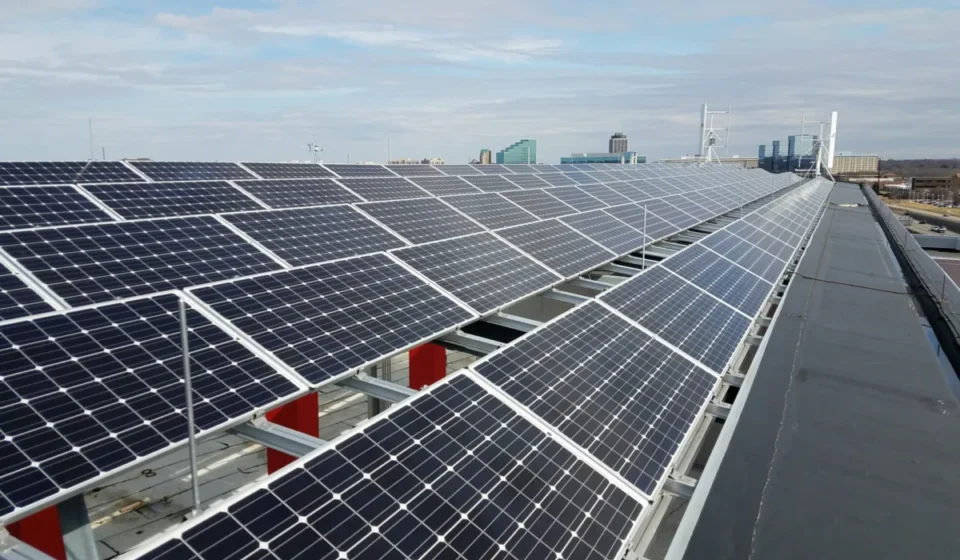
- Software and AI Orchestration: Companies like OATI have pivoted their massive experience in national grid management toward localized solutions. Their proprietary platforms synchronize diverse energy inputs—including solar panels, battery storage, cogeneration plants, and backup diesel generators—ensuring that when the main grid fails, the local lights stay on.
- Modular Hardware Innovation: Startups such as Minneapolis-based Syncris are revolutionizing the physical components of microgrids. By developing "Lego-like" inverters that can be stacked and expanded without expensive custom engineering, they are lowering the barrier to entry for smaller facilities and rural municipalities.
- Academic and Research Excellence: The University of St. Thomas (UST) houses the Center for Microgrid Research, a nationally recognized hub that serves as the only institution in North America providing hands-on training for both students and industry professionals. Simultaneously, the University of Minnesota is leading multi-university efforts to secure these decentralized grids against the rising threat of cyberattacks.
According to the Minnesota Department of Employment and Economic Development (DEED), the state exported approximately $2.3 billion in "IT-related electrical equipment" last year. This figure underscores the state’s transition from a traditional manufacturing hub to a high-tech exporter of energy intelligence.
Chronology: From Industrial Giants to Independent Power
To understand Minnesota’s current dominance, one must look back several decades. The state’s "outsized footprint" in the microgrid industry, as Michael Burr, founder of Microgrid Initiatives, puts it, is rooted in the long-standing presence of multinational corporations.
The 1980s and 1990s: The Legacy Era
During the late 20th century, Minnesota became a base of operations for industrial titans like Honeywell, Siemens, IBM, Eaton, and Johnson Controls. These companies specialized in power electronics and energy controls—the fundamental building blocks of what would eventually become the smart grid. During this period, the state also birthed Independent Energy magazine, a trade publication that documented the early days of the independent power industry. This media presence helped foster a community of experts who were thinking about decentralized power long before it became a climate necessity.
The Mid-1990s to 2010: The Software Shift
OATI was founded in the mid-1990s, focusing initially on the software required to manage the buying and selling of large blocks of electricity. As the U.S. power market became more complex and deregulated, OATI’s software became the standard for ensuring grid reliability during extreme weather events. Meanwhile, companies like Hunt Technologies in Pequot Lakes were pioneering advanced metering infrastructure (AMI), which allowed for two-way communication between utilities and customers.
2015 to Present: The Resilience Revolution
In the last decade, the focus has shifted from "efficiency" to "resilience." As extreme weather events—such as the "microburst" storms in northern Minnesota and catastrophic hurricanes in the South—became more frequent, the limitations of a centralized grid became apparent. This prompted Minnesota firms to apply their software and hardware expertise to microgrids. In 2017, OATI completed its Bloomington headquarters, which serves as a living "proof of concept" for microgrid optimization, capable of running entirely "islanded" from the main grid.
Supporting Data: Economic Impact and Project Scale
The economic and technical data supporting Minnesota’s microgrid leadership is significant. The industry is no longer confined to experimental labs; it is a multi-billion-dollar market with real-world applications.
- Export Value: The $2.3 billion in IT-related electrical equipment exported by Minnesota in 2023 represents a vital part of the state’s GDP, placing it ahead of many states traditionally associated with the "tech" sector.
- Federal Investment: In the past year alone, the federal government has poured millions into Minnesota-led projects. The Red Lake Nation received $3.15 million and the White Earth Nation was awarded $1.75 million for solar-powered resilience hubs. Additionally, the U.S. Department of Energy recently announced $8 million in grants for microgrid innovation in remote communities, many of which utilize Minnesota-developed technology.
- Scalability: OATI’s microgrid projects have demonstrated massive scalability. A pilot project in North Carolina that began as a 31-home "cottage community" was successfully expanded to support 300 homes, proving that microgrids can grow organically as demand increases.
- Operational Efficiency: For commercial users, the data is even more compelling. Syncris reports that some of their industrial customers were losing hundreds of thousands of dollars annually due to "power quality" issues—minor voltage fluctuations that degrade machinery. Their microgrid solutions have effectively mitigated these losses, providing a return on investment that goes beyond simple energy savings.
Official Responses: Perspectives from the Industry
Leaders across the Minnesota energy landscape emphasize that the state’s success is a combination of technical "know-how" and a cultural streak of self-reliance.

David Heim, OATI’s Vice President and Chief Strategy Officer, takes pride in the local nature of the innovation. "It’s cool that we are a [Twin Cities] company doing all this right here in our backyard, not out in Silicon Valley," Heim said. He notes that for tribal nations and rural communities, microgrids are about more than just electricity; they are about "energy sovereignty," giving these communities a seat at the table when negotiating with large utilities.
Mary Brown, OATI’s Senior Executive Vice President, highlights the changing role of the consumer. She points out that technology has advanced to the point where "distributed energy resource management systems" (DERMS) can orchestrate thousands of home batteries and electric vehicles. "These resources will increasingly help reduce Minnesotans’ energy costs," Brown stated, especially as federal policy shifts and tariffs potentially drive up the cost of traditional grid power.
Zach Edmond, Co-founder of Syncris, identifies the "grid edge" as the primary frontier for their technology. He explains that customers at the end of distribution lines often suffer the most. "You have a machine that’s supposed to last 20 years and it’s breaking down after seven or 10… you realize it’s the quality of the power," Edmond said. By using their modular "Lego block" inverters, Syncris aims to make high-quality power accessible to those far from the urban core.
Michael Burr of Microgrid Initiatives views the current boom as a natural evolution of the state’s character. "Minnesota’s place in the microgrid industry also has been driven by the long-standing efforts of Minnesotans to achieve greater energy sustainability, independence, and self-reliance," Burr noted.
Implications: The Future of Energy and Climate Resilience
The implications of Minnesota’s microgrid dominance extend far beyond the state’s borders. As the U.S. grapples with an aging electrical infrastructure and the increasing frequency of climate-driven disasters, the Minnesota model offers a blueprint for national resilience.
Addressing the "Grid Edge"
The "grid edge"—rural areas and the ends of distribution lines—is where the current system is most vulnerable. Minnesota’s innovations in modular hardware and AI-driven management mean that these remote areas no longer have to wait for massive, multi-billion-dollar transmission projects to achieve reliability. They can build it locally, one "Lego block" at a time.
Social and Economic Equity
The Resilient Minneapolis Project, which includes microgrids at north Minneapolis schools, demonstrates how this technology can serve disadvantaged urban communities. By doubling as "resilience hubs" where residents can charge medical equipment or find climate-controlled shelter during outages, microgrids are becoming a tool for social equity.
Economic Shielding
With the potential for rising electricity prices due to shifting federal energy policies and import tariffs, the ability for businesses and homeowners to generate and manage their own power acts as an economic shield. Minnesota’s exports of this technology suggest that the state will continue to profit from the global need for energy independence.
Security in a Digital Age
As the grid becomes more decentralized, it also becomes a larger target for cyber threats. The research being conducted at the University of Minnesota and the University of St. Thomas ensures that the "grid of the future" is not just green and resilient, but also hardened against digital warfare.
In conclusion, the "red-and-blue sailboat" in Bloomington is more than just an architectural curiosity. It is a symbol of a state that has leveraged its industrial history to command the future of energy. Minnesota’s microgrid industry is proving that in the face of global climate and economic uncertainty, the most powerful solutions are often the ones built right in your own backyard.