




















































A Convergence of Modernist Masterpieces: Minnesota’s Arts Scene Explores Rhythm, Ritual, and Existential Dread

This week, the cultural heartbeat of Minneapolis centers on two distinct but spiritually linked pillars of 20th-century artistic innovation. At Orchestra Hall, the Minnesota Orchestra is launching its new "Sound Unbound" series with a visually reinvented take on Igor Stravinsky’s The Firebird. Simultaneously, across town at the Guthrie Theater, artistic director Joseph Haj is interrogating the paralysis of hope through a high-stakes production of Samuel Beckett’s Waiting for Godot.
Both productions serve as a reminder that even decades after their inception, these works possess the capacity to unsettle, provoke, and illuminate the human condition. Whether through the digital mapping of architectural space or the stark, minimalist silence of a barren stage, these performances invite audiences to confront the evolving nature of art in an increasingly complex world.
The Canvas of Orchestra Hall: Reimagining Stravinsky
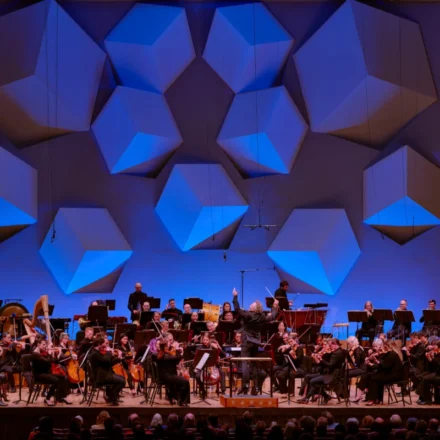
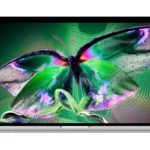
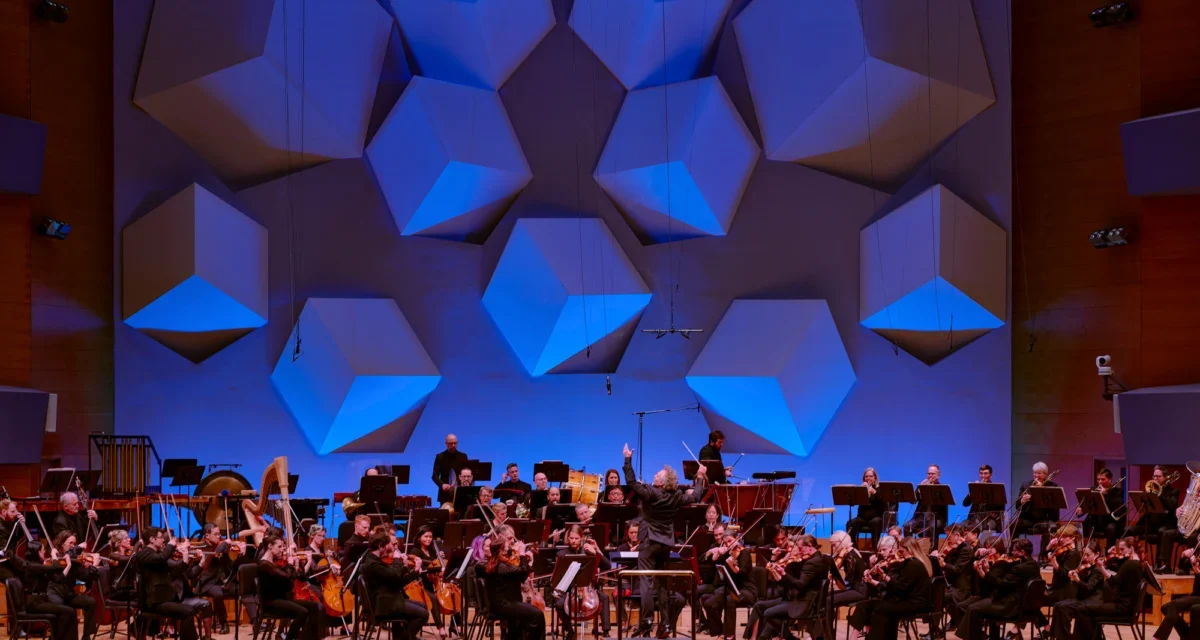
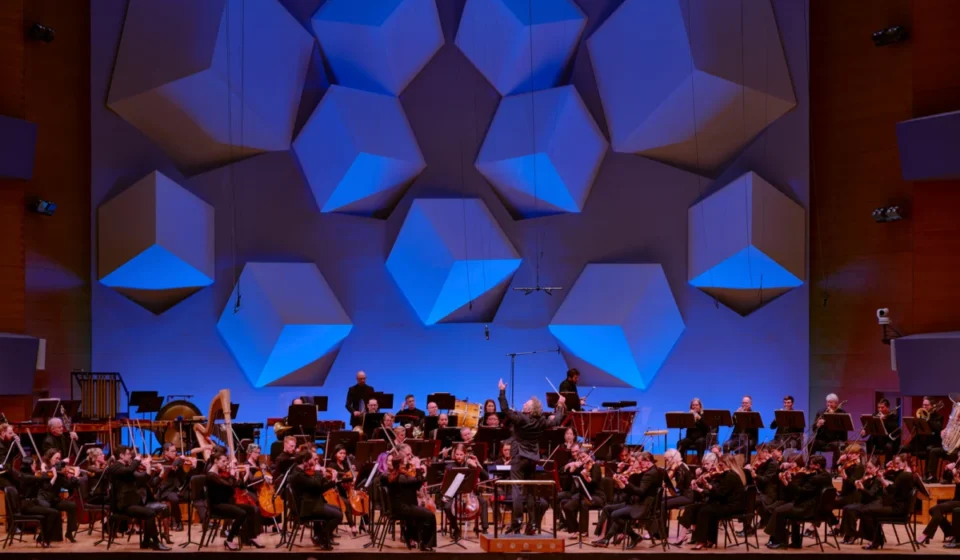
For the Minnesota Orchestra’s season opener, the iconic, cube-studded acoustic architecture of Orchestra Hall is undergoing a metamorphosis. BAFTA-winning designer Tal Rosner has been commissioned to treat the hall’s signature back wall and ceiling not merely as a backdrop, but as a primary instrument of the performance.
Using the technique of video mapping—a process that requires pixel-perfect calibration to turn physical objects into projection surfaces—Rosner is crafting a visual landscape to accompany Igor Stravinsky’s 1910 masterpiece, The Firebird. This performance marks the inaugural chapter of the Orchestra’s "Sound Unbound" series, a multi-year initiative dedicated to deep-dive collaborations between world-class musicians and visual artists.
The Historical Weight of ‘The Firebird’
To understand the audacity of Rosner’s project, one must appreciate the revolutionary nature of the music itself. Commissioned by Sergei Diaghilev for the Ballets Russes, The Firebird was the breakout score that cemented Stravinsky as the primary architect of modernism. At the time of its premiere, it was a seismic departure from the Romantic traditions of the 19th century, setting the stage for the literal riots that would erupt three years later during the 1913 premiere of The Rite of Spring.
By mapping the folklore-steeped narrative of Prince Ivan, the sorcerer Koschei, and the elusive Firebird onto the hall’s modernist geometry, Rosner is bridging the gap between early 20th-century avant-garde and 21st-century digital media.
The Methodology: Precision and Metaphor
Tal Rosner, whose career trajectory began with dreams of MTV-style motion graphics, brings a unique perspective to orchestral collaboration. His approach to The Firebird is not a literal re-enactment, but a suggestive, rhythmic conversation with the score.
"I don’t show the princesses," Rosner noted during an interview regarding his creative process. "The princesses are represented by golden ribbons." This design philosophy emphasizes the abstract over the illustrative. Rosner works in tandem with the orchestra’s lighting crew, treating the concert as a holistic ecosystem where visuals and sound are co-dependent.
"The cubes were a stroke of serendipity," he remarked. "They provided a constraint that forced me to innovate. This is a design that is impossible to replicate anywhere else because it is so deeply rooted in the specific, physical layout of this hall."
By avoiding the "Look at me!" ego-driven style of traditional projection, Rosner aims for a subtle, mature integration. The result is a performance that honors the original narrative structure of the Russian folktale while pushing the audience toward a new sensory experience.
Supporting Data: The Orchestral Program
The performance of The Firebird will be part of a robust program that spans both the classic and the contemporary. Under the baton of Music Director Thomas Søndergård, the program includes:
- George Walker’s Icarus in Orbit (2004): A testament to the late Pulitzer Prize-winning composer’s mastery of modern orchestral texture.
- Sergei Prokofiev’s Concerto No. 2 in G minor for Piano and Orchestra, Op. 16: Featuring the virtuosic Vadym Kholodenko.
The performances are scheduled for Friday, Sept. 25, at 8 p.m. and Saturday, Sept. 26, at 7 p.m. Tickets are priced between $64 and $159, with full program details available on the Minnesota Orchestra’s official website.
Existentialism at the Guthrie: ‘Waiting for Godot’
While the Orchestra explores the color and energy of Stravinsky, the Guthrie Theater is delving into the stark, existential void of Samuel Beckett. Directed by Joseph Haj, the production of Waiting for Godot serves as a sobering counterpart to the spectacle at Orchestra Hall.
Beckett’s 1953 play is notoriously rigid; the author left little room for creative interpretation, mandating every silence and pause. Yet, Haj manages to infuse the production with a fresh, contemporary urgency. By stripping the staging to its essential minimalism, the production asks a haunting question: How does one maintain hope in an era of "end times fascism" and global polarization?
The Performances: Chemistry and Gravitas
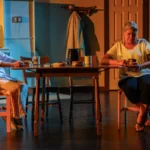
The production relies heavily on the interplay between David Strathairn (Vladimir) and Jimmy Kieffer (Estragon). Strathairn, an actor of immense cinematic pedigree, brings a profound, weary gravitas to the second act, allowing the audience to feel the crushing weight of the characters’ existential plight. Kieffer provides a necessary comedic balance, grounding the production’s more abstract moments in a relatable, human lovability.
The ensemble is bolstered by William Sturdivant’s portrayal of Pozzo and Jim Lichtscheidl’s delivery of Lucky’s infamous, absurdist monologue—a centerpiece of the play that remains as challenging today as it was seventy years ago. The immersive sound design by Darron L. West creates an immediate, claustrophobic atmosphere that forces the audience to inhabit the same bleak, timeless space as the characters.
Implications: Why These Works Still Matter
The coincidence of these two major productions occurring simultaneously in Minneapolis highlights a recurring cycle in the arts. We are currently living in a moment that mirrors the turbulence of the early and mid-20th century. Stravinsky’s shift toward modernism was a response to a world on the brink of radical change, just as Beckett’s Godot was a reaction to the trauma of the French Resistance and the rise of totalitarianism.
For the modern theatergoer and concertgoer, these works offer a form of mirror-gazing. When we watch The Firebird at Orchestra Hall, we are seeing the triumph of art over chaos. When we watch Waiting for Godot at the Guthrie, we are seeing the persistence of the human spirit in the face of indifference.
Professional and Artistic Synthesis
The success of these two ventures signals a broader trend in the Twin Cities arts community: a willingness to take risks with established classics. By inviting visual artists like Tal Rosner to reshape the concert experience, and by trusting directors like Joseph Haj to mine the depths of Beckett, the institutions are ensuring that these "classics" do not become museum pieces. Instead, they remain vital, living conversations.
As audiences transition between the vibrant, digital geometry of Orchestra Hall and the stripped-back, existential landscape of the Guthrie, they are invited to consider their own place in a world that is, at once, technologically oversaturated and spiritually searching.
Logistics and Conclusion
For those looking to engage with these artistic offerings:
- Orchestra Hall: The Minnesota Orchestra performances run Sept. 25–26. Tickets can be acquired via the Minnesota Orchestra website.
- Guthrie Theater: Waiting for Godot runs through Oct. 11, with various matinee and evening showtimes. Detailed schedule and ticket pricing ($25–$91) are available on the Guthrie Theater website.
Whether one seeks the transcendent power of orchestral color or the quiet, biting truth of theatrical minimalism, this week provides a rare opportunity to witness the evolution of the 20th century’s most enduring artistic innovations. These productions prove that whether through the lens of a projector or the silence of a stage, the arts remain our most effective medium for understanding the complexities of the modern world.