











































For millions of Americans navigating the darkest moments of their lives, the three-digit sequence "988" has become a vital lifeline. It is not merely a number, but a bridge—a point of contact that promises the presence of a human voice when everything else feels like it is collapsing. For Cadence Van Beek, a sophomore at Melrose-Mindoro High School, that bridge was the difference between spiraling into despair and finding a path forward.
During a severe mental health crisis, Van Beek feared the clinical indifference of a bureaucratic waitlist. Instead, she found a counselor who practiced radical patience, guiding her through her de-escalation and connecting her with essential local resources in Jackson County.
"It didn’t feel rushed," Van Beek recalls. "She took her time with me, and she was very kind—just a kind soul."
Van Beek’s experience is one of more than 345,000 interactions Wisconsinites have had with the state’s 988 Suicide and Crisis Lifeline since its launch in July 2022. While the service has demonstrated a profound impact on public health, its future remains precarious. Unlike 911, which is bolstered by reliable, long-term telecommunications funding, the 988 system in Wisconsin relies on a patchwork of inconsistent grants and biennial budget allocations, leaving the state lagging behind national benchmarks for in-state response rates.
A Proven Lifeline: The Data Behind the Demand
The effectiveness of the 988 system is no longer a matter of anecdotal evidence; it is supported by hard data. A recent study published in JAMA revealed that in the first two and a half years of the program, suicide rates among individuals aged 15 to 34 were 11% lower than statistical projections, representing nearly 4,400 fewer deaths.
Despite this, the demand for services continues to outpace the state’s capacity to fund them. Tana Koss, Senior Vice President at Family Services of Northeast Wisconsin—the agency responsible for operating the state’s 988 line—notes that the surge in call volume has shattered initial projections.

"Wisconsin has blown all numbers out of the water and continues to," Koss said. "The demand from Wisconsinites for this service has surpassed every model of projection that was available to us."
This surge is attributed to a combination of factors: the long-tail mental health effects of the COVID-19 pandemic and the increased destigmatization of seeking help. As the public becomes more comfortable reaching out, the need for a stable, permanent, and adequately funded infrastructure becomes an urgent public health imperative.
Chronology of a Funding Struggle
The journey to establish a robust mental health response has been marked by a series of legislative hurdles. While the federal government provides some funding, the reliance on biennial budget cycles creates a "funding cliff" every two years.
- July 2022: The 988 Suicide and Crisis Lifeline launches nationwide. Wisconsin begins its rollout, relying on a mix of federal grants and limited state support.
- 2023–2025: Advocacy groups, led by the National Alliance on Mental Illness (NAMI) Wisconsin, repeatedly lobby for a dedicated funding stream. Gov. Tony Evers recommends $12.2 million in the biennial budget, but the legislature approves only $7 million.
- June 2025: State Rep. Ben Franklin and State Sen. Jesse James introduce legislation to require the state to provide grants to 988 administrators. However, the bill fails to include necessary funding and subsequently stalls, failing to reach a floor vote in the Senate or Assembly.
- January 2026: The federal government provides a three-year grant of $4.5 million annually to Family Services. While helpful, this remains significantly below the $12.2 million annual requirement for full operational sustainability.
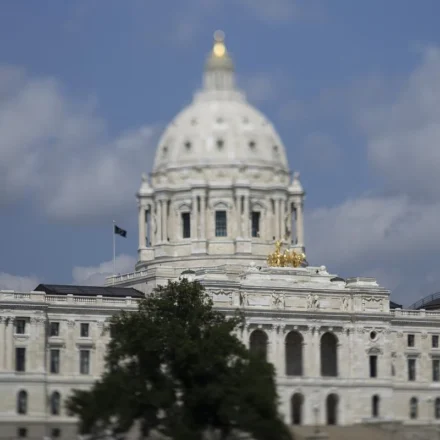
- May 2026: Cadence Van Beek visits the state Capitol, presenting her own research to lawmakers and advocating for a telecommunications fee similar to the one that funds 911.
The Disparity in Response Rates
The current funding model has direct consequences for the quality of care. In July 2026, Wisconsin received over 11,200 calls. Of those, only about 9,000 were answered by in-state counselors. The remainder were routed to national backup centers.
This routing process is suboptimal. When a call is diverted to a national center, the caller loses the benefit of speaking with someone who understands local context, regional resources, and the specific nuances of the Wisconsin mental health landscape. Furthermore, the routing process adds time to the call, increasing the risk that a person in crisis will hang up.
"The longer a person waits on the line, the more likely they are to disengage," Koss explains. "When you’re in queue, our primary center gets an opportunity to answer. If we’re not able to, then our backup center gets an opportunity to answer. So the sooner in that process you can have the staff available, the more likely you are to engage that caller."

While Wisconsin improved its in-state response rate from 74% in January to 81% in July, it still trails behind states like Illinois and Minnesota, both of which boast 90% in-state response rates. The difference? Many of those states have already enacted a dedicated 988 telecommunications fee on phone bills—a model similar to the 75-cent monthly fee Wisconsinites already pay to support 911.
Official Responses and Political Obstacles
The debate over how to fund 988 has become a flashpoint for partisan disagreement. Critics of the current legislative approach argue that bills like the one introduced by Rep. Franklin were "hollow"—lacking the mandatory appropriations needed to make the service functional.
Brandy Tollefson, a De Pere School Board member and opponent of Franklin in the 2026 election, speaks from a place of personal tragedy. Having lost her stepbrother to suicide, she views the lack of funding as a systemic failure.
"I fully support working with any Democrat or Republican who wants to get this permanently funded," Tollefson said. "There was a lot missing from [the proposed bill] to make it a bipartisan bill that people could get behind, because the details just weren’t there."
Advocates like Julia Polk, NAMI Wisconsin’s advocacy coordinator, argue that the state needs to move beyond the "trust and hope" model of grant-based funding. The anxiety of waiting to see if federal grants will materialize is, according to Polk, a significant impediment to long-term planning and counselor recruitment.
Implications for the Future: Youth and Technology
The crisis is particularly acute among younger generations. Megan Zimmerman, outreach program director at NAMI Fox Valley, emphasizes that many people avoid calling 988 due to the misconception that it will result in an immediate, involuntary police response. In reality, law enforcement or emergency services are involved in only 0.4% of 988 calls in Wisconsin.

"If I can get an individual to agree to have that conversation on the phone with someone, and I’m there to support them in whatever way they need, that is just as good of an outcome as telling them to go home," Zimmerman notes.
This is especially true for Gen Z, who often prefer the anonymity and accessibility of text and chat functions. Cadence Van Beek, who now studies psychology at the University of Wisconsin-Whitewater, highlights the necessity of these digital options: "Gen Z in general, we’ve always been behind a screen. 988 gives youth the option to text it, and I always have liked that, because talking or maybe even going in person can be overwhelming."
Furthermore, as the prevalence of generative AI companions grows, experts warn of the dangers of relying on algorithms for emotional support. In Illinois, legislators are considering a bill that would impose daily fines on AI companies that fail to refer users to 988 when they express suicidal ideation. Zimmerman and other advocates are now actively educating students to prioritize human-led crisis lines over AI chatbots.
Conclusion: A Call for Sustainability
The path forward for Wisconsin is clear but politically fraught. Whether through a dedicated telecommunications fee, a permanent state trust fund, or a more robust legislative mandate, the current model of financial uncertainty is unsustainable.
As Tana Koss emphasizes, the goal is not to debate the method of funding, but to ensure its permanence. "I’m not personally attached to any route," she said. "I think the request that I would have and advocate for is sustainability over the long haul because what we’re projecting is this growth hasn’t stopped."
For young advocates like Cadence Van Beek, the fight for 988 is a personal mission. Having transitioned from a high schooler in crisis to a college student studying the very field that saved her life, she remains steadfast in her belief that society has a fundamental obligation to be there for those who need it most.

"988 has always kind of been a given," Van Beek says. "We always kind of assume that it’ll be there. The possibility that there might not be enough counselors on the line because of funding for 988… just makes me a little worried."
As Wisconsin approaches the next biennial budget cycle, the question remains: will the state provide the security necessary to ensure that when a person in crisis dials 988, someone is there to answer? For thousands of families, the answer is a matter of life and death.