















































The Silent Glow: Why Advocates are Calling for Dark-Sky Standards in the Age of Data Centers

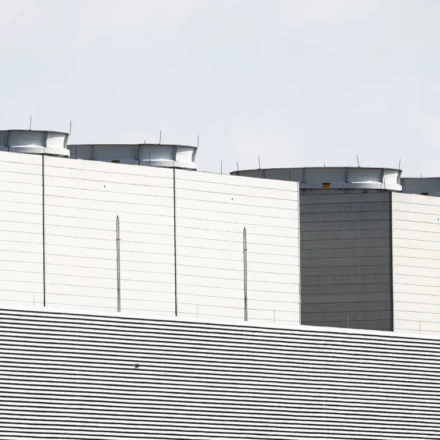
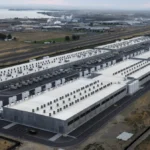
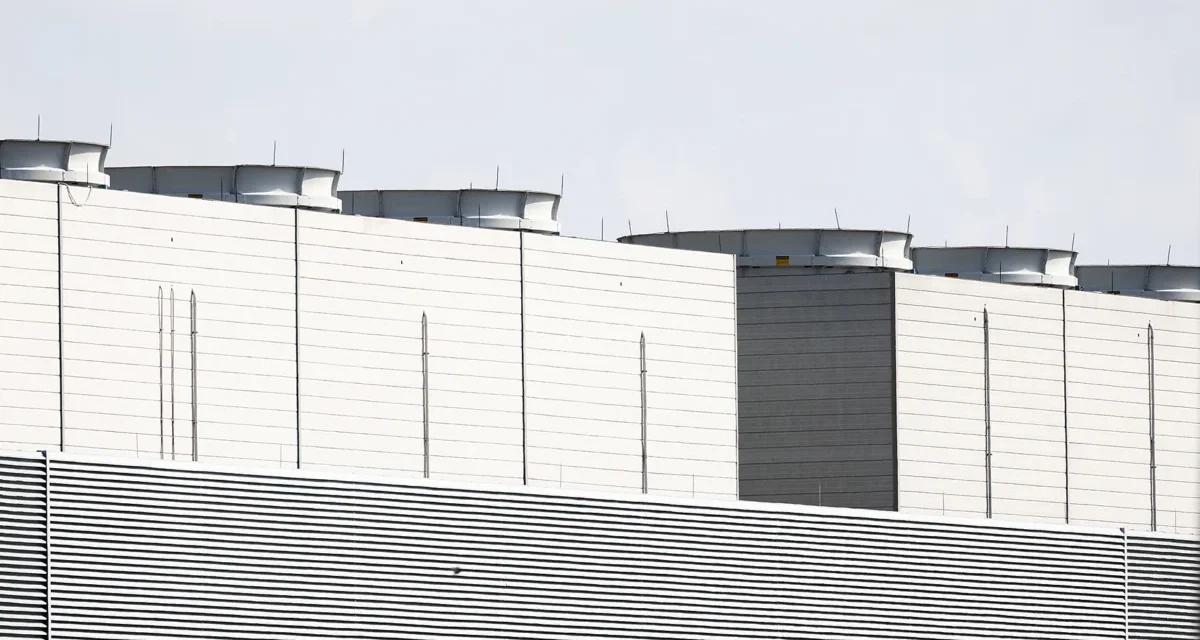
As the global demand for artificial intelligence, cloud storage, and high-speed digital infrastructure surges, the physical landscape of the United States is undergoing a quiet, industrial transformation. Across the country—and particularly in the rural expanses of the Midwest and South—massive, windowless structures are rising from the earth. These are the data centers, the humming, heat-intensive nerve centers of the modern internet.
While much of the public debate has focused on the staggering amounts of water and electricity these facilities consume, a secondary, often-overlooked environmental impact is casting a long shadow: light pollution. Vayujeet Gokhale, a physics professor at Truman State University and a board member for DarkSky Missouri, believes it is time for these tech giants to dim their lights.
“If you are going to have lights on at night, then let’s do it in a responsible way,” Gokhale says. His proposal is straightforward: stop lighting the sky and start lighting only what is necessary, in the way that is necessary.
The Case for “Responsible Illumination”
For Gokhale, light pollution represents a unique category of environmental degradation. Unlike the complex, systemic challenges of water usage or carbon emissions, which often require fundamental changes to business models or technological breakthroughs, the mitigation of light pollution is, in his view, the most solvable environmental problem of our time.
“You don’t need to light up the place for these computers and memory banks to work. They’ll still work even if it’s completely dark,” Gokhale notes. “You need light for certain other things, like security, but you can minimize the pollution without affecting the quality of the data center product. You can’t make that same case with water and energy.”
DarkSky Missouri and its parent organization advocate for a simple set of principles:
- Directional Shielding: Installing lighting that is pointed exclusively downward to prevent light trespass and skyglow.
- Intelligent Automation: Utilizing motion sensors so that floodlights are only active when human presence is detected.
- Spectral Management: Using warm-colored, low-intensity LED lighting to reduce the disruptive blue-light spectrum that causes the most damage to biological rhythms.
These choices, Gokhale argues, are not just environmental virtues; they are operational efficiencies. By reducing unnecessary lighting, companies can lower their energy expenditures and improve the overall security profile of their facilities. “Many times, in these environmental issues, it’s a zero-sum game,” he says. “Not so with light pollution. It’s a win-win.”
A Chronology of Rapid Expansion
The rise of the data center is a relatively recent phenomenon, yet it has achieved a breakneck pace of growth.

- Pre-2020: Data centers were largely concentrated in established tech hubs.
- 2021–2023: As AI investment accelerated, the search for cheaper land and energy led developers toward the rural American Midwest and the Mississippi River Basin.
- May 2026: Google announces a landmark $15 billion investment in Montgomery County, Missouri, signaling a new era of large-scale infrastructure in the state.
- June–July 2026: The friction between rapid development and local oversight hits a fever pitch. St. Charles County officials impose a six-month moratorium on new data center projects, citing concerns over infrastructure strain.
- September 2026: The backlash against tax-incentivized data centers manifests at the ballot box, with Independence, Missouri, residents recalling city council members who supported a controversial project.
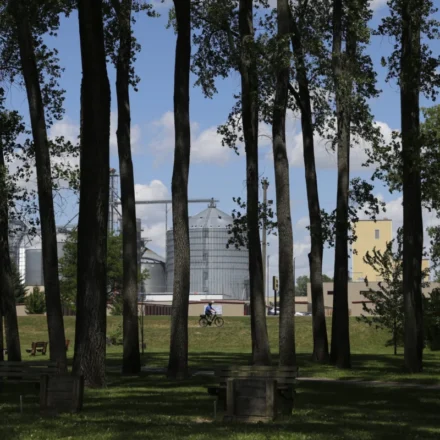
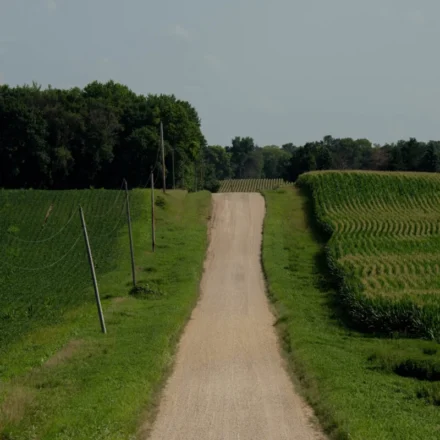
Today, there are over 3,000 data centers operating in the United States. According to the Pew Research Center, three-quarters of currently planned sites are slated for rural areas in the South and Midwest, regions that often lack the regulatory frameworks to handle such massive industrial projects. In Missouri alone, there are 95 active facilities, and that number is poised to climb.
Supporting Data: The Biological Cost
The environmental implications of this expansion extend far beyond the aesthetic loss of a star-filled night. The night sky is a critical habitat for millions of species, many of which are currently in decline.
The Pollinator Crisis
Nicole Flowers-Kimmerle, a horticulture educator for the University of Illinois Urbana-Champaign Extension, emphasizes that our agricultural system is deeply tethered to the nocturnal world. “About one out of every three bites of food produced in the U.S. is dependent on insect or animal pollinators,” she notes.
When data centers blaze with high-intensity floodlights throughout the night, they create a biological vacuum. Moths and other nocturnal insects, which are vital for pollination and serve as the base of the food web, become disoriented by the artificial glow. This disruption ripples upward, impacting the bird species that rely on these insects as a primary food source.
The Flyway Hazard
The impact is magnified by the geography of the Mississippi River Basin, which serves as a primary migratory “flyway” for nearly 50% of all North American bird species. Murry Burgess, an assistant professor at Mississippi State University specializing in ornithology, explains that migratory birds often use the stars as a celestial compass.
“With light pollution, it’s really obscuring the stars and throwing them off course, making them expend more energy circling around trying to find where they’re supposed to go,” Burgess says. “That’s when you start to see a lot of window collisions and increased mortality.”
For birds traveling thousands of miles from South America to the northern reaches of the continent, the loss of dark corridors acts as a barrier to survival. “It’s really important to preserve dark sky areas,” Burgess adds, “the same way that you would have a wildlife refuge. The sky is part of their habitat.”
Official Responses and Regulatory Lags
Despite the growing scientific consensus regarding the negative impacts of light pollution, government policy has struggled to keep pace.

In Missouri, the legislative response has been fragmented. State Representative Colin Wellenkamp (R-St. Charles County) introduced House Bill 3362 in the last session, which aimed to hold data center developers accountable for grid upgrades and establish permitting requirements for high water usage. However, the bill did not address the secondary impacts of the facilities, such as light and noise pollution, and ultimately failed to advance.
A significant hurdle is the lack of a legal definition for a “data center.” Currently, the Missouri Department of Natural Resources does not regulate these facilities as a distinct industry. Because they are often classified simply as “commercial development,” they frequently bypass the rigorous environmental impact assessments required for traditional heavy industry.
Governor Mike Kehoe has championed these investments, framing them as an “investment in Missouri families, communities, and long-term opportunity.” While the economic potential is undeniable, the lack of regulatory guardrails has left local councils to navigate the trade-offs on their own.
The Road Ahead: Defining the Purpose
Vayujeet Gokhale is quick to clarify that he is not fundamentally anti-development. Rather, he is an advocate for thoughtful integration. His goal is to see a state-level policy that categorizes data centers and establishes baseline requirements for their operation—including, and perhaps starting with, responsible lighting.
“At the most fundamental level, we need to define what these things are, what their purpose is,” Gokhale says. As the AI economy continues to reshape the landscape of the Mississippi River Basin, the question of how these facilities exist within their environments will become increasingly pressing.
If communities can successfully demand, for example, that these massive warehouses utilize smart lighting, it could set a precedent for how the U.S. manages the environmental footprint of the digital age. As it stands, the glow emanating from these facilities serves as a reminder that the cost of progress is often hidden in the dark—and that, for now, the sky is being sacrificed for the sake of the server.
Whether policymakers will take the lead in drafting these regulations or continue to leave the decision-making to individual developers remains to be seen. But for those like Gokhale and Burgess, the time to act is before the next 3,000 centers are built, not after the night sky has been permanently altered.
This story is a product of the Mississippi River Basin Ag & Water Desk, an independent reporting network based at the University of Missouri in partnership with Report for America, with major funding from the Walton Family Foundation.