



















































The Private Equity Paradox: Minnesota’s Legislative Battle Over the Future of Elder Care

In the quiet corridors of Minnesota’s 339 skilled nursing facilities and more than 2,350 assisted living homes, a quiet but profound transformation has been underway. It is a shift from local, often non-profit or family-owned operations toward a complex web of global finance. At the heart of this shift is private equity—a business model that critics argue prioritizes short-term investor returns over the long-term health of Minnesota’s most vulnerable seniors.
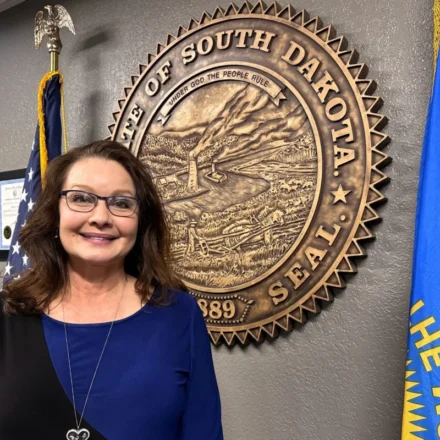
Representative Liz Reyer (DFL-Eagan) does not fit the stereotype of a corporate antagonist. Before her election to the Minnesota House, she spent years in the private sector as a market researcher, including a stint at Blue Cross and Blue Shield of Minnesota. Her background has given her a nuanced view of the intersection between healthcare and commerce. "I don’t say ‘let’s ban private equity,’" Reyer noted in a recent interview. Yet, Reyer is now the chief architect of a legislative push that could fundamentally change how private equity interacts with the state’s elder care industry.
As the author of House File 2771, Reyer, alongside Senator Alice Mann (DFL-Edina), is leading a charge to peel back the layers of corporate opacity. The bill, currently making its way through the committee process, seeks to impose rigorous disclosure requirements and operational mandates on private equity firms looking to acquire nursing homes. The debate has ignited a fierce ideological and economic battle at the State Capitol, pitting consumer advocates against industry lobbyists and highlighting the precarious financial state of the facilities tasked with caring for an aging population.
Main Facts: The Scope of HF 2771 and the Transparency Gap
The central premise of the proposed legislation is simple: Minnesota cannot regulate what it cannot see. Currently, the Minnesota Department of Health (MDH) requires facility owners to disclose their general status—whether they are a for-profit business, a non-profit, or a government-owned entity. However, this level of reporting fails to capture the intricate corporate structures typical of private equity.
"Private equity ownership is not identifiable from standard licensing types," explains Kelly Asche, a senior researcher at the Center for Rural Policy and Development. Under current law, a nursing home may be listed as a for-profit corporation, but the state lacks the mechanism to track whether that corporation is a subsidiary of a private equity fund with a specific mandate for rapid capital extraction.
HF 2771 aims to close this loophole through several key provisions:
- Advance Notification: Facility operators must notify the state at least 120 days before a sale to a private equity firm.
- Detailed Disclosures: Purchasing companies must provide a "complete and detailed description" of their corporate structure, including all parent companies, subsidiaries, and investment partners.
- Past Performance Vetting: State regulators would be empowered to block transactions if the private equity operator has faced adverse judgments or significant regulatory violations within the previous 10 years.
- Capital Reinvestment Mandates: New operators would be legally required to invest "sufficient capital" to maintain infrastructure and staffing levels, a direct counter to the "cost-cutting" reputation of private equity.
Chronology: A Growing National and Local Momentum
The push for private equity oversight in Minnesota did not happen in a vacuum. It is part of a broader national trend as state legislatures grapple with the "financialization" of healthcare.
- 2015–2020: Private equity investment in healthcare surged nationwide. During this period, firms began targeting nursing homes, attracted by the steady stream of government-funded Medicare and Medicaid reimbursements.
- 2023–2024: Following reports of declining care quality in private equity-owned facilities, states like California, Massachusetts, and Oregon passed landmark legislation to increase oversight of healthcare acquisitions.
- October 2024: Investigations into the financial health of Minnesota nursing homes revealed a murky landscape of "hidden revenue," where facilities appeared to be losing money on paper while paying high rent or management fees to related-party companies owned by the same investors.
- February 2025: Rep. Reyer and Sen. Mann introduced their respective bills (HF 2771 and SF 2972) in the Minnesota House and Senate.
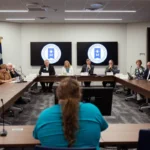
- Mid-February 2025: The House and Senate Human Services Committees held hearings on the bills. While the legislation was "laid over"—a procedural move that keeps the bill alive for future inclusion in larger spending packages—it sparked intense debate that signaled the issue would be a focal point of the legislative session.
Supporting Data: The Cost of the Private Equity Playbook
To understand why DFL lawmakers are sounding the alarm, one must look at the specific investment model used by private equity. Yashaswini Singh, a healthcare economist at Brown University, defines private equity by its "time horizon." Unlike a family business that might look at a 30-year legacy, private equity firms typically seek a significant return on investment within ten years or less.
To hit these aggressive targets, firms often employ a "playbook" that includes:
- Sale-Leasebacks: Selling the facility’s real estate to a separate entity and then leasing it back. This generates immediate cash for investors but saddles the nursing home with permanent, high-cost rent.
- Staffing Reductions: Labor is the highest cost in elder care. Private equity firms often trim staff to the bare minimum required by law.
- Strategic Patient Selection: Research by Atul Gupta, a professor at the Wharton School of the University of Pennsylvania, suggests that private equity-owned homes often "cherry-pick" patients with lower health risks to minimize costs, yet paradoxically show higher mortality rates among residents.
The data from advocacy groups like Consumer Voice is stark. In a 2024 analysis of federal data, the group found that staff turnover rates—a primary indicator of care quality—were significantly higher at private equity-owned facilities. For example, homes operated by the firm Portopiccolo in Tennessee saw turnover rates as high as 61%. In Minnesota, where a "Nursing Home Workforce Standards Board" is already struggling to address a staffing crisis, such turnover rates could be catastrophic.
"Private equity’s sole purpose is to squeeze every single cent out of the function of whatever business they’ve glommed onto," argued Sen. Erin Maye Quade (DFL-Apple Valley) during a recent committee hearing. "They ruin the function of the business in the pursuit of profit."
Official Responses: The Clash of Practicality and Principle
The legislative debate has revealed a sharp divide between those who view private equity as a "modern-day plague" and those who see it as a necessary evil in a cash-strapped industry.
The DFL and Advocate Perspective
Proponents of the bill argue that the current system allows "impersonal business identities" to operate in the shadows. Rep. Reyer emphasizes that the bill isn’t about banning investment, but about ensuring that the state knows who is providing care. Consumer advocates argue that without these protections, the "silver tsunami" of aging Minnesotans will be left at the mercy of investors who prioritize dividends over dignity.
The Republican and Industry Perspective
Republicans and industry lobbyists have raised significant concerns about the unintended consequences of the bill. Rep. Natalie Zeleznikar (R-Fredenberg Township), a former nursing home executive, points out that the industry is already in a state of contraction. "There are not a lot of people waiting to buy nursing homes," Zeleznikar warned, noting that the high cost of 24-hour staffing has made many facilities financially unviable. She fears that HF 2771 will act as a deterrent, scaring away the very capital needed to keep rural facilities from closing.
The Long Term Care Imperative, a powerful lobbying partnership for senior care providers, echoed these sentiments. A spokesperson stated that the "more paperwork and regulation" proposed by the bill would only create "more burdens for senior living communities," ultimately harming affordability and access for the seniors the bill intends to protect.
Bipartisan Common Ground?
Despite the friction, there is a sliver of bipartisan agreement. Rep. Jeff Backer, a Republican co-chair of the House Human Services Finance and Policy Committee, stated that he agrees with the bill’s goal of transparency. Furthermore, Senator Jim Abeler (R-Anoka) has shown support for a related measure introduced by Sen. Scott Dibble (DFL-Minneapolis) that imposes even stricter requirements on private equity-owned homes.
Implications: A High-Stakes Wait-and-See
The decision to "lay over" the bills means that the conversation is far from over. As the legislative session progresses, these measures are likely to be folded into a "gargantuan omnibus bill"—a catch-all legislative package where many of the session’s most contentious policy changes are finalized.
The implications of passing—or failing to pass—HF 2771 are profound:
If the bill passes: Minnesota will become one of the most transparent states in the nation regarding healthcare ownership. This could lead to a "cooling effect" where private equity firms avoid the state, potentially stabilizing care quality but also potentially accelerating the closure of facilities that rely on aggressive private investment to stay afloat.
If the bill fails: The current trend of opaque ownership will likely continue. Regulators will remain "in the dark" about the true corporate structures of facilities, and the state may find itself unable to intervene as more nursing homes transition from community-focused models to profit-driven investment vehicles.
Ultimately, the debate over HF 2771 is a debate over the soul of Minnesota’s social safety net. As Rep. Reyer noted, Minnesotans are being "thrust into dealings with complex and impersonal business identities." Whether the state chooses to illuminate those identities or leave them in the shadows will define the quality of life for the state’s elderly for decades to come.
As the session continues, lawmakers like Sen. John Hoffman (DFL-Champlin) insist the dialogue must continue. "We’re just going to lay over and keep the conversation going," Hoffman said. For the thousands of Minnesotans living in these facilities, that conversation is anything but academic.