
















































The Minnesota Timberwolves entered the 2026-27 NBA season with championship aspirations, banking on a roster overhaul designed to challenge the established hegemony of the San Antonio Spurs and the Oklahoma City Thunder. However, just four games into the campaign, the team’s momentum hit a structural roadblock: a knee surgery that will sideline superstar Anthony Edwards for up to two months.
In the wake of this seismic loss, the Timberwolves have been forced to undergo a rapid, high-stakes reinvention. Rather than spiraling, the team has leaned into a collective identity, headlined by a newfound reliance on a balanced, "next-man-up" offensive philosophy. At the center of this transformation is a phenomenon that has become the team’s rallying cry: "The Dosunmu Dash."
The Dosunmu Dash: A Catalyst for Chaos
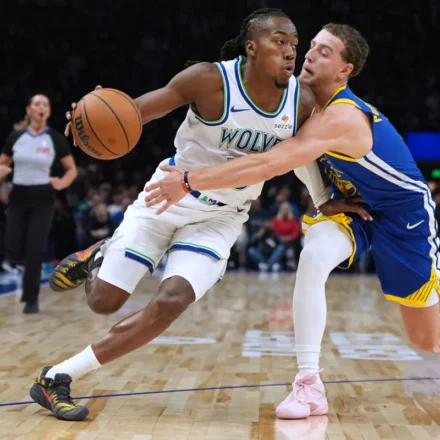
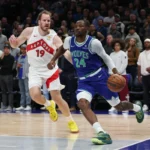
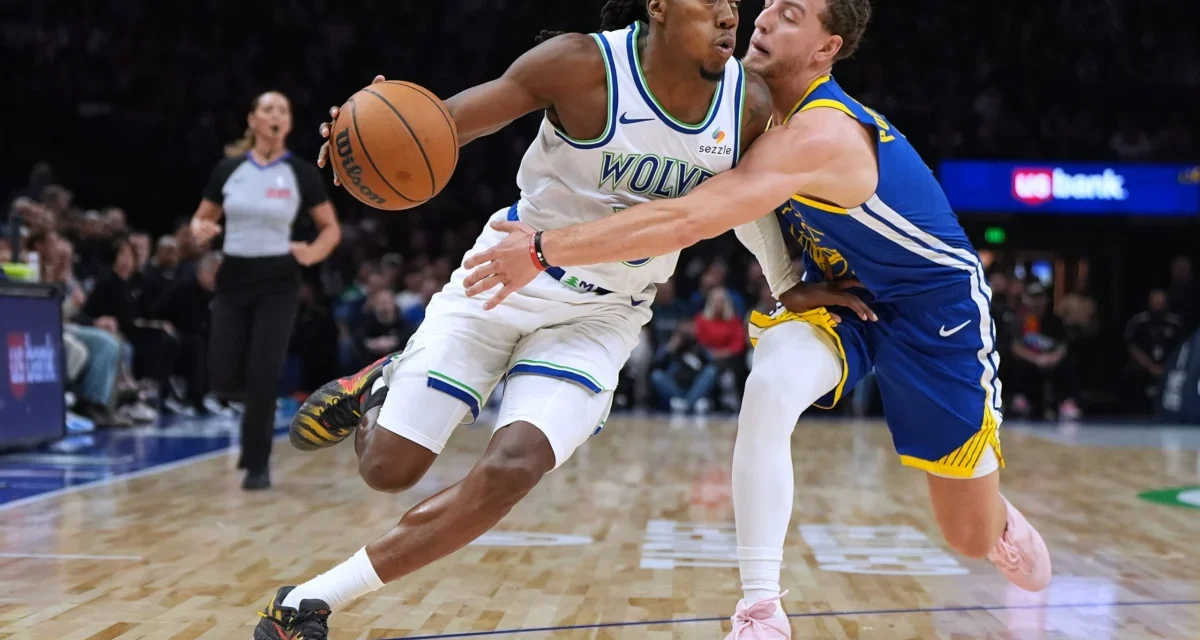
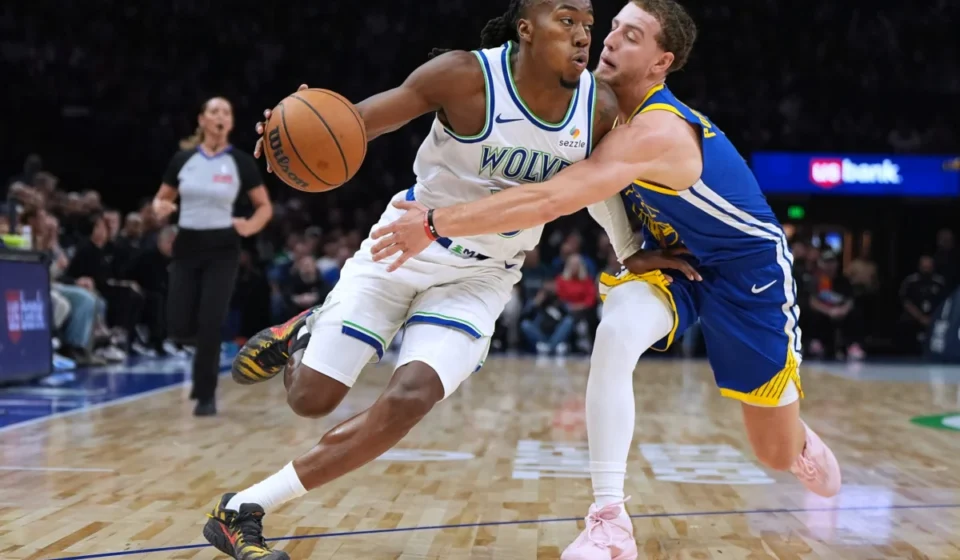
The most visible manifestation of Minnesota’s resilience is the play of Ayo Dosunmu. His transition game—often sparked by defensive steals or opportunistic loose-ball recoveries—has become a clinical display of basketball geometry. On Wednesday night, as the Wolves pulled off a gritty upset against the first-place Houston Rockets, Dosunmu served as the team’s primary engine.
His signature move, the "Dash," is a court-length sprint that defies standard defensive set-ups. When asked earlier this spring about the source of his finishing finesse after such high-speed maneuvers, Dosunmu was characteristically humble, attributing the talent to divine providence. Yet, the eye test suggests otherwise. His ability to navigate tight seams, shift tempos like a jazz musician, and utilize ambidextrous crossovers is clearly the result of thousands of hours of repetitive, disciplined drudgery.
Against Houston, Dosunmu’s impact was statistical and visceral. He accounted for 11 of the team’s fast-break points—no other teammate recorded more than two—and dominated the paint with 20 points, 18 of which came via nine contested layups. It marked his third consecutive game leading the Wolves in both fast-break points and points in the paint.

Chronology of the Shift
The transition to a post-Edwards hierarchy did not happen in a vacuum. Coach Chris Finch had challenged Dosunmu prior to the season to find an "extra gear" on both ends of the floor. When Edwards went down, Dosunmu, already the primary option off the bench, was the natural choice to step into the starting rotation.
This shift was facilitated by a combination of necessity and external factors: the meticulous minutes management of LaMelo Ball and a nagging hip injury sidelining T.J. Shannon. Dosunmu has responded by becoming, arguably, the most impactful player on the roster over the last five games. He currently leads the team in scoring (19.8 PPG), is tied for the lead in steals (10), and ranks second in assists (23).
The Wednesday night game in Houston served as a microcosm of this transition. Dosunmu carried the scoring load through the second and third quarters, providing the bridge needed for the team to survive LaMelo Ball’s mid-game slump. While Dosunmu eventually fatigued in the fourth quarter, his work in the middle frames ensured that the Timberwolves stayed within striking distance, allowing the team’s stars to close the deal in the final minutes.
Supporting Data: The Efficiency of the "Next Man Up"
The Timberwolves’ success during this period is not merely a product of adrenaline; it is supported by a robust, data-backed approach to rotation and role-playing.
The Paint Dominance
Dosunmu’s efficiency is staggering. Over the past five games, he ranks 10th in the NBA in paint points, and third among non-big men—trailing only Scottie Barnes and Ajay Mitchell. Even when evaluating his season-long performance (which includes his time as a reserve), he sits fifth among guards in paint production.

Defensive Synergy and Bench Contributions
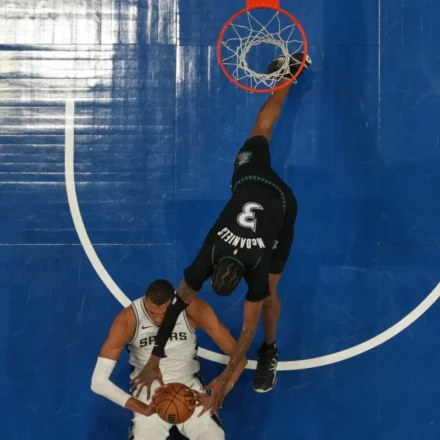
The team’s defensive metrics remain surprisingly sturdy. Jaylen Clark’s perimeter defense has allowed Jaden McDaniels to roam and disrupt passing lanes, while the tandem of Trey Lyles and rookie Joan Beringer has proven to be a masterclass in mentorship. In the 82 minutes that Lyles and Beringer have shared the floor, the Wolves have allowed a stifling 100 points per 100 possessions—a significant improvement over the team’s baseline.
Conversely, the team is navigating the "loud" successes and "quiet" liabilities of Bones Hyland. While Hyland provides a much-needed offensive spark and maintains a stellar 3-to-1 assist-to-turnover ratio, his defensive presence has seen the team allow 122.1 points per 100 possessions during his minutes. Finding the equilibrium between his offensive ceiling and defensive floor remains a top priority for the coaching staff.
Official Perspectives and Coaching Philosophy
Coach Chris Finch’s public remarks suggest a team that is deeply aware of its precarious situation but confident in its depth. Regarding Jonathan Kuminga, who has arguably been the team’s most pleasant surprise, Finch noted that the Wolves would be "lost without him."
Kuminga’s value lies in his adherence to the fundamentals of his role. His performance in the final 2:37 of the Houston game—where he recorded eight crucial points, including two corner three-pointers and a gritty putback—epitomizes the "heroic-when-necessary" mindset the coaching staff is cultivating.
The most delicate situation involves LaMelo Ball. Ball, who views himself as a "unicorn" of the game, operates best on intuition. Finch has been careful not to stifle that creativity while simultaneously trying to manage the turbulence that can come with Ball taking on an increased usage rate. The objective is to encourage Ball to lead without forcing him to adopt a rigid style that might disrupt the chemistry of his teammates.

Implications for the Season
The Timberwolves are currently in the midst of a seven-game homestand, a scheduling gift that allows for intensive practice and cohesion-building without the physical toll of travel. This stretch is critical for integrating the current rotation before Edwards returns.
The broader implication is that the 2026-27 season is a marathon, not a sprint. The Timberwolves’ goal of advancing deep into the playoffs—past the traditional powerhouses of the West—requires that they develop a high floor during the regular season. By forcing players like Dosunmu, Kuminga, and Clark to expand their responsibilities, the organization is effectively raising its collective ceiling.
When Edwards returns, the team will not simply revert to its previous state; it will be a more versatile, battle-tested unit. The current reliance on high-pace, ball-sharing basketball—exemplified by the 22 forced turnovers and 33 points off turnovers against the Rockets—is creating an identity that makes the Wolves dangerous regardless of who is on the floor.
The "Dosunmu Dash" is more than a highlight-reel play; it is the emblem of a team that has refused to let a season-defining injury become a season-ending excuse. By fostering strengths that complement their star rather than merely replacing him, the Timberwolves are positioning themselves to be a legitimate threat when the calendar turns to the postseason. The next two months will not just be about surviving the absence of Anthony Edwards—they will be about proving that the Wolves’ depth is a weapon that few opponents are prepared to handle.