


















































This article was originally published by The Daily Yonder.
In the quiet corridors of rural Minnesota, a critical health divide is being addressed by a pioneering research initiative. A new project, spearheaded by the Masonic Cancer Center at the University of Minnesota and the Minnesota Cancer Clinical Trials Network, aims to dismantle the systemic barriers preventing rural residents from accessing life-saving lung cancer screenings. By transforming the primary care experience, researchers hope to turn the tide against a disease that remains one of the state’s most significant health challenges.
The Core Objective: A Shift in Clinical Culture
The fundamental premise of the project is deceptively simple: improve screening rates by empowering the entire primary care team to take ownership of the process. Dr. Abbie Begnaud, a leading pulmonologist and associate professor at the University of Minnesota Medical School, argues that the current "hand-off" model of patient care is failing rural populations.
“Anybody with lungs can get lung cancer, and, when found early, lung cancer survival rates can reach 80% to 90%,” Dr. Begnaud explained. “The problem is that less than 20% of eligible Minnesotans are actually screened for lung cancer.”
Under the standard model, patients are often handed informational pamphlets and expected to navigate the complex administrative task of scheduling a scan themselves. In rural settings, where imaging centers may be hours away and administrative burdens are high, this often leads to a "screening gap." The new pilot program, tested in six primary care clinics, shifts the responsibility to the clinic staff. By involving nurses, medical assistants, and administrative personnel in identifying eligible patients and scheduling their appointments on-site, the program removes the logistical and psychological friction that prevents many from seeking care.
A Chronology of the Initiative
The development of this program is the result of years of observation and clinical frustration.
- Initial Observation: Dr. Begnaud and her colleagues identified a recurring pattern: rural patients frequently presented with stage 3 or stage 4 lung cancer, despite having been eligible for early screening for years.
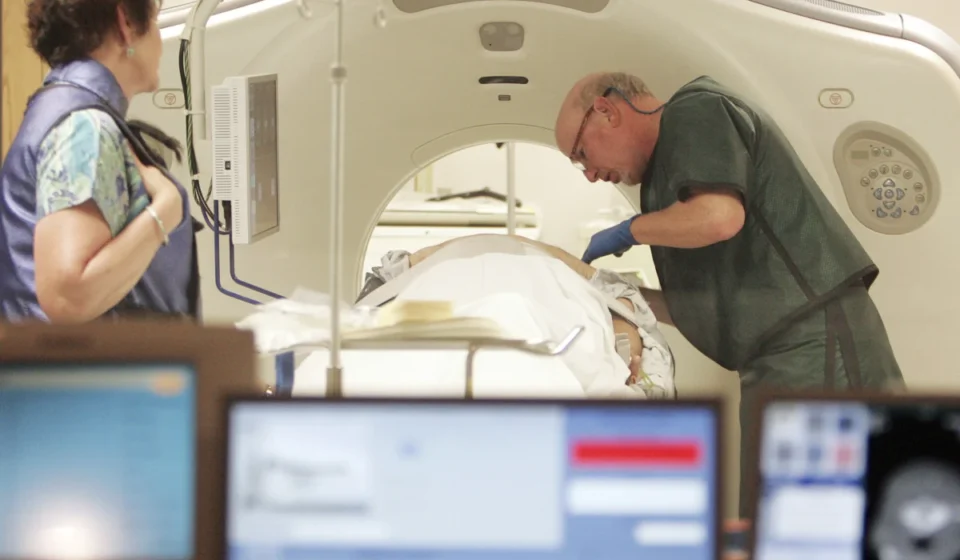
- The Pilot Phase: Collaborating with the Minnesota Cancer Clinical Trials Network, the research team identified six rural clinics to test a "whole-of-office" approach. The pilot focused on training staff to proactively identify smoking histories, assess eligibility for Low-Dose Computed Tomography (LDCT) scans, and facilitate immediate scheduling.
- Data Collection (Early 2024): Throughout the pilot, clinics tracked the number of screening orders generated. Preliminary data revealed a 30% increase in orders compared to baseline figures.
- Expansion Planning (Mid-2024 to Present): Encouraged by the initial success and the enthusiasm of clinic staff, the team is now preparing for a statewide, scaled-up trial to validate the efficacy of the model across a more diverse range of rural healthcare settings.
Supporting Data: The Rural Health Disparity
The necessity for this program is underscored by a wealth of data indicating that where you live significantly dictates your health outcomes. According to the American Lung Association and the U.S. Surgeon General, the divide between urban and rural health is widening.
As of 2023, the national smoking rate for adults sits at 10.8%. However, this average masks a stark geographic disparity. The 2024 Surgeon General’s report found that 15.4% of rural adults smoke, compared to just 10.1% of their urban counterparts. Furthermore, rural smokers are not only more frequent consumers of cigarettes—averaging 15 or more per day—but are also more likely to start smoking at a younger age.
The report also highlights a "geographic cluster" of vulnerability. Rural adults in the Midwest and Southeast—including states like Indiana, Kentucky, Missouri, and Ohio—are 40% more likely to smoke than residents in the Northeast or West. These populations also report significantly lower "quit ratios," suggesting that rural residents face greater difficulty in accessing cessation resources and maintaining smoke-free lifestyles.
"People who live in rural areas experience tobacco-related health disparities," the Surgeon General’s report notes. "Compared with people who smoke and live in urban areas, people in rural areas who smoke tend to have worse cessation-related outcomes when attempting to quit and are more likely to die from a tobacco-related disease."
Addressing the "Stigma Factor"
Beyond geography and logistics, Dr. Begnaud emphasizes that there is a profound psychological barrier: the weight of societal shame.
“All the public service announcements and warnings that we’ve been doing over the last several decades have decreased the smoking rate, but they have also led to stigma and shame around cigarette smoking,” she noted. “People who have smoked or continue to smoke are certainly aware that it’s bad for their health, and they know that everyone else is thinking about it. I think they internalize these messages of blame.”
This internalization often acts as a deterrent to seeking medical care. If a patient feels judged by their healthcare provider, they are less likely to disclose their smoking history or engage in conversations about screenings. The pilot program aims to "decouple" the clinical necessity of screening from the moral judgment often associated with tobacco use. By normalizing the screening process as a routine part of preventive medicine—much like a cholesterol check or blood pressure screening—the program seeks to foster an environment of support rather than scrutiny.
Official Perspectives and Clinical Motivation
The success of the pilot program, while localized, has garnered significant interest within the oncology and public health communities. Dr. Begnaud believes the "whole-of-office" approach is inherently feasible because it leverages the existing strengths of rural clinics: close-knit teams and deep community ties.
“In the clinics that we’ve worked in, the entire clinic teams were excited to learn more about it and excited to work on this project,” Dr. Begnaud stated. While she maintains a rigorous scientific caution—noting that a small pilot cannot be the sole basis for a total paradigm shift—the momentum is undeniable.
Her motivation is deeply personal. As a specialist who has witnessed the heartbreaking trajectory of late-stage diagnosis, she views this project as a moral imperative. “My clinical work as a lung specialist motivates me,” she says. “Every time I see somebody who comes to me who should have been screened and wasn’t, and now they have a stage 3 or a stage 4 lung cancer, it motivates me to get up and work harder tomorrow.”
Implications for the Future of Rural Healthcare
The implications of this study extend far beyond lung cancer. If the "whole-of-office" model proves successful in a statewide trial, it could serve as a template for other preventive health screenings in rural America, including colon cancer, heart disease, and diabetes screenings.
The model demonstrates that systemic change does not always require massive infrastructure investment or high-tech breakthroughs. Instead, it requires the optimization of existing human capital. By empowering non-physician staff to take an active role in patient health, clinics can extend their reach without increasing the burden on overworked rural physicians.
As the Minnesota Cancer Clinical Trials Network prepares for the next phase, the focus will be on sustainability. How do you keep the momentum going once the research funding ends? The answer likely lies in integrating these practices into the standard operating procedures of rural clinics, effectively changing the culture of care to one where "screening is for everyone."
Ultimately, the goal is to close the gap between the 15.4% of rural adults who smoke and the less than 20% who are currently being screened. By moving from a passive system to a proactive one, the University of Minnesota team is providing a roadmap for a healthier rural future—one where geography is no longer a terminal diagnosis.