





















By [Your Name/Journalistic Staff], based on reporting by Kate Sosin for The 19th.
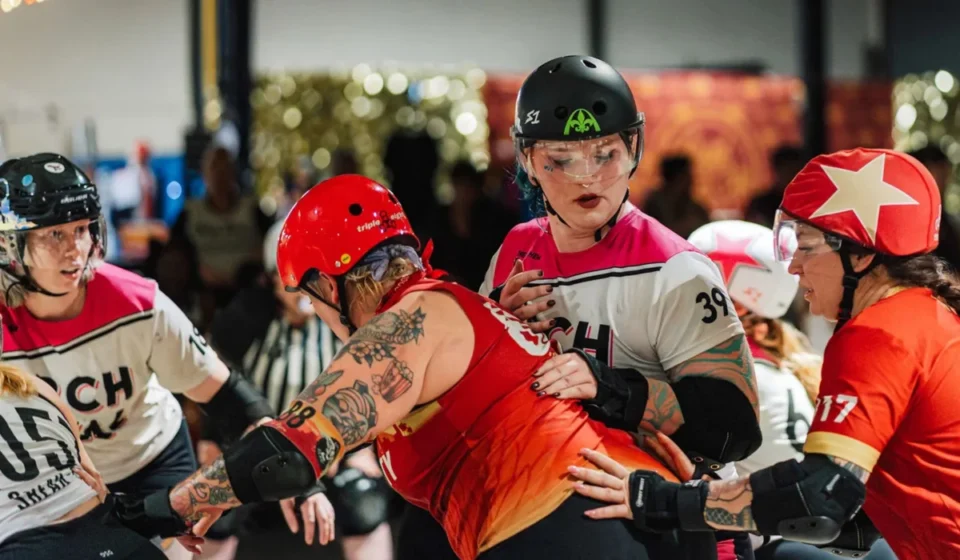
In the landscape of modern athletics, where the debate over transgender participation has become a flashpoint for national politics and legislative action, one high-contact, counter-cultural sport has quietly been building a different model. For over two decades, roller derby—a sport characterized by aggressive hits, punk-rock aesthetics, and a fiercely independent spirit—has navigated the complexities of gender identity, ultimately choosing to prioritize community and inclusion over the rigid, often exclusionary standards prevalent in mainstream athletic organizations.
The Human Experience: Finding Home on the Track
For Juniper Simonis, a memory from 2012 remains etched in vivid detail. It was a warm summer evening in Ithaca, New York. As she sped through the streets on her bicycle, the music of American folk singer Mariee Siou provided a soundtrack to a moment of profound personal liberation. She had just received an email confirming that the Ithaca League of Women Rollers had voted to allow her to join their team.
“As somebody who played sports and was queer, but those were two very separate parts of my life, the promise and the opportunity to integrate those was very hopeful for me,” Simonis recalls. For a transgender woman, receiving that affirmation—a simple, unequivocal “you are welcome”—was more than just an invitation to play a sport; it was a validation of her existence.
Yet, the journey has not been without its shadows. Despite the camaraderie, Simonis notes that she has also been on the receiving end of abuse, including physical assault by other players specifically because of her identity. Her experience captures the dual reality of the sport: while roller derby stands as a progressive bastion, it remains a microcosm of the broader society, still grappling with its own internal biases and failures.
A Chronology of Evolution: From Endurance Races to Inclusive Advocacy
Roller derby’s history is as complex as its present. Tracing its roots back to the 1930s, the sport began as a marathon endurance race promoted by Leo Seltzer. According to the Smithsonian, even in its nascent stages, the sport was co-ed, though it was plagued by the era’s standard pay disparities.
Over the decades, these endurance events evolved into the high-contact, strategic sport known today. As derby veteran and Angel City League Derby Director Rachel “Rotten” Johnston explains, the transition was organic: “Over the course of these races, people start to run into each other. They get tired, they try to sabotage each other. And so that’s the thing that people started to get really into.”
By the early 2000s, a grassroots resurgence in Austin, Texas, brought structure to the sport. This era was defined by a “riot grrrl” ethos—a direct, gritty rebuttal to the polished, hyper-feminine pop culture of the time. It was a space for “tough, punk rock” women to define their own terms of strength and femininity.
As the sport exploded in popularity—eventually spanning over 400 leagues across six continents under the Women’s Flat Track Derby Association (WFTDA)—the question of who belonged on the track became unavoidable. In the early 2000s, the focus was on creating a safe space for women away from cisgender men. As Nicole “Bonnie Thunders” Williams, widely regarded as the greatest skater in the sport’s history, notes, “At the time, ‘cis’ wasn’t really even a term we were using. And it was cis men that we didn’t want.”
The policy evolved slowly. Initially, WFTDA mirrored Olympic guidelines, requiring transgender women to undergo two years of hormone replacement therapy. However, this proved difficult to enforce and was applied unevenly. It wasn’t until 2015 that the WFTDA took a definitive step, updating its policy to welcome anyone of a marginalized gender, regardless of transition status or appearance.
Supporting Data and Case Studies: The Impact of Policy
The shift toward inclusion was not merely an administrative change; it transformed the lives of the athletes. Penelope “Fifi Nomenon” Nederlander joined the LA Derby Dolls in 2010. She recalls the anxiety of coming out to a mentor, only to be met with total acceptance once it was confirmed she had legally transitioned. “It was the first group of friends who I met who only knew me as Penny, and that was huge,” she says.

This inclusive framework also provided a safe harbor for nonbinary athletes and those assigned female at birth who sought to transition while remaining active in their community. Drew “OMG WTF” Flowers, a nonbinary skater who co-owns a skate shop with Nicole Williams, struggled with the fear that their transition would alienate their teammates. Instead, they found a community that embraced their journey. “I had reached a point in my life where I was like, ‘I have to do this,’” Flowers says. Today, both Flowers and Williams skate for the prestigious Rose City Rollers Wheels of Justice, proving that professional-level success and authentic self-expression are not mutually exclusive.
Official Responses and the Price of Inclusion
The sport’s commitment to inclusion has occasionally come at the cost of mainstream recognition. For years, roller derby was considered for inclusion in the Olympic Games. However, WFTDA leaders were wary. Not only were there logistical hurdles regarding governance—as the International Olympic Committee preferred to work with USA Roller Sports rather than the WFTDA—but there was a philosophical incompatibility.
Roller derby leaders were unwilling to compromise their gender policies to satisfy the strict, exclusionary mandates often imposed by international sporting bodies. Ultimately, the community chose to maintain its autonomy rather than conform to a system that would force them to police the identities of their athletes.
“When I see ‘protect women’s spaces,’ that feels so repressive,” Williams says. “I don’t want to discount that women’s spaces are important. They are, but I don’t really identify with that in the way that I used to.”
The Path Forward: Addressing Persistent Inequality
Despite its successes, the sport is not a utopia. Donita “Blaxyl Rose” Green highlights that the sport still struggles with internal systemic issues. She notes that gender-diverse skaters—and particularly Black, trans skaters—often face harsher officiating and microaggressions. “I’ve seen firsthand how much worse some of these microaggressions and problems happen when you are a dark-skinned Black skater,” Green says. “We talk often about skating while Black. It just happens.”
These realities suggest that while the formal policies of the WFTDA have reached a place of advanced inclusion, the culture of the sport must still work to dismantle the prejudices that bleed in from the outside world.
Implications for the Future of Sport
Roller derby’s model offers a compelling alternative to the current, highly polarized landscape of athletics. By focusing on the reality of the sport—where athletic advantages vary wildly among all people regardless of gender—derby has found that concerns about competitive fairness often mask underlying bias.
As Penelope Nederlander suggests, there is a path forward that involves honest conversation rather than exclusionary bans. She advocates for an approach that acknowledges biological realities without using them as a cudgel to bar trans women from participating. “In roller derby, there doesn’t seem to be an important difference. We really don’t have any complaints about trans skaters. So that’s awesome,” she notes.
Rachel Johnston agrees, dismissing the fear-mongering regarding safety in a contact sport. “I think that people who are concerned about people getting hurt are missing the fact that we’re playing a full contact sport. You’re going to get hurt no matter what. You know, life isn’t fair, and sports most certainly are not fair.”
Ultimately, roller derby has demonstrated that a sport can be both competitive and inclusive. By choosing to prioritize the humanity of its participants over a narrow, tradition-bound definition of gender, the roller derby community has created a blueprint for how other organizations might navigate the future—if they are willing to take the risk of being truly open.