



















































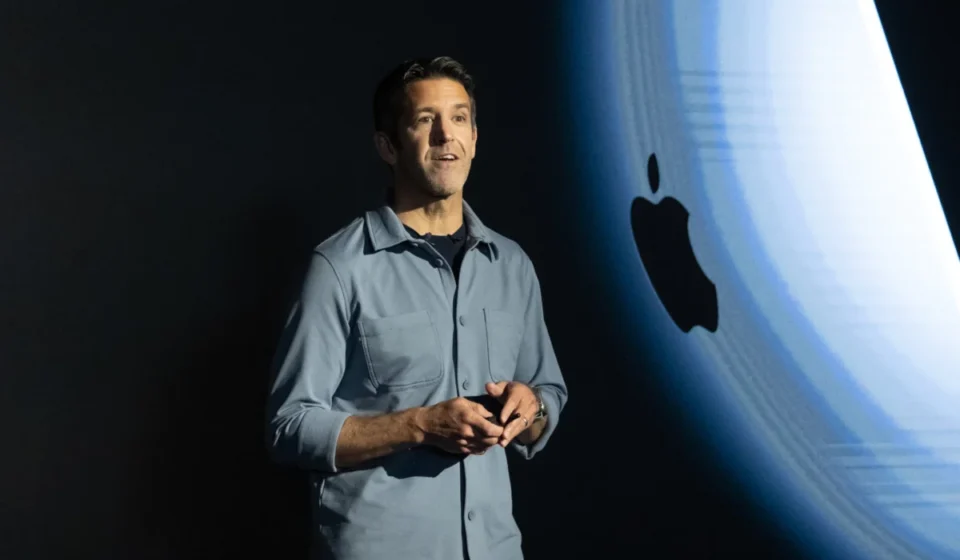

The landscape of Silicon Valley underwent a tectonic shift this week as Apple, the world’s most valuable technology company, officially inaugurated a new chapter in its corporate history. After a transformative 15-year tenure that saw Apple evolve from a hardware-centric company into a global services and lifestyle ecosystem, Tim Cook has formally stepped down as CEO. Succeeding him is John Ternus, the company’s former Senior Vice President of Hardware Engineering.
While the transition was first announced in April, the official transfer of power this Tuesday marks a pivotal moment for the tech giant. For Apple enthusiasts, the name John Ternus is synonymous with the company’s recent hardware renaissance; for the general public, however, the 51-year-old leader represents a transition from a household name to a figure of mystery. As he takes the helm, Ternus inherits a company at a critical crossroads, tasked with navigating the complexities of the generative AI revolution, a shifting global supply chain, and the maturation of its spatial computing ambitions.
The Succession: Continuity Meets Innovation
Tim Cook’s departure does not signal a total withdrawal from the company he helped build into a multi-trillion-dollar juggernaut. Cook will remain at Apple as executive chairman, providing a bridge between the old guard and the new leadership.
"I take enormous comfort in handing the helm to someone as brilliant, wonderful, and capable as John," Cook wrote in a heartfelt message to Apple staff on his final day as CEO. "Few people understand what it takes to build products that change the world the way John does, and I could not be more excited for his leadership."
This endorsement from the outgoing CEO is significant. Cook, who took over from Steve Jobs in 2011, has long prioritized the internal cultivation of talent. By selecting an internal candidate with deep institutional knowledge, the Apple board has signaled that it values the "Apple Way"—a philosophy centered on craftsmanship, design-led development, and vertical integration—over the disruptive, often volatile, management styles seen elsewhere in the tech sector.
A Quarter-Century of Craftsmanship: The Rise of John Ternus
To understand the man who will now steer the Apple ship, one must look at his long, quiet climb through the company’s ranks. Now 51, Ternus has spent 25 years—nearly half his life—embedded within the Apple ecosystem.
Ternus joined Apple in 2001, shortly after graduating from the University of Pennsylvania. His first foray into the professional world was at a small firm called Virtual Research Systems, where he worked on virtual-reality devices—a fitting prelude to his later involvement with the Apple Vision Pro. His entry into Apple was humble; he began in the product design team, a department where the company’s legendary obsession with detail is most acutely felt.
His ascent was steady and methodical. By 2013, he had earned the title of VP of Hardware Engineering, and in 2021, he was promoted to Senior Vice President. Over the course of his career, he has been the invisible hand behind some of the most iconic consumer products in history, including the AirPods, the Apple Watch, and the entire Mac lineup.
Perhaps the most defining moment of his executive career was his role in the transition from Intel processors to Apple Silicon. This architectural shift, which required massive coordination between hardware and software teams, proved to be a masterstroke, resulting in laptops and desktops that offered unprecedented performance-per-watt. It was this success that cemented his reputation as a product-first leader, rather than a purely operational one.
The Philosophy of the "Perfect Screw"
Ternus’s leadership style is rooted in a deep, almost obsessive attention to detail—a trait he attributes to his early days at the company. In his 2024 commencement speech at the University of Pennsylvania, he recalled a grueling night spent at a supplier facility, counting the grooves on a screw head.
"I was arguing with the supplier because these parts had 35 grooves. They were supposed to have 25," he recounted. "I distinctly remember stepping back for a minute and thinking, ‘What the hell am I doing? Is this normal?’"

That experience taught him that at Apple, there is no "invisible" detail. This mirrors the ethos of Steve Jobs, whom Ternus frequently cites as his ultimate inspiration. He often shares an anecdote about watching Jobs inspect the back of a chest of drawers, noting that the carpenter had finished it as beautifully as the front, even though it would never be seen. For Ternus, this is the essence of Apple: building products that are perfect not because someone is watching, but because it is the right way to build.
The Immediate Challenges: AI and Market Adaptation
The timing of Ternus’s appointment could not be more critical. Next week, Apple will host its annual iPhone launch event, a high-stakes performance that sets the tone for the company’s fiscal year. This year’s event carries added pressure: the public debut of a deeply integrated Siri AI, powered by Google’s Gemini model.
Integrating third-party AI into the Apple "walled garden" is a delicate balancing act. Historically, Apple has been hesitant to rely on external tech, preferring to build proprietary solutions from the ground up. However, the rapid acceleration of the AI race has forced a change in strategy. Ternus will need to prove that this "new-and-improved" Siri isn’t just a gimmick, but a fundamental utility that maintains the privacy and seamless user experience that customers expect.
Furthermore, Ternus has already begun testing the limits of Apple’s traditional pricing models. He was a lead architect behind the MacBook Neo, an affordable, entry-level laptop that utilizes iPhone-derived chips to lower costs. This represents a strategic shift for Apple: capturing the "budget-conscious" consumer without diluting the premium brand equity. Balancing these new, cost-sensitive product lines with the high-margin, high-tech hardware that Apple is famous for will be the defining challenge of his early tenure.
Beyond the Boardroom: Who is John Ternus?
Despite his meteoric rise, Ternus has managed to remain an enigma to the general public. He is not the type of executive who engages in culture wars or public grandstanding. His recent decision to join X (formerly Twitter) was a notable departure from his previous low-profile existence.
His background, however, provides clues to his character. As an undergraduate, he was a competitive swimmer—a sport known for requiring immense discipline and endurance. His senior engineering project, a feeding arm for individuals with quadriplegia, suggests a genuine interest in how technology can serve human needs, rather than just acting as a status symbol.
In an industry often characterized by "abrasive egos," Ternus’s approach to leadership is surprisingly modest. "Always assume you’re as smart as anyone else in the room, but never assume that you know as much as they do," he told students at his alma mater. This blend of confidence and intellectual humility may be his greatest asset as he navigates the complex, often conflicting interests of Apple’s board, investors, and the global user base.
Implications for the Future
The appointment of John Ternus signals that Apple intends to remain a "product-builder’s company." While other tech giants have pivoted aggressively toward cloud infrastructure, advertising, or experimental ventures, Apple under Ternus appears poised to double down on the hardware-software integration that has kept it at the top of the food chain for two decades.
However, questions remain. Can Apple maintain its design-first culture as the complexity of its software—specifically AI—continues to grow? Will the company’s reliance on third-party AI partners like Google ultimately weaken its control over the user experience? And, perhaps most importantly, will Ternus be able to replicate the massive market expansions that defined the Cook era, or is the company entering a period of refinement and consolidation?
For now, the consensus among analysts is one of cautious optimism. Ternus is a known quantity inside Apple, trusted by the engineers, the designers, and the supply chain managers. He is a product of the system he now leads, which suggests that while the pace of innovation may change, the core DNA of the company is unlikely to be altered.
As the tech world watches the September event, the spotlight will be on the man who spent 25 years worrying about the number of grooves on a screw. If he can bring that same level of scrutiny to the future of Artificial Intelligence and spatial computing, the "Apple of the future" may look very different—but it will almost certainly remain as intentional as it has ever been.