






















































The Iron Range’s New Frontier: Niron Magnetics and the Multi-Billion Dollar Shift Toward Domestic Mineral Independence

For decades, the Iron Range of Northern Minnesota has been defined by the rhythmic cycle of the taconite industry—a cycle that has, in recent years, trended toward decline. As global steel markets shifted and domestic mills turned toward recycled scrap, the sprawling open-pit mines that once built American cities began to face an uncertain future. However, a new technological revolution is brewing in the state, one that promises to marry Minnesota’s industrial heritage with the cutting-edge requirements of the global green energy transition.
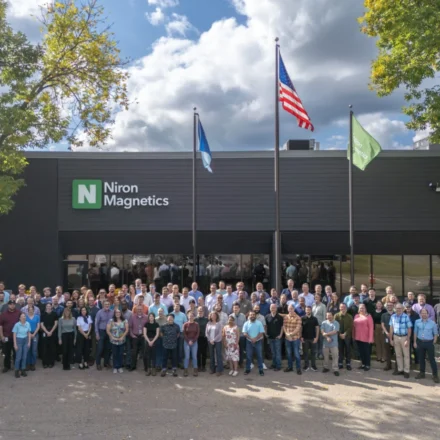
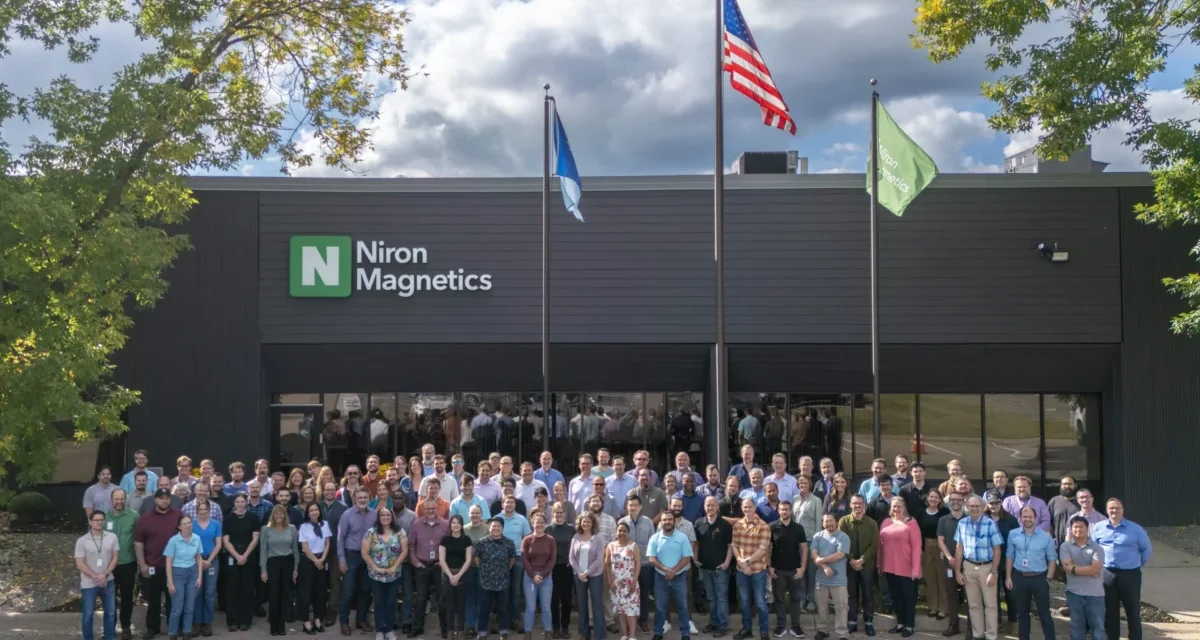
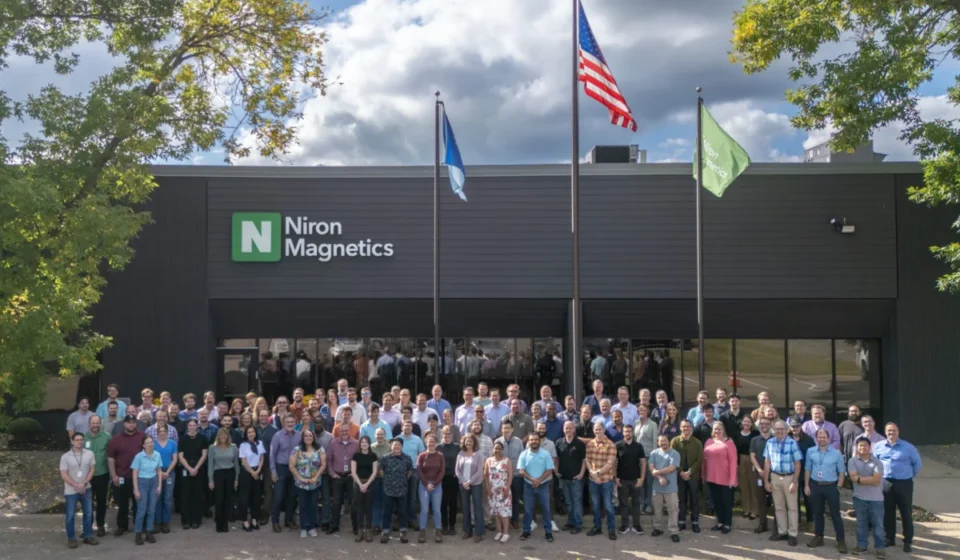
Minneapolis-based Niron Magnetics is currently evaluating the Iron Range as the potential site for its third and largest manufacturing facility. This proposed $1.8 billion plant represents more than just a capital investment; it is a strategic maneuver to decouple the United States from its near-total reliance on Chinese "rare-earth" minerals. By utilizing a breakthrough technology that replaces rare-earth elements with common iron and nitrogen, Niron aims to revitalize the Range while securing the supply chain for everything from electric vehicle (EV) motors to advanced defense systems.
Main Facts: A Transformative Vision for Minnesota’s Industrial Heart
The scope of Niron Magnetics’ proposal is staggering, both in terms of financial investment and regional impact. The company is scouting locations for a 1.6 million-square-foot facility that would begin construction by 2028 and be operational by 2029. This "Giga-factory" of magnets would employ upwards of 700 workers, providing a significant boost to a region that has seen thousands of jobs vanish as the traditional iron-ore industry consolidated and contracted.
At the heart of this expansion is Niron’s proprietary "Clean Earth Magnet" technology. Unlike conventional high-performance magnets that require rare-earth elements—such as neodymium and dysprosium—Niron’s magnets are composed of iron nitride. This material is abundant, inexpensive, and, crucially, can be sourced entirely within the United States.
The Strategic Shift from Rare Earths
Currently, China controls approximately 70% of the global mining of rare-earth minerals and a staggering 90% of the refined magnet manufacturing market. This dominance has long been a point of concern for U.S. policymakers and automotive manufacturers. Rare-earth mining is notoriously "dirty," involving toxic chemical leaching and significant environmental degradation.
Niron’s alternative offers a twofold solution:
- Economic Resilience: By using iron and nitrogen, the company bypasses the volatile pricing and geopolitical risks associated with the rare-earth market.
- Environmental Sustainability: The production process for iron nitride magnets is significantly cleaner, requiring less energy and producing fewer hazardous byproducts than traditional rare-earth refining.
Chronology: From University Lab to Global Competitor
The journey of Niron Magnetics is a testament to the power of academic research being successfully commercialized within the state of Minnesota.
2014–2022: The Research and Development Phase
The core technology was invented by Professor Jian-Ping Wang at the University of Minnesota. Recognizing the physical limitations of existing magnets and the looming supply chain crisis, Wang and his team spent years perfecting the stable production of iron nitride. The company eventually established a pilot plant in Northeast Minneapolis, where it currently employs roughly 185 people in research, development, and small-scale production.
2023–2024: Scaling Up in Sartell
In 2023, Niron broke ground on its first commercial-scale production facility in Sartell, near St. Cloud. This facility, representing a $10 million state investment alongside private capital, is designed to employ 175 people and produce 1,500 tons of magnets annually. It serves as the proof-of-concept for the company’s industrial-scale manufacturing capabilities.
2024–Present: The Hunt for a "Mega-Site"
Earlier this year, Niron hired Savills, a global commercial real estate advisory firm, to begin the selection process for its third and largest plant. While other states are being considered, the Iron Range has emerged as a frontrunner due to its existing transportation infrastructure, high-voltage power capacity, and a workforce already skilled in heavy industrial processing.
Supporting Data: The Economics of Iron Nitride
The financial and production metrics behind Niron’s expansion highlight why the company has attracted nearly $300 million in public and private capital.
- Investment Scale: The proposed $1.8 billion facility would be one of the largest private investments in the history of Northern Minnesota.
- Production Volume: While the Sartell plant targets 1,500 tons per year, the Iron Range facility is designed to produce 10,000 tons of magnets annually.
- Revenue Goals: Niron officials have indicated they are aiming for $1 billion in annual revenue as they scale, with a potential initial public offering (IPO) on the horizon within the next two to three years.
- Supply Chain Inputs: The primary feedstock for these magnets is iron powder—often derived from recycled steel or processed iron ore—and atmospheric nitrogen. This eliminates the need for the complex metallurgical processing and chemical separation required for rare earths.
The company’s roster of partners further validates the technology. Investors and prospective customers include:
- General Motors (GM) Ventures
- Volvo Cars
- Stellantis (Chrysler, Fiat, Peugeot)
- Samsung Ventures
- Western Digital
- U.S. Department of Energy (DOE)
Official Responses: Bipartisan Support and Economic Optimism
Unlike many industrial projects in Minnesota, which often face steep opposition from environmental groups or political factions, the Niron Magnetics expansion has garnered broad, bipartisan support.
State Economic Development
Kevin McKinnon, Deputy Commissioner of the Minnesota Department of Employment and Economic Development (DEED), expressed high confidence in the project’s fit for the state. "The trajectory of where they are going is very exciting," McKinnon said. "The scale of the third project would dwarf Sartell, and we believe Minnesota is a compelling location for such a project."
Ryan Malich, executive director of business development at the Department of Iron Range Redevelopment and Resources (IRRR), echoed this sentiment. "These are the types of jobs we’re trying to add to the area—evolving, innovative technologies. We want to be on the frontside of technological development. All the elements seem to line up well."
Political Alignment
The project has managed to bridge the gap between the administration of Governor Tim Walz and Republican leaders like U.S. Representative Pete Stauber. While Walz and Stauber have frequently clashed over the Twin Metals copper-nickel mine near the Boundary Waters Canoe Area (BWCA), both see Niron as a win for the region.
Niron CEO Jonathan Rowntree emphasized that the company’s mission aligns with national security priorities. "Permanent magnets are foundational to everything from electric motors to defense," Rowntree stated. "Expanding domestic production with the right partner will be critical to strengthening supply chain resilience."
Implications: A New Paradigm for Mining and Environment
The potential arrival of Niron Magnetics on the Iron Range carries profound implications for the region’s environmental and economic identity, particularly when contrasted with the controversial Twin Metals project.
A "Clean" Alternative to Hard-Rock Mining
The Twin Metals project, which aims to mine copper, nickel, and cobalt within the BWCA watershed, has been mired in legal and environmental battles for years. Opponents argue that sulfide-ore mining poses an unacceptable risk of acid mine drainage to one of the nation’s most pristine wilderness areas.
In contrast, Niron’s facility would be located outside the sensitive BWCA watershed. Because it uses iron and nitrogen rather than extracting heavy metals from sulfide ores, the environmental profile is significantly lower. Some analysts suggest that if Niron successfully establishes a massive footprint on the Range, it could lessen the political and economic pressure to approve more controversial mining projects by providing the high-paying "green" jobs that the region craves.
Geopolitical Security
By producing magnets domestically, the U.S. reduces its vulnerability to Chinese export controls. Last year, China implemented new restrictions on the export of rare-earth processing technology, a move widely seen as a response to U.S. semiconductor trade limits. Niron’s ability to manufacture magnets from "commodity iron and atmospheric nitrogen" creates a "fortress supply chain" that is immune to such foreign interference.
The Future of the Iron Range
For a century, the Iron Range provided the raw materials for the Industrial Age. If Niron Magnetics selects the region for its $1.8 billion plant, the Range will pivot to provide the essential components for the Information and Green Energy Age. The transition from extracting raw ore to manufacturing high-tech, finished components represents a maturation of the local economy—from a primary resource provider to a high-value technology hub.
As the site selection process continues through the end of the year, the eyes of the state remain fixed on Niron. If the deal closes, it won’t just be a victory for a Minneapolis startup; it will be a defining moment for the American industrial heartland’s ability to reinvent itself for the 21st century.