

















































Financial Triage: Minnesota State System Shifts Millions to Rescue Struggling Universities

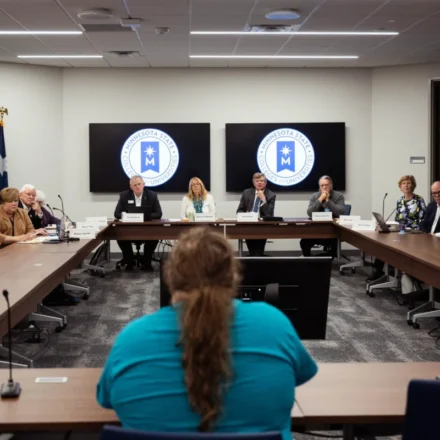
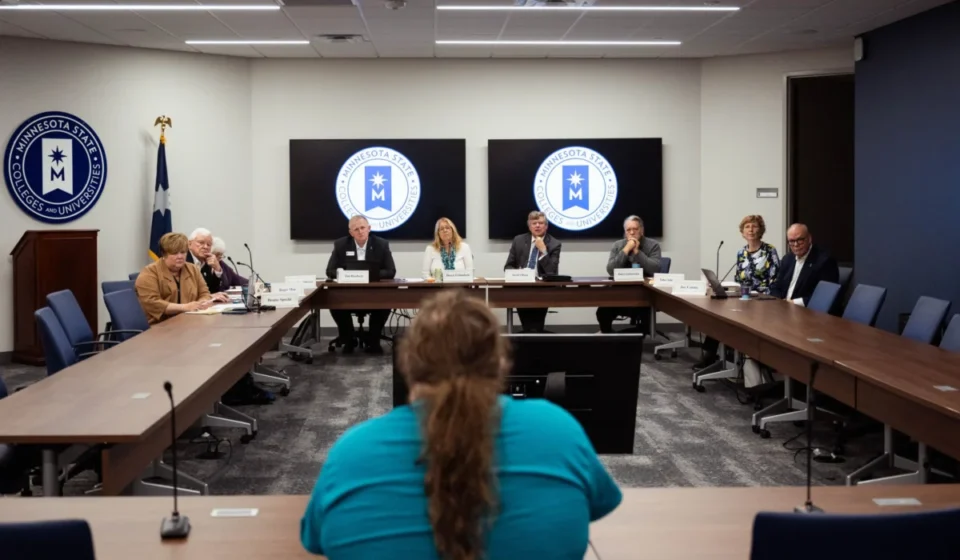
In a move that underscores the deepening fiscal crisis facing public higher education in the Midwest, the Minnesota State Board of Trustees voted on Wednesday to authorize a controversial, multi-year transfer of funds. The plan, which will move up to $25 million annually for the next four years, is designed to serve as an emergency life raft for two of the system’s universities currently teetering on the edge of financial insolvency: St. Cloud State University and Bemidji State University.
The decision represents a significant departure from traditional institutional funding models, effectively requiring the system’s healthier, often smaller community and technical colleges to subsidize the mounting deficits of its larger four-year counterparts. While administrators frame the decision as a necessary act of collective preservation, the move has ignited a fierce debate over fairness, administrative accountability, and the long-term sustainability of the state’s massive public education network.
The Anatomy of the Crisis: A Chronology of Decline
The roots of this emergency, which culminates in the Fiscal Year (FY) 2028 budget, stretch back over a decade. Minnesota State—a vast system comprising 26 colleges and seven universities—has faced a "perfect storm" of economic headwinds.
- 2011–2016: Early signs of instability emerged as demographic shifts began to shrink the traditional college-age population in Minnesota. St. Cloud State, once a flagship of the region, began a long-term slide in enrollment that prompted early, smaller-scale budget reallocations.
- 2023: St. Cloud State University, faced with a ballooning deficit, suspended admissions to nearly 200 academic majors, minors, and certificate programs. This radical contraction was intended to stabilize the school’s bottom line but failed to stem the loss of revenue.
- 2024–2025: Both St. Cloud and Bemidji State continued to endure steep workforce reductions. St. Cloud State’s staff has been hollowed out, with a 40% reduction in its total workforce over the past 15 years.
- September 2026: System officials publicly acknowledged that the situation had reached a breaking point. With a projected system-wide budget shortfall of nearly $100 million expected by summer 2028, the Board of Trustees moved to formalize a "solidarity" tax on its member institutions.
- October 2026: The Board officially approved the $25 million annual transfer, finalizing the contribution amounts for each of the 33 member institutions.
Supporting Data: The Cost of Survival
The scale of the redistribution is profound. Under the newly approved plan, every institution in the Minnesota State system is expected to contribute to an emergency fund, with individual school contributions ranging from $121,000 to as much as $1.8 million in the first year alone.
For the beneficiaries of this plan, the infusion of cash is a reprieve from total collapse. In FY 2028, St. Cloud State will receive $10 million, while Bemidji State will receive $4.8 million. The necessity of this injection is underscored by the state of St. Cloud State’s coffers: the university, which held nearly $19 million in reserve a decade ago, is expected to completely deplete its remaining emergency funds by this summer.
Conversely, the donors to this fund—many of them community colleges that have operated on "frozen" budgets for years—are feeling the sting. For instance, Dakota County Technical College and Inver Hills Community College, which share a leadership team and enroll roughly 6,600 students, are tasked with contributing $747,533. This comes on the heels of years of deferred maintenance and increased class sizes at these institutions.
Official Responses: A House Divided
The reaction to the vote has been a mixture of pragmatic resignation and deep frustration. Michael Berndt, president of the two community colleges forced to contribute nearly three-quarters of a million dollars, expressed a sentiment shared by many faculty and staff across the system.
"It’s frankly demoralizing to our employees to see the outcome of our work significantly reduced by seeing our allocation dollars reduced," Berndt said during the proceedings. He noted that while the final version of the proposal—which includes caveats to shield the most cash-strapped schools—is "stronger and more thoughtful" than the initial draft, the political fallout remains. "I will have to explain this loss of funding to my students, my employees, and local lawmakers," he added.
University presidents, who are often on the receiving end of the criticism, find themselves in an equally precarious position. Edward Inch, president of Minnesota State University-Mankato—which will provide the largest contribution at $1.8 million—characterized the situation as a choice between "damaging and less damaging" options.

"It’s not a choice that gets made between a good idea or a bad idea," Inch stated. "There is a price to be paid for the whole system in order to stabilize our peers."
Trustee Roger Moe, perhaps the most candid in his assessment, framed the decision as a bitter pill. "We take the tough medicine," Moe said, "and hopefully we can get this thing corrected over the years coming ahead."
Implications: The Long Road to Restructuring
The $25 million transfer is, by all accounts, a "bridge" measure. It is designed to buy time while the system attempts to solve a structural financial crisis that has been exacerbated by three primary factors: a sustained decline in enrollment, "constrained" state legislative funding, and the relentless pressure of inflation.
Moving Beyond the Bridge
The Board of Trustees is already eyeing more aggressive, long-term interventions that go beyond simple cash transfers:
- Consolidation and Closures: The system is actively considering the closure or merger of certain campuses to align physical capacity with shrinking student demand.
- Asset Liquidation: In a secondary, parallel vote, the board approved a $24.3 million plan to tap into equipment budgets through 2032 to fund the demolition of "unnecessary" campus buildings. These structures are currently bleeding money through utility and maintenance costs.
- Service Integration: The system is pushing for the consolidation of administrative functions, including IT and cybersecurity, to achieve economies of scale across its 33 locations.
- Legislative Advocacy: Perhaps most critically, Minnesota State is preparing a $65 million one-time budget request for the state legislature. This proposal is intended to act as a permanent backstop to the current emergency funding measures.
The Legislative Hurdle
The success of the current plan hinges on the assumption that the state will eventually step in. Bill Maki, the system’s vice chancellor for facilities and finance, admitted that the current redistribution is "not the most ideal plan." He noted that while the current measures will prevent immediate closures, they are merely a stopgap. "It really indicates that we have a situation where we have significant financial challenges at a couple of institutions, and we don’t have a lot of levers to deal with it," Maki remarked.
A System at a Crossroads
The broader implication of this vote is a fundamental shift in the identity of Minnesota State. By treating its disparate campuses as a single, interdependent financial unit, the system is signaling that no campus is truly independent of the collective’s fate.
However, this "solidarity" carries risk. If the system continues to bleed resources from its smaller, more stable community colleges to prop up struggling universities, it may trigger a downward spiral that weakens the entire system. Students at donor institutions are already asking why their tuition dollars are being used to support schools miles away, and local lawmakers are beginning to demand transparency regarding exactly where these funds are going and what specific outcomes they are intended to produce.
As the 2028 fiscal year approaches, the eyes of the state will be on the Minnesota State system. The "tough medicine" has been administered, but the question remains: will this intervention facilitate a genuine recovery, or is it merely delaying an inevitable and painful transformation of the state’s higher education landscape? For the students, staff, and communities involved, the coming years will be defined by an uncomfortable uncertainty as the system attempts to do more with less, all while trying to maintain its mandate to provide accessible, affordable education to all Minnesotans.