

























































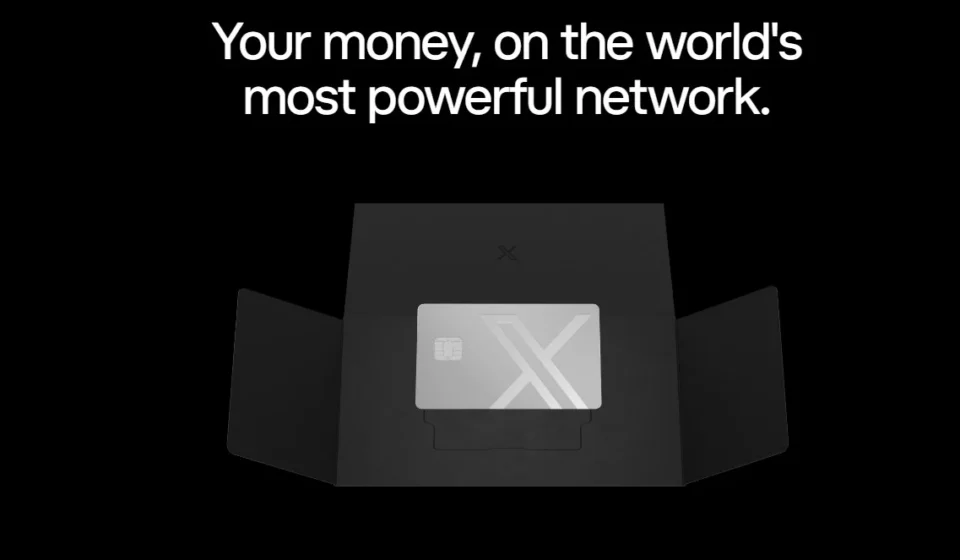

Elon Musk’s long-held vision of transforming X (formerly Twitter) from a microblogging social network into an all-encompassing "everything app" has taken its most significant step forward. On July 27, the platform quietly initiated the rollout of X Money, an integrated financial service designed to handle peer-to-peer (P2P) transfers, direct deposits, bill payments, and physical debit card transactions.
By embedding banking services directly into a social media interface, X is attempting to replicate the success of super-apps like Tencent’s WeChat in China. However, the launch brings a unique set of financial, regulatory, and security questions for users accustomed to keeping their social media profiles and financial portfolios strictly segregated.
1. Main Facts: What is X Money?
At its core, X Money functions as a hybrid between a peer-to-peer payment processor (similar to Venmo or Cash App) and a high-yield digital checking account. The service is not operating as a licensed bank itself; rather, X Payments provides the digital interface and customer experience, while the regulated financial infrastructure is powered by Cross River Bank, an established player in the financial technology (fintech) banking sector.
Core Features and Access Limits
During its initial rollout phase, access to X Money is tightly controlled:
- Target Audience: The service is currently limited to selected, verified U.S. residents who are at least 18 years of age.
- Subscription Requirement: To qualify for the service, users must hold an active subscription to X Premium (priced at approximately $8/month or $84/year at launch) or X Premium Plus (priced at $40/month or $395/year).
- The Visa Partnership: Users receive access to a virtual Visa debit card, which can be integrated with Apple Wallet, as well as the option to request a physical card for point-of-sale transactions and ATM withdrawals.
Service Architecture
To provide peace of mind to depositors, X Money advertises up to $10 million in Federal Deposit Insurance Corporation (FDIC) coverage. Because standard FDIC insurance is capped at $250,000 per depositor, per institution, X utilizes a cash sweep program. This mechanism automatically distributes customer deposits exceeding the individual bank limit across a network of participating, insured partner financial institutions, thereby multiplying the total effective coverage.
2. Chronology: From Social Network to Fintech Challenger
The launch of X Money is the culmination of a multi-year strategic pivot initiated shortly after Elon Musk acquired Twitter in October 2022.
[Oct 2022] Musk acquires Twitter; outlines "X, the everything app" vision.
   │
[2023 - Early 2024] X Payments secures state-by-state money transmitter licenses.
   │
[Mid 2024] Partnership finalized with Cross River Bank for banking infrastructure.
   │
[July 27, 2024] Soft launch of X Money to select US Premium/Premium Plus subscribers.
   │
[Present] Gradual feature rollout (6% APY, 3% Cashback, physical Visa distribution).- October 2022: The "X" Vision Outlined: Upon taking the company private, Musk immediately discussed his desire to build a platform modeled after WeChat, combining messaging, social media, and payments.
- 2023–Early 2024: Securing Regulatory Approvals: X Payments systematically applied for and secured money transmitter licenses across dozens of U.S. states. This regulatory groundwork was mandatory before the platform could legally handle, transfer, or hold user funds.
- Mid-2024: Institutional Alignment: X finalized its partnership with Cross River Bank, resolving the hurdle of obtaining a federal banking charter by utilizing a "Banking-as-a-Service" (BaaS) model.
- July 27, 2024: The Soft Launch: X Money officially commenced its rollout. The company opted for a gradual, invite-only deployment to select Premium subscribers to test system stability, identity verification pipelines, and transaction loads.
3. Supporting Data: The Financial Mechanics of X Money
To attract capital away from traditional banks and established digital wallets, X Money has launched with highly competitive promotional rates. However, these figures require careful mathematical scrutiny to determine their true value to consumers.
Feature Specifications at a Glance
| Feature | Specification / Offer | Requirements & Limitations |
|---|---|---|
| Availability | Selected U.S. users aged 18+ | Gradual rollout; not universally active |
| Required Tier | X Premium or Premium Plus | Paid subscription mandatory |
| Interest Rate | Up to 6% APY | Dependent on subscription tier & direct deposit |
| Debit Rewards | 3% Cashback | Applies to eligible retail purchases only |
| P2P Transfers | Instant, free transfers | Limited to active X users |
| Debit Card | Physical & Virtual Visa | Apple Wallet support included |
| ATM Access | Fees reimbursed within 3 days | Subject to individual operator charges |
| Deposit Protection | Up to $10 Million | Pass-through FDIC coverage via cash sweep |
The Mathematics of the 6% APY Offer
The headline-grabbing 6% Annual Percentage Yield (APY) is significantly higher than the national average for savings accounts, which often hovers below 0.5%. However, because the high yield is locked behind paid subscription tiers, the net return depends heavily on the user’s account balance.
To break even on the subscription cost solely through interest earnings, a user must maintain a substantial balance.
Scenario A: Premium Plus Subscription (Monthly Billing)
- Annual Subscription Cost: $480 ($40 per month)
- Required Balance to Break Even: A user must maintain a constant balance of approximately $8,000 at 6% APY for a full year to generate $480 in interest (before taxes). Any balance below this amount results in a net financial loss if the subscription is maintained solely for the interest rate.
Scenario B: Premium Plus Subscription (Annual Billing)
- Annual Subscription Cost: $395 (one-time payment)
- Required Balance to Break Even: A user must maintain a constant balance of approximately $6,584 at 6% APY to generate $395 in interest.
For users who already pay for X Premium or Premium Plus for creator monetization, ad-reduction, or verification badges, the 6% APY represents pure upside. For pure savers, however, standard fee-free high-yield savings accounts (HYSAs) offering 4% to 5% APY may prove more lucrative without requiring upfront subscription outlays.
Decoding the 3% Cashback Program
While a 3% cashback rate on a debit card is remarkably high—matching or exceeding many premium rewards credit cards—it is subject to strict eligibility terms. Standard financial transactions, such as ATM withdrawals, P2P money transfers, account funding, and peer-to-peer payments, are excluded from earning cashback. The 3% reward is restricted to qualifying retail merchant transactions, and users are advised to review the platform’s specific cashback terms to identify category exclusions and monthly caps.
4. Official Responses and Regulatory Alignment
The launch of X Money brings together a complex web of corporate partnerships, regulatory bodies, and consumer advocacy guidelines.
The Partner Bank’s Role
In an official announcement, Cross River Bank confirmed its role as the sole engine powering the regulated financial transactions of X Money. As a heavily regulated, FDIC-insured state-chartered bank based in New Jersey, Cross River ensures that all deposits, KYC (Know Your Customer) verifications, and anti-money laundering (AML) compliance procedures meet federal banking standards.
The Limits of FDIC Pass-Through Insurance
While X highlights its $10 million deposit protection, financial experts emphasize that pass-through insurance is not absolute. For the insurance to apply:
- The funds must be successfully swept and deposited into the participating partner banks before an institutional failure occurs.
- The depositor must not hold separate, individual accounts at those same partner banks that, when combined with the X Money sweep balance, exceed the $250,000 limit per institution.
- FDIC insurance only covers bank insolvency. It does not cover funds lost to unauthorized account access, personal scams, or account suspensions initiated by X for violations of its terms of service.
Regulatory Warnings on P2P Scams
The Federal Trade Commission (FTC) and financial watchdogs have repeatedly warned consumers about the rising tide of scams on peer-to-peer payment applications. Because transactions on platforms like X Money are designed to be instant and irreversible, they are primary targets for bad actors.
The FTC emphasizes that P2P apps should be treated like physical cash. If a user is tricked into sending money to an impersonator or a fraudulent account, the platform has little to no legal obligation to reverse the transfer or reimburse the lost funds.
5. Strategic Implications: The "Everything App" and Its Risks
The integration of a financial ledger into a public social media platform marks a massive structural shift in how users interact online, carrying both profound benefits and systemic risks.
The Convenience of the "Everything App"
From a market perspective, X Money offers unparalleled convenience. Creators can receive direct tips, subscriptions, and ad-revenue shares directly into an account that can immediately pay their utility bills or fund their physical debit cards. It reduces the friction of moving money between external banks, digital wallets, and social platforms, potentially creating a self-sustaining economic ecosystem within X.
Cybersecurity and the Single Point of Failure
The primary technical concern of consolidating personal finance with social media is the creation of a massive, attractive target for cybercriminals.
[Traditional Model]
Social Media Account (Hacked) ──> Loss of Posts / Private Messages
Bank Account (Separate)       ──> Secured by Multi-Factor Authentication / Bank Systems

[Unified Model (X Money)]
X Account (Hacked) ───────────> Loss of Posts, Private Messages,
                                 Direct Deposit Routing, Cash Balances,
                                 and Debit Card Control
If an attacker gains unauthorized access to a user’s X profile—whether through phishing, credential stuffing, or SIM-swapping—they no longer just gain access to public posts and direct messages; they potentially gain access to the user’s direct deposit information, cash balances, and virtual debit cards.
To mitigate this, X has integrated support for passkeys, customizable transaction limits, and multi-factor authentication. Security analysts strongly advise that any user participating in X Money treat their login credentials with the same rigor as a primary bank account password, avoiding reuse and enabling every available biometric and hardware-based security layer.
Privacy and Data Profiling
In an era where financial data is highly prized by advertisers and algorithm designers, the convergence of spending habits with public posting history raises significant privacy questions. While X maintains that financial transactions remain private and compliant with financial privacy regulations, the underlying terms of service and data-sharing agreements require close inspection.
Linking a user’s real-world purchases, subscription payments, and peer-to-peer transfers to their social media profile provides a highly detailed consumer profile. Users must decide whether the convenience of a unified app outweighs the potential exposure of their private financial footprint to a corporate entity driven by advertising and AI-model training (such as X’s Grok AI).
Summary: A Calculated Risk for Tech-Forward Consumers
X Money represents a bold leap forward in Elon Musk’s restructuring of the platform. By pairing a highly competitive 6% APY and 3% cashback offer with robust banking partnerships, the service is positioned as a legitimate competitor to traditional fintech applications.
However, the financial benefits are highly dependent on subscription mathematics, and the security risks of anchoring a bank account to a highly targeted social media profile are non-trivial. For early adopters, a cautious, phased approach—testing the system with nominal balances before routing major paychecks—remains the most prudent path forward.