





















































Collateral Damage: Minnesota’s Anti-Fraud Campaign Triggers Crisis for Vulnerable Medicaid Patients

WASHINGTON — In its aggressive pursuit of systemic integrity, the Minnesota Department of Human Services (DHS) has inadvertently dismantled a critical safety net, leaving thousands of the state’s most vulnerable residents—autistic children, low-income seniors, and those with severe developmental disabilities—caught in a bureaucratic crossfire.
What began as a necessary effort to weed out fraudulent billing practices has spiraled into a state-wide crisis. As the DHS navigates a complex, high-stakes confrontation with federal authorities over Medicaid funding, the collateral damage is being felt in living rooms across Minnesota. Families are being forced to navigate a labyrinth of new, cumbersome requirements that are resulting in delayed care, closed clinics, and, for some, a terrifying loss of essential services.
The Genesis of the Crisis: Revalidation 2026
The turmoil stems from "Revalidation 2026," an intensive initiative launched by the DHS in response to intense federal pressure. The Centers for Medicare & Medicaid Services (CMS) had previously flagged specific Minnesota Medicaid programs as "high-risk" for fraud, threatening to withhold hundreds of millions of dollars in federal funding unless the state took immediate, drastic action.
To comply with federal demands and protect up to $2 billion in potential funding, the DHS initiated an "off-cycle" revalidation process in January. This required approximately 5,600 providers across 13 high-risk categories to undergo rigorous scrutiny, including mandatory site visits, comprehensive background checks, and the submission of detailed operational data. Providers were given a strict deadline of May to complete this process.

However, the rapid implementation of these controls created a "perfect storm" of administrative gridlock. Providers, already operating on thin margins, found themselves overwhelmed by a fragmented authorization system and new, rigorous auditing requirements enforced by third-party agents like Acentra Health and Optum.
Chronology of a Systemic Collapse
The breakdown did not happen overnight; it was a slow, agonizing erosion of access:
- January 2026: The DHS launches the accelerated revalidation process, placing immense pressure on thousands of providers to prove their legitimacy under the new federal guidelines.
- Spring 2026: As the May deadline approaches, administrative backlogs begin to mount. Providers report that authorization requests, which once took a week, are now languishing for months.
- May 2026: The deadline for revalidation passes. Hundreds of providers, despite attempting compliance, find themselves caught in bureaucratic limbo due to processing errors or delays.
- Summer 2026: Reports of service interruptions spike. Families across the state begin to notice that their long-standing therapies, personal care assistants (PCAs), and behavioral health services are being denied or delayed by the new, opaque authorization portals.
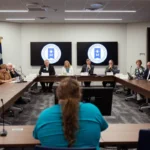
- September 2026: In a series of tense legislative hearings, providers and advocates testify that the system is failing the very people it was designed to serve. The DHS acknowledges the severity of the backlog, citing "increased review complexity" during the transition.
The Human Cost: Families in Limbo
For families like the McGuires of Bloomington, the shift has been catastrophic. Caroline and Luke McGuire, who care for two children with complex medical needs—a 6-year-old son with cerebral palsy and a 12-year-old daughter with significant chromosome-related developmental delays—are now at the mercy of a broken system.
"It’s always been a far from perfect system, but now they have made it so much worse," Caroline McGuire said. "People with disabilities are paying the price, and it’s so much worse when it’s children."

Her son, Colin, suffered a four-month delay in vital physical therapy sessions. The reason? A combination of a new, malfunctioning authorization portal and a monthly requirement to re-prove the necessity of services that have been documented for years.
Similar stories are echoing throughout the state. Addyson Carpenter, a disability advocate and chair of the Minnesota Council on Disability, faced a harrowing personal struggle. After surviving a life-threatening battle with septic shock, she found herself unable to secure necessary in-home nursing care for her 18-year-old daughter, Lydia, who has profound autism. Despite her status as an expert in the field, Carpenter found herself trapped in the same bureaucratic machinery that is failing thousands of others.
Supporting Data: The Scale of the Disruption
The numbers provided by the DHS and testimonies from providers paint a grim picture of the current landscape:
- Provider Attrition: As of early September, 695 providers had not been revalidated and had not filed appeals. Helen Mader of Behavior Frontiers, a provider for children with autism, reported that 34 of her employees left due to the instability, resulting in 24 children being denied access to care.
- The Authorization Backlog: Dr. Eric Larsson, Chairman of the Autism Treatment Association of Minnesota, testified that approximately 1,000 children are currently waiting for care due to the backlog managed by Acentra Health.
- Financial Instability: The delay in payments has forced many providers to take out private loans or exhaust personal savings just to keep their doors open. Paige Berland, co-owner of Minnesota Behavioralist Specialists, noted that as many as a third of her clients have authorizations stuck in the backlog.
- The "Fraud" Gap: Perhaps the most controversial finding is the lack of correlation between the administrative crackdown and the actual discovery of bad actors. A July report from Georgetown University indicated that the DHS had only referred about 1% of the revalidated providers to the Office of Inspector General for further fraud investigation.
Official Responses and Accountability
In the face of mounting public outcry, the Minnesota Department of Human Services has attempted to balance its commitment to federal compliance with the reality of the service failures.

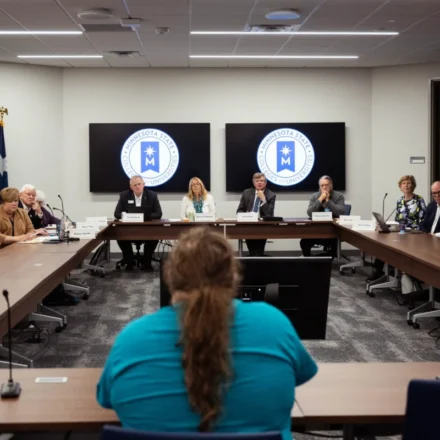
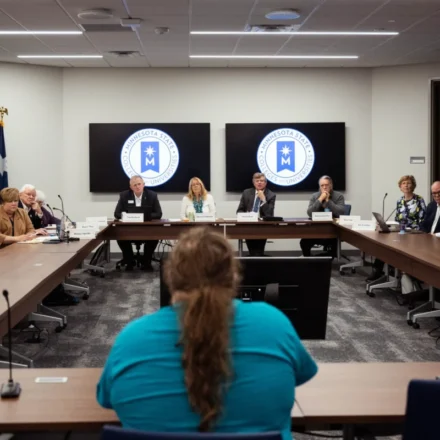
At a recent state Senate Human Services Committee hearing, state Medicaid director John Connolly offered an apology to the providers and the families. "DHS is in a very difficult moment, as I know you are," he told the committee.
However, critics argue that an apology does little to mitigate the immediate danger. Maren Christensen, executive director of the Multicultural Autism Action Network, was blunt in her assessment: "There is no concern for the people who use the services. There will be people who do not survive this."
The state’s defense remains that the complexity of the "Revalidation 2026" program was a direct consequence of federal mandates. The DHS maintains that the "integrity controls" were necessary to ensure the long-term viability of the Medicaid program in Minnesota, even if the transition period has been marred by excessive complexity.
Implications for the Future
The long-term implications of this crisis are profound. By freezing the authorization of any new providers until January, the state has essentially put a cap on the availability of care, even as the demand for services continues to rise.

Furthermore, the "chilling effect" of this policy may drive providers out of the Medicaid space entirely. If the administrative burden remains high and the reimbursement process remains unpredictable, the state risks losing a significant portion of its provider network, further exacerbating the scarcity of essential services.
There is also the question of the federal government’s role. While the state is tasked with managing these programs, the pressure applied by the federal government—without sufficient guidance or support for the logistical realities of such a massive, sudden overhaul—has played a major role in the current instability.
As the state moves toward the end of the year, the focus for many families remains on simple survival. For the McGuires, the Carpenters, and thousands of others, the "war on fraud" has become a war of attrition, where the weapons are red tape and delays, and the casualties are the most vulnerable Minnesotans.
The state now faces a critical juncture: either it must streamline its verification processes and provide immediate relief to struggling providers, or it will continue to oversee the slow erosion of the very services that keep thousands of children and adults alive and thriving. As it stands, the cost of "integrity" has proven to be far higher than anyone in the Capitol initially estimated.