












































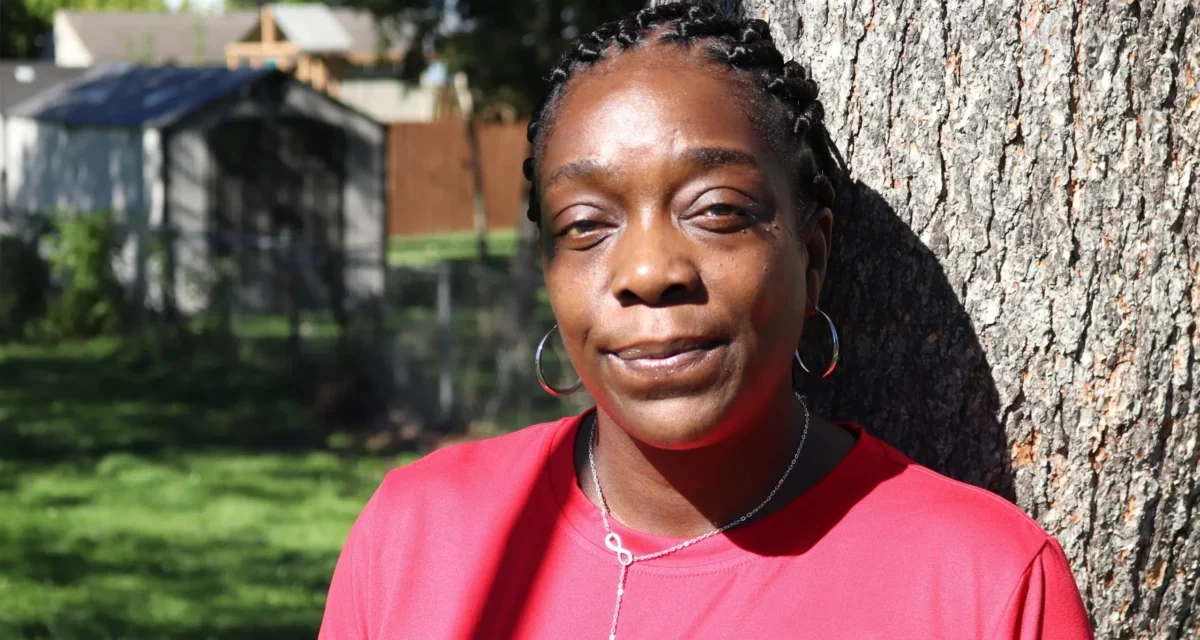






In the shadow of Denver International Airport, Anthony Muñoz, then a high school student, often looked up at the steady stream of jets traversing the Colorado sky. He wasn’t just watching planes; he was contemplating the chemical trail they left behind. Muñoz, an avid gardener, found himself wrestling with a question that has become the hallmark of a new generation of American students: How is my local environment changing, and what can I do about it?
His curiosity led to the creation of an “ozone garden” at Vista Academy, his charter school. By cultivating native plants sensitive to ground-level ozone, Muñoz transformed his campus into a living laboratory. Guided by experts from the National Center for Atmospheric Research (NCAR) in Boulder, he learned to interpret leaf discoloration as a biological indicator of air quality. Today, that capstone project serves as a cornerstone for a growing national movement: the State Seal of Climate Literacy.
As climate change shifts from a theoretical global crisis to a tangible reality affecting everything from local air quality to regional agricultural stability, a growing number of U.S. states are codifying "climate literacy" into the high school experience. Through rigorous coursework and community-based capstone projects, these programs aim to turn climate anxiety into climate agency, preparing a new workforce for the green economy while challenging the traditional, often static, boundaries of K-12 education.
The Evolution of the Climate Seal: A Chronology
The movement for climate literacy began not in the halls of state legislatures, but in the soil of local schoolyards.
2020–2023: The Roots of Reform
The concept originated with Lyra Colorado, a Denver-based nonprofit dedicated to community-centric education. Working with rural districts, the organization identified a growing frustration among students and educators: existing textbooks provided dense, abstract data on climate change but failed to explain how the crisis manifested in their own backyards. Educators sought a framework that bridged the gap between national curriculum standards and local environmental realities.
2024: Colorado Leads the Way
In 2024, Colorado lawmakers officially approved the state-wide Seal of Climate Literacy. The move established a clear, voluntary pathway for students: complete two advanced courses—one in a science discipline and one in a field of their choice, such as civics or the humanities—and execute an approved project addressing a climate issue within their community.
2025: National Expansion
The Colorado model proved contagious. Recognizing the potential for both workforce development and civic engagement, Maine adopted its own climate seal earlier this year. Shortly thereafter, California signed legislation establishing a similar program, signaling that the initiative has moved from an experimental pilot to a policy priority in the nation’s most populous state.
Current Status
To date, 26 of Colorado’s 179 school districts have adopted the seal, with approximately 1,200 students having earned the designation. Similar initiatives are currently under consideration or being pushed by youth coalitions in Hawaii and Minnesota, demonstrating a coast-to-coast momentum.
Supporting Data and Educational Frameworks
The Seal of Climate Literacy is built on a two-pillar requirement designed to ensure both academic rigor and practical application.
- Academic Foundation: Students must complete two courses that cover the core tenets of climate science—causes, impacts, and mitigation strategies. By allowing the second course to be in the humanities or fine arts, the program encourages interdisciplinary thinking, acknowledging that climate change is as much a challenge of ethics, economics, and civics as it is of atmospheric science.
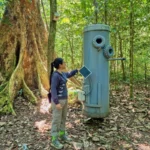
- Community Capstone: The project requirement is the seal’s "secret sauce." Whether it is monitoring forest health, developing sustainable composting systems, or building trails to prevent soil erosion, these projects force students to engage with their local ecosystem.
The results, according to advocates like Lyra Colorado CEO Mary Seawell, are transformative. In a pilot program conducted in Maine, officials expected roughly a dozen applicants; they were met with 57 seniors eager to participate. At Freeport High School in Maine, students are already turning their coastal environment into a classroom, studying the warming Gulf of Maine and its impact on the local lobster and aquaculture industries.
Official Responses and the Ideological Divide
Despite the popularity of the seal among students, the initiative has encountered significant friction. The primary hurdles are twofold: institutional inertia and ideological opposition.
Budgetary and Logistical Concerns
Many school districts operate under severe fiscal constraints. The rollout of the seal in Colorado was supported by less than $20,000 in state funding, forcing schools to rely on grants, philanthropy, or, in some cases, out-of-pocket expenses by students and teachers. Critics argue that adding new requirements to an already strained curriculum places an undue burden on school districts that are struggling to meet basic proficiency standards.
The Ideological Critique
Perhaps the most vocal opposition comes from those who view the climate seal as a departure from core educational mandates. Lance Izumi, senior director of education studies at the Pacific Research Institute, has been a leading critic. Izumi argues that the emphasis should remain on "foundational science learning," particularly given that only one-third of California students currently test as proficient in science.
"Diverting focus away from foundational science learning could worsen California’s already abysmal performance levels," Izumi wrote in an email. From this perspective, the seal represents an "activist" project rather than an academic one, potentially distracting students from the rigorous study of core scientific principles.
Proponent Defense
Proponents, however, view the seal as an essential evolution of science education. Laura Schifter, a senior fellow with the Aspen Institute’s This is Planet Ed, argues that the seal addresses a glaring omission in K-12 schooling. "Where we can make the most difference is often in our local community," Schifter says. She contends that rather than distracting from science, the seal provides the "applied" context that makes academic science meaningful to students, thereby increasing engagement and retention.
The Geopolitical and Economic Implications
The movement for climate literacy is unfolding during a period of intense national volatility regarding environmental policy.
The Chilling Effect of Federal Policy
The current political climate has created a precarious environment for these educational initiatives. With federal rhetoric frequently dismissing climate change as a "hoax" and legislative efforts aimed at the tax-exempt status of environmental nonprofits, school districts and their partners are feeling the pressure. Mary Seawell notes a "noticeable chilling effect" among potential donors who fear that supporting climate-focused education could invite regulatory or political retribution.
Furthermore, proposed federal budget cuts to institutions like the National Center for Atmospheric Research—which served as a vital mentor for students like Anthony Muñoz—threaten the collaborative infrastructure that makes these projects possible. For students like Muñoz, who is now studying mechanical engineering at the Colorado School of Mines, these cuts are viewed as "devastating" to the future of youth scientific inquiry.
Workforce Pipelines
Beyond the politics, there is a pragmatic economic argument for the seal. Proponents are working to align the program with career and technical education (CTE) pipelines. By connecting the high school seal to certifications in heat pump installation, solar grid maintenance, and sustainable agriculture, the initiative seeks to solve two problems at once: preparing students for the "green economy" and filling critical gaps in the skilled trades.
In Maine, the seal is already viewed as a natural evolution of their existing "Seal of Biliteracy," which recognizes language proficiency. State specialists view the climate seal as a way to provide a clear pathway into environmental careers, helping students transition from enthusiastic learners to professional practitioners.
Conclusion: Empowering the Next Generation
As Anthony Muñoz continues his studies and mentors younger students at his former high school, his focus remains on the long-term impact of his work. He is currently writing code to ensure that the data collected in the ozone garden remains accessible, regardless of the fate of federal climate research funding.
The movement for the State Seal of Climate Literacy represents a significant shift in the relationship between students, their schools, and the planet. It is an acknowledgment that the traditional classroom model—often disconnected from the world outside its walls—is insufficient for a generation inheriting a rapidly changing climate.
While the program faces significant challenges—ranging from the lack of consistent funding to intense political scrutiny—it offers something that standard curricula often fail to provide: a sense of agency. By shifting the focus from "global doom and gloom" to the actionable, local stewardship of their own communities, these students are doing more than just earning a sticker on a diploma. They are learning how to lead, how to observe, and how to participate in the most significant challenge of their century.
"Students are the future," says Rylan Neumann, a recent graduate and current student at UC Berkeley. "We’re the ones growing up in this world." As the Seal of Climate Literacy gains traction, it is becoming clear that the students are not just waiting for the future to arrive; they are actively preparing to build it.