








































In the heart of Redwood County, Minnesota, the vast, sun-drenched fields of Morgan transformed this week into the epicenter of the state’s political universe. Farmfest, the annual agricultural exposition that serves as a cornerstone of rural life, once again proved its mettle as the definitive proving ground for candidates seeking high office. With the August 11 primary election looming just days away, the event offered more than just machinery displays and livestock exhibitions; it provided a high-stakes stage for candidates for governor, the U.S. Senate, and the U.S. House of Representatives to articulate their platforms to the people who feed the nation.

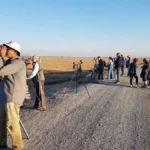
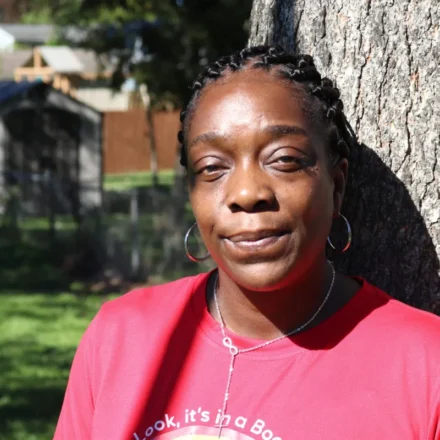
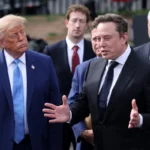
MinnPost photographer Bridget Bennett spent two days navigating the bustling fairgrounds, documenting the grit and theater of the campaign trail. From the formal, microphone-heavy candidate forums to the intimate, dust-caked media scrums and the relentless cycle of handshakes, Bennett’s lens captured the quintessential American political ritual in a setting that demands authenticity.

The Main Facts: Agriculture at the Ballot Box
Farmfest is not merely a trade show; it is a barometer for the political climate in Greater Minnesota. For decades, it has functioned as a neutral, albeit high-pressure, venue where urban political aspirations collide with rural realities. This year’s gathering was defined by a sense of urgency. With the primary election just over the horizon, candidates were under immense pressure to convert curiosity into committed votes.

The issues at the forefront were as diverse as the exhibitors on the floor: the persistent volatility of commodity prices, the expansion of broadband infrastructure in underserved rural counties, the impact of international trade tariffs on soybean and corn exports, and the increasingly complex debate over climate-smart agricultural incentives. For candidates, the challenge was to move beyond soundbites and demonstrate a granular understanding of the Farm Bill—a piece of legislation that remains the lifeblood of the rural economy.

Chronology: Two Days of Campaigning in the Dust
The cadence of the two-day event followed a rigorous, almost military schedule.

Day One: The Opening Salvo
As the gates opened, the atmosphere was thick with the scent of diesel and deep-fried refreshments. The morning began with a series of panel discussions focused on agricultural policy. Candidates for U.S. Senate and Congress were immediately thrust into the spotlight, facing questions from moderators regarding the looming reauthorization of the Farm Bill. The afternoon was marked by the "media scrum" phenomenon—a chaotic, swirling dance of journalists, camera operators, and staffers surrounding candidates as they moved from one tent to the next. The focus here was reactive; candidates were forced to address breaking news from the campaign trail, often shifting from talking about crop insurance to defending their stance on national issues within a matter of minutes.

Day Two: The Final Outreach
The second day shifted from policy panels to direct voter engagement. Candidates traded their business attire for practical footwear, navigating the rows of vendors to press the flesh with farmers, agribusiness leaders, and local officials. It was a day defined by the "handshake economy." In the rural Midwest, trust is a currency earned through face-to-face interaction. The optics of these encounters—a candidate listening intently to a farmer’s concerns about input costs—are arguably more valuable than any television advertisement. By the late afternoon, the fatigue of the campaign was visible, yet the pace did not slacken as candidates made their final pitches before heading toward the airport or back onto the highway for evening town halls.

Supporting Data: The Economic Landscape
To understand the intensity of the rhetoric at Farmfest, one must look at the data governing the state’s agricultural sector. According to recent reports from the Minnesota Department of Agriculture, the state consistently ranks among the top in the nation for the production of sugar beets, sweet corn, and soybeans. However, the profitability of these commodities is currently squeezed by high interest rates and the rising cost of fertilizer and machinery.

- Trade Sensitivity: Minnesota farmers export billions of dollars in agricultural goods annually. Shifts in federal trade policy, therefore, have an immediate, bottom-line impact on the livelihoods of those attending Farmfest.
- Broadband Connectivity: Data from the Office of Broadband Development indicates that while progress has been made, roughly 10% of Minnesota households—many in rural areas—still lack access to high-speed internet. This was a recurring theme in candidate forums, with bipartisan agreement that infrastructure investment is a prerequisite for rural economic survival.
- The Primary Effect: Historically, primary elections in Minnesota suffer from lower turnout than general elections. Consequently, the candidates at Farmfest were not just looking to sway the general electorate; they were identifying and mobilizing their most dedicated base, knowing that a few hundred votes in key districts could decide the trajectory of their campaigns.
Official Responses: Candidates Weigh In
During the forums, the tone was a mix of calculated optimism and pointed critique. Incumbent candidates leaned heavily on their legislative records, citing specific grants and federal funding secured for local projects. Their challengers, meanwhile, focused on the "need for change," arguing that the current political establishment has become detached from the daily struggles of those living outside the Minneapolis-St. Paul metropolitan area.

"The issues facing our family farms aren’t partisan; they are survivalist," one candidate for the U.S. House remarked during a panel. Another Senate hopeful emphasized, "Washington is too far away to understand the reality of a drought or a trade war. That is why I am here—to listen, not to lecture."

These responses underscored a persistent theme: the struggle to bridge the cultural and economic divide between the Twin Cities and the rest of the state. While each candidate offered a different solution, they all acknowledged that the prosperity of Minnesota is inextricably linked to the success of its agricultural sector.

Implications: The Road to August 11
The implications of Farmfest extend far beyond the borders of Redwood County. The event served as a litmus test for candidate viability. A lackluster performance in a debate or an inability to connect with the crowd in Morgan can, and often does, signal a waning campaign. Conversely, a candidate who effectively navigates the complexities of the policy forums and exhibits the stamina for the "handshake marathon" gains momentum that can be critical in the final week of the primary.

Furthermore, the issues prioritized at Farmfest are likely to dominate the discourse leading up to the November general election. The focus on rural development, sustainable energy, and trade autonomy will remain central to the platforms of both major parties. As the candidates depart the fairgrounds, they carry with them the expectations of a constituency that is increasingly skeptical of rhetoric and hungry for tangible results.

As we look toward August 11, the imagery of the handshakes in Morgan serves as a reminder of the fragility and the importance of the democratic process. In an era where much of political communication happens behind screens, the physical, dusty, and demanding nature of Farmfest remains a vital component of the Minnesota political experience. The voters are watching, the candidates have spoken, and the machinery of the primary election is now in full motion.

Photography for this feature was provided by Bridget Bennett, whose documentation of the event offers an unfiltered look at the intersection of rural life and state-level politics. Her images reflect the exhaustion, the engagement, and the essential humanity of the campaign trail.