





















































Data Centers Emerge as Unexpected Midterm Battleground, Splitting Republicans and Igniting Local Opposition

WASHINGTON D.C. – A seemingly technical infrastructure issue – the construction of data centers – has rapidly escalated into a defining political flashpoint, thrusting itself into the heart of the upcoming midterm elections. President Donald Trump’s recent broadside, lambasting communities that resist these facilities as wishing to be "backwards and poor," has not only ignited a national debate but also placed a significant number of Republicans, particularly in Minnesota, in an unenviable political bind.
Far from being a niche concern, public sentiment regarding data center proliferation has crystallized into widespread opposition, cutting across partisan lines. A recent poll indicates a surprising consensus against new developments, challenging the traditional economic narratives often associated with large-scale industrial projects. This evolving dynamic forces candidates from both parties to navigate a complex terrain where national strategic imperatives clash with deeply rooted local concerns about environmental impact and community autonomy.
The Core Conflict: National Imperative vs. Local Impact
At its heart, the controversy surrounding data centers pits two powerful, often competing, visions against each other. On one side, proponents, led emphatically by former President Trump, frame these facilities as indispensable engines of economic growth, technological advancement, and national security, particularly in the escalating global race for artificial intelligence dominance. They are presented as modern-day "Golden Geese," laying the golden eggs of innovation and strategic advantage.
On the other side, a growing chorus of communities, environmental advocates, and local politicians view data centers with skepticism, if not outright alarm. Their concerns are grounded in tangible impacts: the staggering consumption of electricity and water, the often-minimal long-term job creation (beyond initial construction), and the potential for significant environmental strain on local resources. This perspective emphasizes the burden placed on local infrastructure and natural environments, often with disproportionate benefits flowing elsewhere.
The chasm between these two perspectives has transformed what might have once been a routine zoning debate into a high-stakes electoral issue, forcing candidates to articulate nuanced positions or risk alienating crucial segments of the electorate.
Shifting Sands of Public Opinion: A Bipartisan Backlash
The notion that data centers are universally welcomed as economic boons is increasingly being debunked by public opinion. A recent Economist/YouGov Poll, conducted between August 28 and 31, 2026, revealed a striking level of public apprehension. More than half of all Americans polled characterized data centers as "bad," while only a meager 20% viewed them favorably.
The poll’s findings underscored a significant partisan divide, yet also highlighted a surprising degree of bipartisan concern. Democrats were notably more likely to view data center construction negatively, with 61% expressing disapproval, citing concerns ranging from environmental degradation to corporate influence. However, Republicans were far from monolithic in their support; a substantial 39% of GOP respondents also saw new data center construction as "bad," with only 31% viewing it positively. This indicates that while the issue resonates more strongly with the Democratic base, a considerable segment of Republican voters also harbors reservations, complicating the political calculus for candidates.
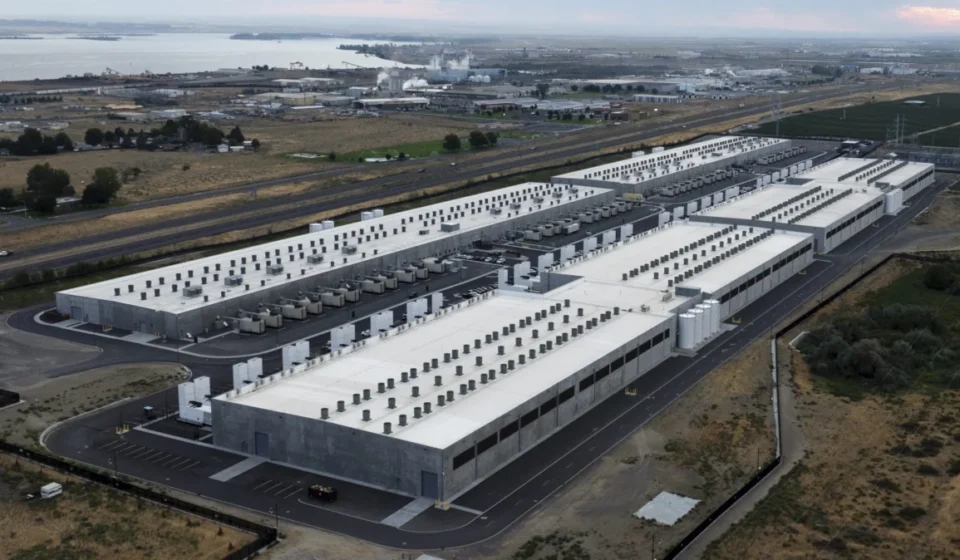
This widespread skepticism stems from several well-documented issues. Data centers are notorious for their voracious appetite for resources. They require immense amounts of electricity, often drawing power equivalent to small cities, and considerable quantities of water for cooling their vast arrays of servers. While the construction phase does generate a significant number of short-term jobs, economists and local critics alike point out that the long-term operational workforce is typically small, offering limited sustained employment opportunities for the host communities. This disjunction between initial promises and ongoing reality fuels much of the local opposition.
The Presidential Decree: Trump’s "Golden Goose" and the AI Arms Race
President Trump, never one to shy away from provocative declarations, cemented his position on data centers with characteristic fervor. In a post on Truth Social this week, he branded them the "Golden Goose," asserting their fundamental role in the strategic AI arms race between the United States and China. "The only reason that communities throughout the U.S.A. should not want Data Centers is if they want to end up being backwards and poor," Trump wrote, unequivocally linking opposition to economic decline and technological stagnation.
This framing elevates data center construction from a local land-use matter to an issue of national security and geopolitical supremacy. For Trump and his staunch allies, the rapid development of such infrastructure is not merely beneficial but essential for maintaining America’s competitive edge in emerging technologies, particularly artificial intelligence, against rival powers. The implication is clear: resistance to these projects is not just shortsighted, but potentially detrimental to the nation’s strategic interests.
Official Responses: A Divided Republican Front in Minnesota
President Trump’s emphatic stance immediately reverberated through the Republican Party, particularly in Minnesota, where several congressional districts are grappling with proposed data center developments. The responses from GOP lawmakers have revealed a significant divergence, illustrating the tightrope many are walking between loyalty to the former president and responsiveness to local constituent concerns.
Unwavering Support: Rep. Tom Emmer
Leading the charge in unequivocal support for Trump’s position is Rep. Tom Emmer (R-6th District), a prominent member of the U.S. House leadership. Emmer wasted no time in embracing the president’s message, publicly stating on X, "President Trump is absolutely spot on." He echoed the national security imperative, warning, "Communist China and our adversaries would love it if the United States was asleep at the wheel and stopped innovating and developing AI and emerging tech. Thanks to President Trump’s work, the USA will be a digital LEADER!" Emmer’s response aligns perfectly with the Trumpian vision, prioritizing strategic technological dominance and portraying opposition as a weakness that adversaries would exploit. His district, which includes Monticello, a site of proposed data center development, highlights the direct local relevance of his stance.
The Nuanced Middle Ground: Rep. Brad Finstad
In stark contrast to Emmer’s full-throated endorsement, Rep. Brad Finstad (R-1st District) has adopted a more nuanced and cautious approach, reflecting the deep local concerns within his southern Minnesota district, which encompasses communities like Pine Island, Faribault, and North Mankato, all facing potential data center projects. Finstad acknowledged the broader importance of AI technology and the potential role of data centers in the nation’s economic future and national security.
However, he firmly asserted the primacy of local control and informed decision-making: "the decision about whether a data center is right for a particular community should be made by the people and local leaders who know their communities best, not handed down by Washington through a blanket, one-size-fits-all approach that treats every community the same."
Finstad’s statement emphasized the critical need for comprehensive understanding of a proposed data center’s impacts. He called for full transparency from developers regarding "energy demands, environmental impacts, job creation, and potential tax benefits." This call for transparency and local autonomy stands in direct opposition to Trump’s "take it or be poor" ultimatum, demonstrating a clear attempt to balance national interests with the democratic rights and concerns of local communities.
A Balanced Approach: State Sen. Eric Pratt
Adding another layer to the Republican spectrum is State Sen. Eric Pratt, a Republican vying for the seat currently held by retiring Rep. Angie Craig. Pratt also pushed back against Trump’s sweeping remarks, advocating for "a balanced approach to data center development that puts local communities at the center of the conversation while recognizing the growing importance of domestic technology infrastructure."
Pratt acknowledged the rising importance of data centers for the economy, technology infrastructure, and national security, but crucially added, "But that does not mean every proposed project belongs in every community, or that concerns from the people who live nearby should ever be brushed aside." While recognizing the strategic value, Pratt emphasized the need for careful evaluation and respect for local concerns. Notably, he also stated his opposition to blanket moratoriums on data center construction, arguing that "Minnesota should resist an an all-or-nothing approach," indicating a preference for project-by-project assessment rather than outright bans.
The offices of Rep. Pete Stauber (R-8th District), whose district includes Hermantown with a proposed data center, and Rep. Michele Fischbach (R-7th District), did not respond to requests for comment. Their silence speaks volumes, suggesting the sensitivity of the issue and the potential political hazards of taking a definitive stance that could alienate either the party’s base or local constituents.
Democratic Challengers Seize the Narrative: From Moratoriums to "Exploitation"
While Republicans grapple with internal divisions, Democratic challengers across Minnesota are actively seizing on the data center issue, transforming it into a potent campaign platform. With public sentiment leaning against unchecked development, Democrats are planting clear flags, advocating for stronger regulations, moratoriums, and greater transparency.
Matt Little, the Democratic rival challenging State Sen. Eric Pratt, has made data center accountability a cornerstone of his campaign. He has pledged to fight for moratoriums on new construction and to ban non-disclosure agreements (NDAs) that developers often impose on local officials, shielding details of projects from public scrutiny. The use of NDAs has become a particular flashpoint, seen by critics as an attempt to bypass public debate and facilitate corporate interests at the expense of community oversight.
In the 1st District, Jake Johnson, the Democratic challenger to Rep. Brad Finstad, actively joined a protest against a proposed data center in Pine Island in August. "I was proud to stand with the people of Pine Island to say that we don’t want this data center here until we know for sure that it will actually benefit our people and our communities," Johnson declared. He further solidified his position by releasing "a plan for stopping data center exploitation" in Minnesota, framing the issue as one of corporate overreach and community protection. This move directly counters the "economic boon" narrative by suggesting a potential for harm.
The Pine Island protest occurred shortly after Google, the company behind the proposed project, held a community celebration, promising school funding as part of a broader "charm offensive" – a strategy that also included sponsoring the city’s cheese festival. Such corporate engagement, while seemingly beneficial, is often viewed with suspicion by critics who see it as an attempt to buy local goodwill and circumvent genuine concerns.
Further north, Trina Swanson, a Democrat challenging Rep. Pete Stauber on the Iron Range, lives in close proximity to a proposed data center in Hermantown. Her personal connection to the issue amplifies her critique. Swanson has vociferously condemned the NDAs signed by Hermantown officials, the perceived lack of regulations on data center developments, their heavy water usage, and the potential for increased energy costs for residents. "I want guardrails in place," she stated, emphasizing the need for robust oversight. "I want to understand how we’re going to prioritize our people over corporations like Google that paid zero dollars in federal taxes last year." Her remarks highlight a broader populist sentiment, pitting local residents against large, often multinational, corporations.
The issue’s prominence is also evident in political advertising. Grant Hauschild, a DFL state senator representing Hermantown, made data centers the subject of his first televised campaign ad. In it, he touted existing state legislative efforts to regulate the industry and pledged to continue advocating for stronger oversight, declaring, "I don’t work for data centers, I work for you." This direct appeal underscores the electoral potency of the issue. AdImpact, a firm tracking political advertising trends, has identified a "quiet boom" in data center-focused ads. While a majority of these ads are funded by Democratic campaigns, a significant 26% originate from Republicans, most of whom are running against the construction of local data centers. This trend further illustrates the bipartisan nature of local opposition and the strategic importance candidates attach to it.
The Legislative Battlefield: Minnesota’s Struggle for Regulation
The political debate surrounding data centers is not confined to campaign rhetoric; it has played out on the legislative stage as well. In 2025, the Minnesota state legislature approved a few initial regulations pertaining to the industry. However, efforts to enact more stringent rules – including tougher water permits, increased environmental oversight, and outright bans on local nondisclosure agreements – largely failed during the 2026 legislative session. These failures are attributed to intense lobbying efforts by powerful industry groups, eager to maintain a favorable regulatory environment, and, notably, by labor unions, which stand to benefit from the significant short-term construction jobs generated by these projects.
This legislative stalemate underscores the complex interplay of economic interests, environmental concerns, and political influence. While public sentiment and many local politicians call for greater oversight, the well-funded lobbying apparatus of the tech industry, coupled with the political clout of labor unions, often creates an uphill battle for those advocating for stricter controls.
Implications: Reshaping Midterms and Defining the Digital Future
The emergence of data centers as a pivotal midterm election issue carries profound implications, not just for Minnesota, but for the national political landscape and the future of technology infrastructure development.
Political Implications
For Republicans, the issue presents a significant challenge. President Trump’s strong, top-down directive clashes directly with the traditional conservative tenet of local control and the growing environmental concerns of many voters. This forces a delicate balancing act for candidates, risking alienation of either the party’s base (by opposing Trump’s vision) or local constituents (by ignoring their concerns). Democrats, conversely, find a clear opportunity to galvanize voters around themes of environmental protection, community autonomy, and corporate accountability, portraying themselves as champions of local interests against powerful external forces. The "quiet boom" in data center ads is a testament to the perceived electoral leverage of this issue, particularly for those opposing local projects.
Economic and Environmental Implications
Beyond the immediate political skirmishes, the debate highlights fundamental questions about the true economic and environmental costs of the digital age. While data centers are essential for the functioning of the internet, cloud computing, and AI, their resource demands are immense and growing. The discussion forces communities to weigh the promise of jobs and tax revenue against the reality of increased energy consumption, strain on water supplies, and potential environmental degradation. The role of NDAs also raises questions about corporate transparency and the democratic process, underscoring power imbalances between tech giants and local governments.
National Security and Geopolitical Implications
President Trump’s framing of data centers as a national security imperative in the AI arms race with China adds a critical, global dimension to a local issue. This perspective suggests that national strategic interests may, at times, supersede local concerns, potentially leading to federal interventions or incentives that override community wishes. The challenge lies in finding a balance where national security needs are met without unduly burdening local communities or compromising environmental sustainability.
Future Outlook
The Minnesota experience, with its divided Republican responses and unified Democratic opposition, serves as a microcosm for a larger national trend. As more data centers are proposed across the country, particularly in rural and suburban areas, similar conflicts are likely to erupt. The legislative battles in Minnesota also offer a glimpse into the future of regulatory efforts, demonstrating the formidable lobbying power of industry and labor. The question remains whether states and the federal government will be able to implement comprehensive policies that address both the strategic necessity of these facilities and the legitimate concerns of the communities that host them. The upcoming midterms will undoubtedly provide a clearer indication of how this complex and increasingly vital issue will shape America’s digital future.