


















































Minnesota’s 1st District: A Teacher’s Uphill Battle to Recreate History in a Shifting Political Landscape

NEW ULM, Minn. – In the heart of Minnesota’s sprawling 1st Congressional District, a familiar narrative is unfolding, echoing a political upset from two decades past. Jake Johnson, a 42-year-old high school math teacher and political newcomer, is mounting a formidable challenge to unseat Republican incumbent Representative Brad Finstad. This contest draws striking parallels to 2006, when another teacher, Tim Walz – then a history teacher and football coach – defied expectations to flip this largely rural, GOP-leaning district, ultimately paving his way to the governor’s mansion. However, the political currents that propelled Walz to victory have dramatically shifted, presenting Johnson with an even steeper climb in a district that has grown decidedly more conservative.
Johnson’s candidacy has quickly captured the attention of the national Democratic Party, earning him a coveted spot on the Democratic Congressional Campaign Committee’s (DCCC) "Red to Blue" list. This designation, reserved for candidates deemed capable of flipping Republican-held seats, underscores the potential seen in Johnson’s grassroots campaigning and impressive fundraising capabilities. Yet, unlike the more moderate Republican Gil Gutknecht whom Walz unseated, Finstad is a staunch conservative deeply aligned with former President Donald Trump, operating within a national political environment marked by intense polarization and rural alienation from the Democratic Party. The outcome of this race in 2026 will not only determine the representation for 750,000 Minnesotans but also serve as a crucial barometer for the Democratic Party’s ability to reclaim ground in traditionally conservative territories across the nation.
The Echo of 2006: A Familiar Blueprint, A Different Era
The historical precedent for Johnson’s campaign is undeniable and frequently invoked. In 2006, Tim Walz, a relatively unknown high school teacher and football coach from Mankato, launched an audacious bid for Congress. Running as a moderate Democrat, Walz focused on kitchen-table issues and built a broad coalition across the 1st Congressional District. His opponent, Republican incumbent Gil Gutknecht, had held the seat for 12 years and was considered a formidable force. Despite the district’s conservative leanings, Walz capitalized on a national anti-incumbent mood and a carefully cultivated image as a pragmatic, community-focused leader. His victory was a significant upset, turning a "likely Republican" seat blue and marking the beginning of a distinguished political career that saw him serve multiple terms in Congress before his successful gubernatorial run.
Fast forward to 2026, and the similarities between Walz and Johnson are striking. Both entered politics from the classroom, leveraging their years as educators to connect with constituents and build trust. Their experience in district schools provided them with an intimate understanding of local communities and a built-in network of former students, colleagues, and parents. Both men have also successfully harnessed the support of politically powerful teachers’ unions, which often provide critical organizational and financial backing for Democratic candidates.
Furthermore, both Walz and Johnson share a personal narrative rooted in economic hardship and a reliance on social safety net programs. Walz, after his father’s death, saw his mother and younger brother depend on Social Security survivor benefits. Johnson, who grew up in Stewartville with ten siblings, vividly recalls his family needing assistance from their church, neighbors, and government programs. "I was a SNAP (food stamp) kid," Johnson states. "We were a Medicaid family." These deeply personal experiences inform their shared commitment to strengthening federal social welfare programs, a core tenet of their campaigns that aims to resonate with working-class voters, regardless of party affiliation.
However, the differences between 2006 and 2026 are as significant as the similarities. The Minnesota 1st Congressional District of today is not the same as it was when Walz first ran. Post-2020 Census redistricting saw the district expand further into rural areas along the Mississippi River, intensifying its agricultural character and solidifying its conservative tilt. The national political landscape has also undergone a seismic shift. The Republican Party has moved sharply to the right, heavily influenced by the populist movement led by Donald Trump. This has transformed many rural districts, including Minnesota’s 1st, into bastions of Trump support. Where Gutknecht was a moderate Republican, Brad Finstad has closely aligned himself with Trump’s policies and political style, making him a more challenging opponent for a centrist Democrat.
Chronology of a Campaign: Building Momentum Against the Odds
Jake Johnson’s journey into the political arena began with a quiet determination, mirroring the grassroots approach that defined Walz’s early career. A high school math teacher, Johnson decided to run in the 2026 election, driven by a desire to address what he perceives as a growing disconnect between Washington and the needs of southern Minnesota families. His initial campaign efforts focused on relentless constituent engagement, a strategy directly out of Walz’s playbook. Johnson has committed to holding town halls in each of the district’s 21 counties, a Herculean task designed to demonstrate accessibility and a genuine interest in local concerns.

This dedication to direct voter contact, coupled with an unexpected prowess in fundraising, quickly brought Johnson to the attention of national Democratic strategists. By June 30, Johnson had amassed nearly $1.9 million in campaign funds, a remarkable feat for a political newcomer challenging an incumbent in a "likely Republican" district. This financial strength, almost matching Finstad’s nearly $2 million war chest, signaled to the DCCC that Johnson was a viable contender. The "Red to Blue" designation followed, granting his campaign access to crucial fundraising support, strategic guidance, and specialized training, amplifying his voice and reach.
Representative Brad Finstad, 50, ascended to the 1st District seat through a special election in 2022, following the death of Rep. Jim Hagedorn. He successfully defended the seat in the subsequent general election and has since solidified his position, aligning himself firmly with the conservative wing of the Republican Party and demonstrating strong loyalty to former President Trump. Finstad’s campaign strategy, in contrast to Johnson’s, has largely focused on engaging his base through official business events, such as meetings with local police officers, farm groups, and companies, rather than direct, unscripted debates or town halls with his challenger. This approach, according to political observers, suggests a confidence rooted in internal polling showing a comfortable lead.
The district itself has undergone significant demographic and political shifts since Walz’s victory in 2006. Redistricting after the 2020 Census absorbed more rural territory, strengthening the GOP’s advantage. This is reflective of a broader national trend where rural areas, once more politically diverse, have increasingly become Republican strongholds. This shift is often attributed to concerns among rural residents that their cultural values – including faith, family, and limited government intervention – are being threatened by a rapidly changing nation. Social scientists have also noted a perception among many rural voters that the Democratic Party is dominated by urban elites who disregard rural lifestyles and prioritize city or immigrant populations over the struggles of the rural working class. This erosion of the Democratic-Farmer-Labor (DFL) Party’s traditional "farmer" base presents a substantial challenge for Johnson that Walz did not face to the same extent.
Supporting Data: A District in Flux
The electoral statistics paint a stark picture of the challenge Johnson faces. In the 2024 presidential election, Donald Trump carried Minnesota’s 1st Congressional District with a commanding 55% of the vote against former Vice President Kamala Harris. This robust support for Trump underscores the district’s conservative leanings and its strong alignment with the national Republican Party. The Cook Political Report, a respected non-partisan election handicapper, rates the district as "Likely Republican," indicating that while a Democratic challenge is not impossible, it remains a difficult proposition.
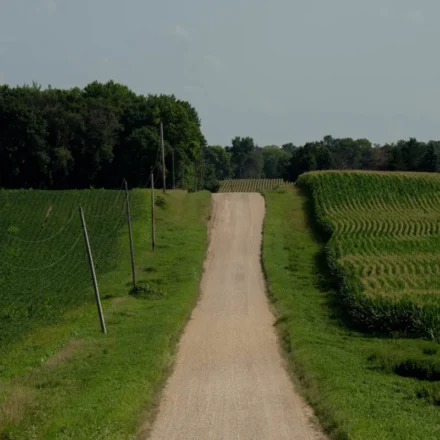
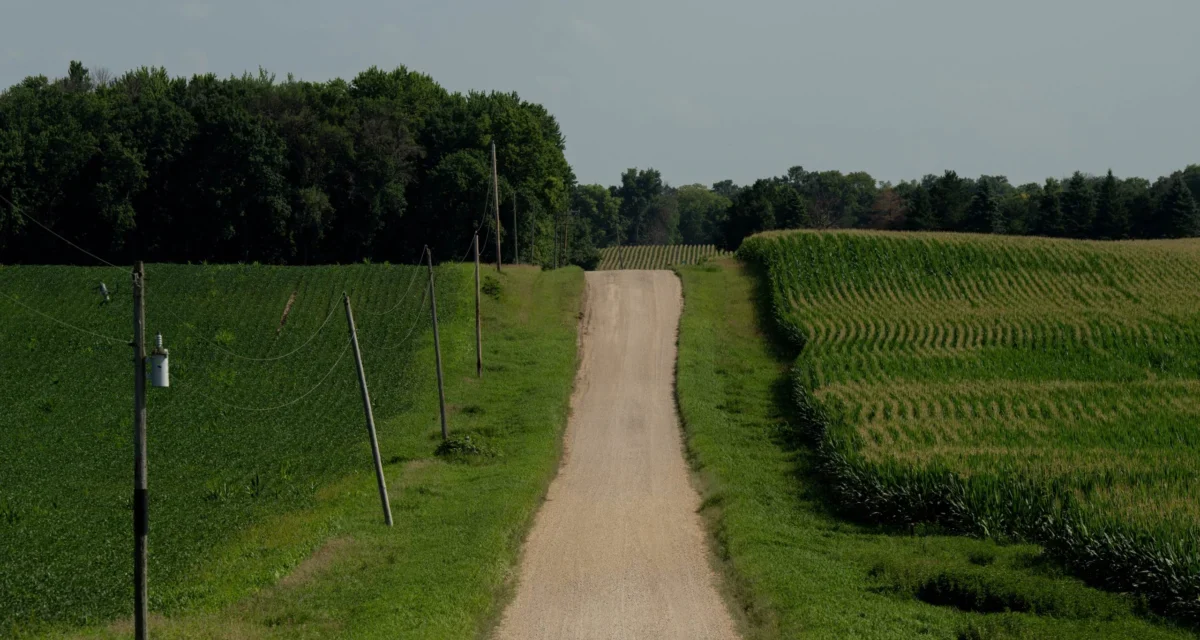
The economic and social fabric of the 1st District further illustrates its unique political dynamics. Dominated by agriculture, the district’s residents are deeply affected by policies related to trade, farm subsidies, and immigration. Towns like New Ulm, Finstad’s hometown, exemplify the district’s heritage and conservative values. New Ulm, steeped in German culture with landmarks like the Hermann the Cheruscan statue and frequent Oktoberfest celebrations, is the county seat of Brown County, which also strongly favored Trump in 2024. Locals acknowledge a strong sense of tradition, where newcomers might historically feel like "auslanders" (outsiders), though resident Pat Booker notes the community has grown more welcoming. Despite this, New Ulm remains a Republican-majority city, posing a significant hurdle for Johnson, who nonetheless makes a point of campaigning there, participating in events like the Bavarian Blast festival parade and planning town halls.
Expert analysis corroborates the district’s conservative shift. Kevin Parsneau, a political science professor at Minnesota State University in Mankato, observes Finstad’s confident campaign posture, suggesting the incumbent’s internal polls likely show a significant lead. Kate Knutson, a political science professor at Gustavus Adolphus College, confirms the district "has gotten a lot more conservative." She points to both redistricting, which made the district even more rural, and the national trend of rural areas gravitating towards the GOP.
Knutson also highlights a key strategic vulnerability for Finstad: the impact of Trump-era policies on the agricultural sector. Farmers in southern Minnesota have faced significant challenges from trade tariffs and immigration policies that have impacted the meatpacking industry, a crucial economic driver in the region. More recently, global events like Iran’s shutdown of the Strait of Hormuz have further exacerbated economic pressures by stalling oil and fertilizer deliveries, driving up farm input costs. Johnson’s campaign aims to exploit this frustration, arguing that Finstad’s alignment with Trump has directly harmed the district’s primary industry.

The DCCC’s "Red to Blue" designation for Jake Johnson is a critical piece of supporting data. This is not merely a symbolic gesture but a tangible commitment of resources. Candidates on this list receive enhanced fundraising assistance, access to national campaign strategy sessions, and specialized training programs. This infusion of national party support is essential for an underdog campaign to compete financially and strategically against an incumbent in a challenging district. Johnson’s ability to raise nearly $1.9 million, even before this designation, demonstrated his grassroots appeal and validated the DCCC’s investment. This level of funding allows him to build out a robust campaign infrastructure, hire staff, and launch significant advertising efforts, all crucial for increasing name recognition and disseminating his message in a sprawling district.
Voter sentiment, while anecdotal, also provides valuable insight. Pat Booker, a New Ulm resident, military veteran, and retired probation officer, offers a compelling perspective on the difference in constituent engagement. She praises both Walz and Johnson for their willingness to answer questions and meet with residents. In stark contrast, Booker recounts her frustrating eight-month attempt to get facetime with Finstad to discuss her concerns about potential SNAP and Medicaid cuts, receiving only "one pat letter saying thank you for your concerns." This perceived lack of accessibility could be a point of vulnerability for Finstad, especially in a district where personal connection and responsiveness are highly valued.
Official Responses: Contrasting Campaign Strategies
The campaigns of Jake Johnson and Brad Finstad offer a study in contrasting political strategies, reflecting their respective positions as challenger and incumbent.
Jake Johnson’s campaign is built on a dual platform of fiscal conservatism and robust social safety net advocacy, a nuanced approach designed to appeal to the district’s centrist and working-class voters. He promises to vote against any legislation that increases the national debt until Congress balances its budget, stating, "Members of both parties are not taking this seriously," in reference to the nearly $40 trillion national debt. This stance positions him as a responsible steward of taxpayer money, a message often popular with fiscally conservative voters. Simultaneously, his personal history as a "SNAP kid" and "Medicaid family" informs his unwavering commitment to shore up federal social safety nets. He emphasizes that these programs are not merely handouts but essential lifelines for families facing hardship, a narrative he believes can transcend partisan divides. Johnson’s relentless schedule of 21-county town halls is his primary method of direct engagement, allowing him to listen to concerns and present his policy solutions in a transparent manner. Furthermore, his campaign actively criticizes Finstad’s support for Trump-era policies that Johnson argues have demonstrably hurt farmers in the district, specifically citing tariffs, immigration sweeps impacting the meatpacking industry, and global disruptions like the Strait of Hormuz shutdown that raise input costs.
Representative Brad Finstad, on the other hand, operates with the confidence of an incumbent in a favorable district. His strategy primarily involves focusing on "official business" engagements within the district, meeting with police officers, farm groups, and local companies. This allows him to project an image of active representation without directly engaging his challenger in unscripted public forums. As Professor Parsneau notes, "He’s speaking to his base. He does not want to be in an unscripted situation." When questioned about constituent accessibility, Finstad asserted to MinnPost, "I’m always listening and communicating with constituents who agree and don’t agree with me. I’m having those conversations and I would say reach out to me, reach out to our office. I’m more than willing to have a conversation and answer questions." He also often frames his work within a broader spiritual context, stating it is "an honor of a lifetime" to serve the district’s residents, but "my goal is heaven, not Congress." He concludes with a defiant promise: "When November comes, the voters of southern Minnesota will decide, but no one is going to outwork me."
Regarding the criticisms of agricultural policies, Finstad has consistently deflected blame from former President Trump’s administration, instead attributing current distress to former President Biden. "We’re heading in the right direction," he told MinnPost after a veterans’ issues roundtable in July. "We have come out of some tough times where the inputs have been really crippling for the last six years, and then on top of that we’ve had that stale market because of that lack of trade." This narrative seeks to reassure his farming base by framing economic challenges as a result of the current Democratic administration, aligning with the broader national Republican message.
The national Democratic Party, through the DCCC, has officially thrown its weight behind Johnson’s candidacy. The "Red to Blue" designation is a strategic move, signifying their belief that this race, while challenging, is winnable and warrants significant investment. This decision is driven by a desire to expand their House majority and demonstrates a willingness to contest even "Likely Republican" districts in what is anticipated to be a highly competitive election cycle. The DCCC’s involvement signals that they see Johnson as a candidate who can not only galvanize the Democratic base but also persuade a sufficient number of independent and even disaffected Republican voters.

Implications: A Bellwether for Rural America
The outcome of the 2026 election in Minnesota’s 1st Congressional District carries significant implications, extending far beyond the borders of southern Minnesota.
For the district itself, a Johnson victory would represent a dramatic shift in representation, signaling a potential softening of its strong Republican leanings. It would mean a representative more aligned with the Democratic Party’s platform on issues like social welfare programs, environmental policy, and trade, potentially bringing new legislative priorities to Washington. Conversely, a Finstad re-election would solidify the district’s current conservative trajectory, reinforcing its identity as a reliably Republican stronghold and a bastion of Trump support. It would also validate Finstad’s strategy of focusing on his base and avoiding direct engagement with challengers, a model that other incumbents in similar districts might emulate.
On a state level, a Democratic flip in CD1 would provide a significant boost to Minnesota’s DFL party, demonstrating its ability to compete and win in rural areas that have increasingly trended Republican. It could reignite discussions about the DFL’s appeal to farmers and working-class voters outside of the state’s urban centers.
Nationally, this race serves as a crucial bellwether. The DCCC’s investment in Johnson underscores the Democratic Party’s broader strategy to regain control of the U.S. House. To achieve this, Democrats need to not only defend their swing districts but also make inroads into territories currently held by Republicans, even those rated as "Likely Republican." A victory for Johnson would send a powerful message that the Democratic Party can still connect with rural voters and that the "teacher-politician" archetype, with its emphasis on community engagement and personal narrative, remains a potent force in American politics. It would also challenge the narrative that rural America is irrevocably lost to the GOP.
Conversely, if Johnson, despite his strong campaign and national backing, fails to unseat Finstad, it would reinforce the perception of the deep-seated political polarization and the enduring strength of the Republican base in districts like CD1. It might lead to a re-evaluation of Democratic strategies for engaging rural voters, highlighting the immense challenges in overcoming demographic shifts and cultural divides.
The enduring legacy of the "teacher-politician" narrative is also at stake. Tim Walz’s success in 2006 proved that a background in education could be a powerful asset on the campaign trail. Johnson’s attempt to replicate this success, under vastly different political conditions, will offer insights into whether this archetype can still thrive in an era of heightened partisanship and nationalized elections. His personal story of growing up reliant on social safety nets, much like Walz’s, emphasizes the power of authentic narratives in connecting with voters on a human level, transcending policy debates.
Ultimately, the contest in Minnesota’s 1st Congressional District is more than just a local election; it is a microcosm of the larger political struggles playing out across America. It pits a determined underdog, armed with a compelling personal story and national party support, against an entrenched incumbent in a district that embodies the nation’s rural-urban divide and ideological polarization. As the campaign intensifies towards the 2026 election, all eyes will be on southern Minnesota to see if history can, indeed, repeat itself, or if the district’s changing political landscape proves too formidable an obstacle for another teacher to overcome.