




































The "Cabin Country" Strategy: Minnesota School Districts Pivot to New Aid in High-Stakes Referendum Push

In the high-stakes world of Minnesota school finance, the calendar is usually an enemy. Superintendents across the state have long treated even-numbered years—those dominated by the noise of presidential and midterm elections—as "no-go zones" for school funding referendums. Data consistently shows that voter approval rates for school levies plummet by nearly 20% during these cycles compared to quieter, odd-numbered years.
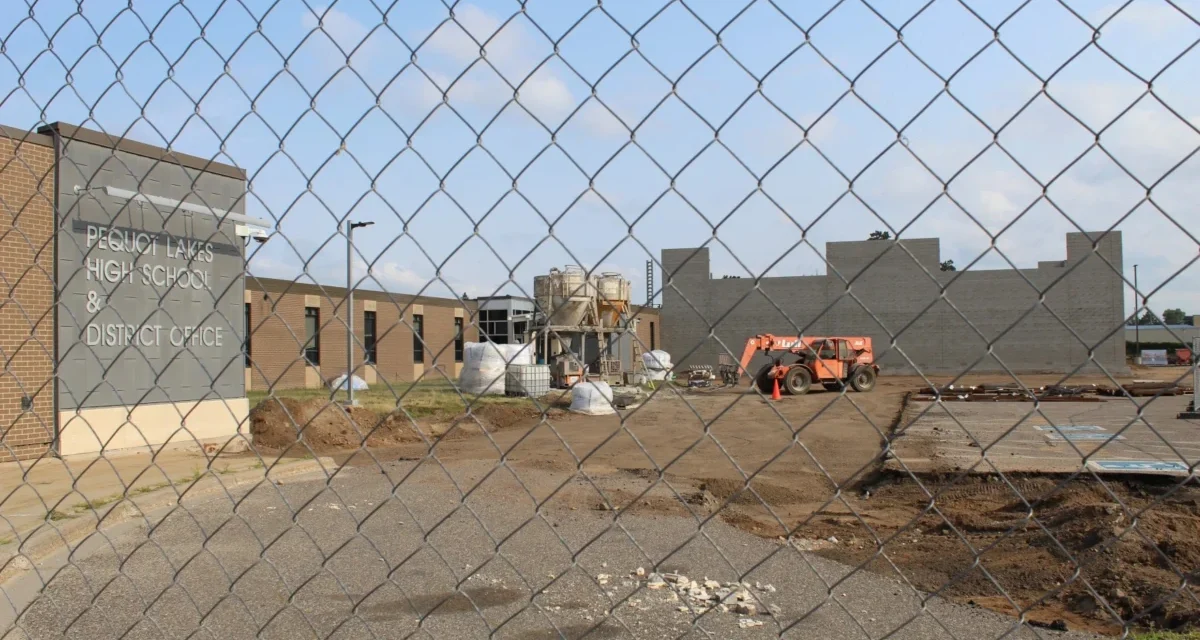
Yet, this November, districts like Walker-Hackensack-Akeley (WHA) and Pequot Lakes are breaking the cardinal rule of school administration. They are heading to the ballot box in the middle of a heated election cycle, betting that a new state-level legislative victory will provide enough incentive for voters to overcome "ballot fatigue" and support their schools.
The driving force behind this gamble is the newly created Seasonal Recreational Tax Base Replacement Aid. This legislative mechanism is designed to address a decades-old grievance in Northern Minnesota: the inequitable funding structures that have long burdened local property owners in regions dominated by cabin culture.
The Financial Landscape: Why Districts are Taking the Risk
For superintendents like WHA’s Kevin Wellen, the decision to run a referendum in an election year was not made lightly. After two decades in administration, Wellen is well-versed in the risks of even-year voting. However, the math, he argues, is undeniable.
"Somebody asked me, ‘Why didn’t you wait until next year when we’re not on a midterm election and just run it then?’" Wellen said during an August interview. "And my answer was: We’d leave a million dollars on the table."
The million-dollar figure represents the potential influx of state aid that the district would forfeit if it failed to pass an operating levy. Under the new state law, the Seasonal Recreational Tax Base Replacement Aid covers up to 50% of a district’s operating levy. The catch, however, is that a district must have an active, voter-approved operating levy to unlock these funds. For districts that have never passed a levy—or those whose previous levies have expired—the new aid is effectively locked behind a door that only the voters can open.
A Chronology of Inequity
To understand the current urgency, one must look at the historical evolution of Minnesota’s school funding. For decades, the tax burden in "cabin country"—areas where at least 15% of the property value is tied to seasonal recreational dwellings—has been disproportionately borne by year-round residents and local commercial entities.
- Pre-2001: Seasonal recreational property taxes were a staple of local school district operating levies, providing a robust base for educational funding.
- 2001 Legislative Pivot: The state legislature shifted this revenue stream away from local districts, redirecting the tax proceeds into a statewide education fund with the stated goal of creating a more uniform, equitable distribution system.
- The Pawlenty Era: In subsequent years, the administration of former Governor Tim Pawlenty moved these funds from the dedicated education pool into the state’s general fund, a move that critics argue essentially "cannibalized" the resources that were originally intended for Northern Minnesota’s school systems.
- 2025 Legislative Breakthrough: After years of advocacy, particularly from rural DFL legislators like Senator Grant Hauschild, the state legislature finally authorized the replacement aid. The policy acknowledges that by excluding cabin property from local levies, the state inadvertently penalized districts with high volumes of second homes.
Senator Hauschild, who serves as the only rural Northern Minnesota DFLer in the legislature, describes the passage of this aid as his primary mission during the recent session. "In final negotiations in the tax committee, I made it my top issue," Hauschild noted. "Ultimately, I think it came down to me saying, ‘Hey, look, this is my top need. This is the thing I need.’"
Understanding the "Cabin Aid" Mechanics
The new aid is not a "blank check" for school districts; it is a structural adjustment. It does not provide "new" money in the sense of exceeding the amount voters approve. Instead, it alters the source of the funding.
When a district passes an operating levy, the revenue is capped at the amount authorized by the voters. With the new aid, the state steps in to cover a significant portion of that levy—in some cases up to 25% or more—depending on the density of seasonal property in that specific district.
Crucially, this shift does not change the tax burden for cabin owners. Instead, it shifts the weight of the levy from the local property owner to the state’s coffers. For residents, this means they are voting to fund their schools, but the actual out-of-pocket cost is mitigated by the state contribution.
The Strategy: "Under-Levying" and Ballot Clarity
Districts like Pequot Lakes and Walker-Hackensack-Akeley are going a step further to ensure voter support. Because school boards have the authority to levy several different property taxes, these districts have committed to "under-levying" in other areas to offset the cost of the new operating levy.
Superintendent Wellen explains the messaging to his constituents: "If you vote yes on Question One, your taxes stay the same, and the district gets just over $637,000. If you vote no on Question One, your taxes stay the same, and the district gets nothing."
By intentionally reducing other discretionary levies, the districts are creating a "net-zero" tax increase scenario. WHA is taking this a step further by including a second question on the ballot. While Question One maintains the status quo, Question Two asks for a modest increase—roughly $4 a month for a $400,000 home—which would trigger a much larger influx of state aid, effectively netting the district over $1 million for a relatively small local investment.
"It’s a crazy bargain," Wellen said. "I’ve heard from people, ‘It sounds too good to be true, how do you convince them?’ I just keep showing them the math."
Potential Challenges and the Battle for Voter Trust
Despite the mathematical logic, the districts face significant hurdles. The most pressing is the legal requirement for ballot language, which must explicitly state that a "yes" vote is for a property tax increase. This language is mandated regardless of whether the district plans to offset the cost by reducing other levies.
"Now that will take a little bit of explanation," says Todd Rapp, owner of Rapp Strategies, Inc., a firm advising the districts. "But voters are pretty wise, and they understand that if you can finally start to bring some of those cabin property taxes back into the district, that will be helpful."
The broader challenge, according to Rapp, is the pervasive cynicism surrounding public institutions. In a polarized political environment, getting voters to engage with the nuances of tax policy is difficult. Furthermore, voters are being asked to consider other educational measures, such as a constitutional amendment to increase payouts from the state’s school trust fund—a measure that also promises more money without tax hikes.
To overcome this, both Pequot Lakes and WHA are leaning on the credibility they earned by successfully passing building referendums in the previous year. After initial setbacks in 2023, both districts spent months conducting community outreach to restore trust.
The Implications: A Deficit-Focused Future
The necessity for these levies is rooted in a sobering reality: many rural school districts are currently in a state of financial crisis. Pequot Lakes, for instance, views the levy as the only way to maintain essential intervention staff for students struggling with math and reading, as well as keeping extracurricular programs like robotics and band afloat.
For WHA, the stakes are even more direct. The district is currently navigating a $573,000 deficit. The revenue from the proposed levies would allow the district to plug this financial hole, preventing the need for deep cuts to staff or class sizes.
"If all goes according to plan, we are going to be able to maintain exactly what we’re offering," Wellen said. "And we’ll have a little bit of choices on maybe what we can add."
However, the strategy is not without its long-term vulnerabilities. While current school boards have committed to the "under-levying" strategy, the referendum authorization lasts for a decade. A future board, facing its own budgetary pressures, could technically choose to stop the offsets, effectively collecting the new operating levy on top of existing taxes.
Superintendents acknowledge this risk but maintain that it is a risk worth taking. "My answer to the population, then, would be, ‘Then elect new board members that won’t do that,’" Wellen said.
As November approaches, the "cabin country" districts are essentially testing a new theory of governance: that when provided with clear, transparent, and mathematically sound options, voters will prioritize the health of their local schools, even in the midst of a volatile election year. If they succeed, they may provide a roadmap for rural districts across the state to navigate the complex, often inequitable, terrain of modern public education finance.