





















































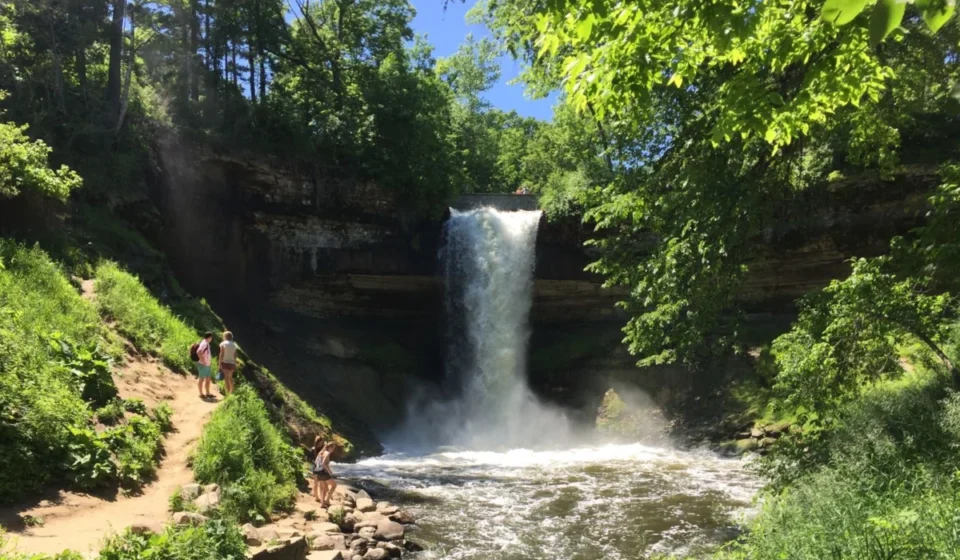

In an era defined by deep-seated political polarization, it is rare to find a policy issue that resonates across the aisle. Yet, as the American landscape shifts under the pressures of climate change and rapid urbanization, one truth has emerged as a rare point of consensus: Americans love their parks.
According to a recent poll conducted by the Trust for Public Land, 88 percent of Americans visited a public park or green space within the past year. Remarkably, this affinity transcends party lines, with nearly 90 percent of Kamala Harris voters and 80 percent of Donald Trump voters identifying these spaces as "critical infrastructure" for their local communities.
While public affection for parks has long been understood as a matter of quality of life, a groundbreaking new report from the Trust for Public Land suggests that parks are far more than aesthetic amenities. They are, in fact, powerful economic engines. The report finds that for every dollar invested in parks and recreation, communities reap a staggering $3 in annual economic benefits.
The Core Data: Quantifying the "Green" Dividend
The report, titled Parks’ Undeniable ROI, provides a quantitative framework for what many city planners have long suspected: nature pays for itself.
“You really do get so much goodness out of them,” says Will Klein, director of parks research at the Trust for Public Land. “People are healthier, people connect with each other. They drive business activity, especially for small businesses.”
The economic "dividend" is multifaceted, ranging from direct spending in surrounding neighborhoods to long-term public health savings. To understand the scale of this impact, one must look at the intersection of public space and the national economy. The United States currently spends approximately $5.3 trillion annually on health care. Of that, physical inactivity—a leading contributor to cardiovascular disease and chronic metabolic issues—costs the nation more than $200 billion each year.
By providing free, accessible venues for exercise, parks act as a massive public health subsidy. “Our polling this year showed that the most popular place in America in 2025 to run around, play, and exercise are parks and public spaces—far more popular than private gyms,” Klein notes. “That physical activity has real health and economic benefits, accounting for about $2,000 per person in health care savings each year.”
A Brief History: From "Pleasure Grounds" to Urban Necessity
The evolution of the American park has followed a long and winding trajectory. In the late 19th century, the "City Beautiful" movement popularized the idea of the urban park as a "pleasure ground"—a retreat from the grimy, industrial reality of the Gilded Age. Figures like Frederick Law Olmsted, the designer of Central Park, argued that parks were essential for the "sanitary and moral" health of the urban working class.
Throughout the 20th century, the role of parks shifted from grand pastoral escapes to hubs for community activity and sports. However, the early 21st century has introduced a new set of challenges: climate-induced flooding, the loneliness epidemic, and the rising cost of living.
Today, we are entering the era of the "Resilient Park." This shift recognizes that parks are not just for leisure; they are technical components of a city’s infrastructure. From "sponge parks" designed to mitigate flash floods to "agrihoods" that prioritize local food production, the function of the public park is being reimagined as a multi-purpose tool for urban survival.
Economic Multipliers: How Parks Fuel Local Commerce
Beyond the health benefits, the "third place" function of parks provides a substantial boost to the economy. In an increasingly commodified society, parks remain one of the few places where a citizen can gather without the pressure to spend money. This accessibility draws crowds, which in turn fuels the surrounding "mom-and-pop" ecosystem.
Consider the data on tourism and local spending:
- The Gulf Coast Trail: The 420-mile greenway currently under development is projected to generate $200 million in economic activity in Sarasota County alone by attracting cyclists and eco-tourists.
- Property Valuation: Even for those who never step foot in a park, the economic benefit is realized through property values. Proximity to well-maintained green space consistently drives up home prices, which in turn bolsters the local tax base, allowing cities to fund schools, roads, and other essential services.
“People want to live near green spaces,” Klein explains. “So you see increased property values, which supports a broader tax base, which can then be reinvested into community benefits.”
Official Responses and the Funding Dilemma
Despite the overwhelming evidence of return on investment, the practical reality of park maintenance is fraught with political tension. As seen in recent budget debates in Minneapolis—where the Park and Recreation Board faces potential cuts—city leaders are often forced to choose between immediate budget balancing and long-term infrastructure health.
Critics of park spending often argue that limited municipal funds should be prioritized for "essential" services like public safety or infrastructure repair. However, the current report reframes this debate entirely. Proponents of parks argue that by cutting park budgets, cities are actually engaging in a "false economy." If a park is allowed to degrade, the city loses the downstream benefits of flood mitigation, lower health care costs, and increased tax revenue, ultimately costing the taxpayer more in the long run.
In response to these budget pressures, some cities are turning to public-private partnerships, "pocket parks" in dense urban areas, and innovative land-use zoning that mandates green space within new housing developments. The goal is to ensure that green space is not a luxury reserved for the affluent, but a baseline component of every neighborhood.
Implications for the Future: Climate, Health, and Community
The implications of this research are clear: to build a resilient, healthy, and prosperous city, one must treat parks as high-priority infrastructure.
1. Climate Resilience
As extreme weather events become more frequent, urban sewer systems are increasingly overwhelmed. Parks act as sponges, absorbing stormwater and reducing the strain on municipal pipes. This reduces the risk of basement flooding and sewage overflows, saving cities millions in disaster recovery costs.
2. The Loneliness Epidemic
The Surgeon General has labeled loneliness a "public health crisis." Parks provide a necessary "third place"—a neutral, non-commercial space where the elderly, families, and teenagers can interact. This social cohesion is not just a "nice-to-have"; it is a buffer against the mental health challenges currently plaguing the nation.
3. Equitable Development
The challenge for the coming decade is ensuring that the "green dividend" is shared equitably. In many cities, green space is concentrated in wealthy districts. Integrating small-scale pocket gardens into affordable housing complexes and revitalizing underutilized lots in underserved neighborhoods is now a matter of economic justice.
Conclusion: A Solution Under Our Feet
As local leaders look for ways to stimulate their economies while navigating the complexities of the 21st century, the answer may be closer than they think. Whether it is a grand metropolitan park or a small urban garden, these spaces provide a massive, reliable return on investment.
"Parks," Klein concludes, "are actually one of these solutions hiding under the feet of all these local leaders."
In an age of division, the park stands as a testament to the idea that we are better off when we share resources. By prioritizing the preservation and expansion of these green spaces, we aren’t just planting trees—we are investing in the health, stability, and future prosperity of the American city. The data confirms what the public has known intuitively all along: when we invest in our parks, we are investing in ourselves.